The Invisible Stagnation: How Monopolies Kill Innovation
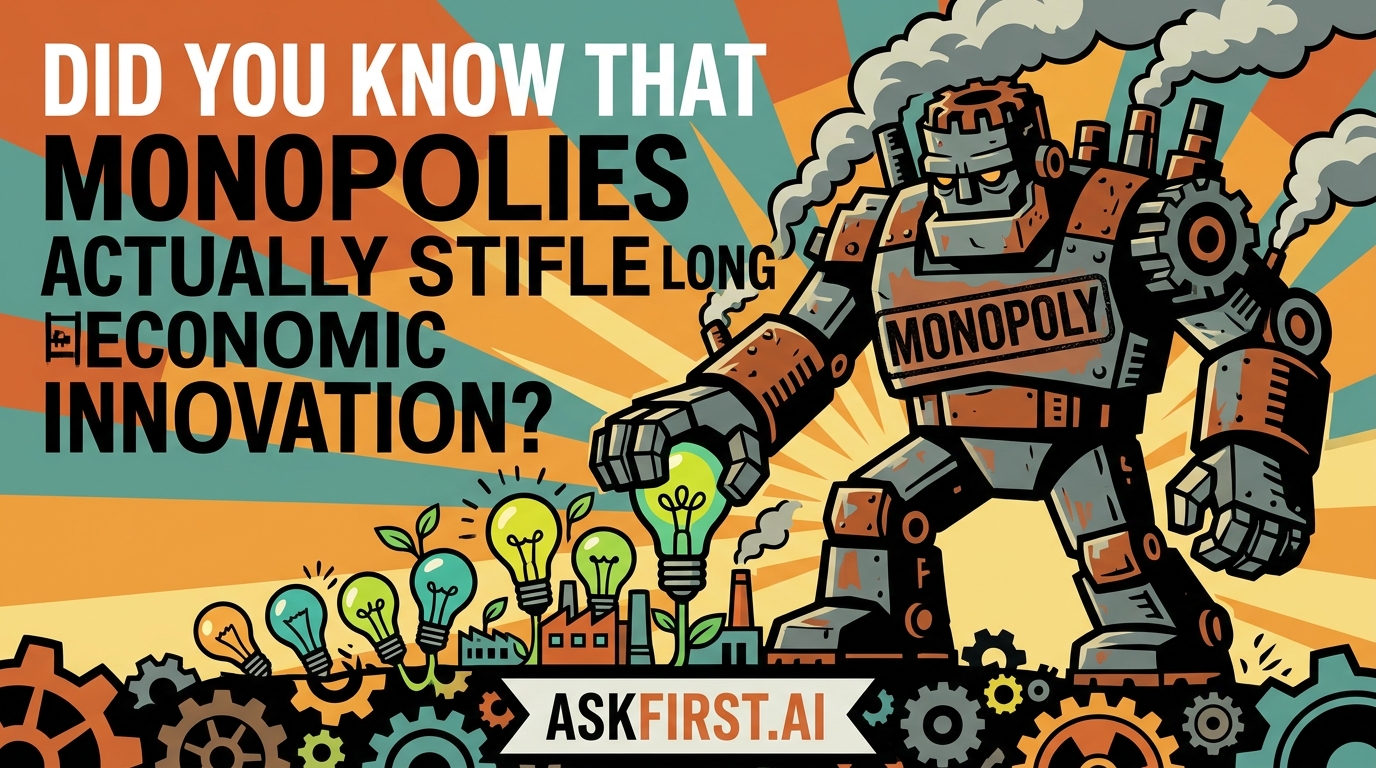
Economic history suggests a paradox: while a company may seek a monopoly to dominate its sector, the pursuit and achievement of total market control often serve as the death knell for the very innovation that originally allowed the firm to rise. When competitive pressure is removed, the existential threat that drives risk-taking and technological advancement vanishes. This phenomenon, often referred to as the 'Innovation Gap,' illustrates why monopolistic environments historically lead to long-term economic deceleration.
The Comfort of No Competition
Innovation is rarely a charitable act. In a healthy, competitive market, firms must innovate to survive. This process is driven by the 'Schumpeterian Gale' of creative destruction, where new entrants challenge incumbents with superior products or more efficient processes. When a company achieves a monopoly, the incentive structure changes radically:
- Reduced R&D Urgency: Without the threat of losing market share to a nimbler rival, corporations often redirect capital from long-term research and development into stock buybacks, dividends, or lobbying to protect their legal moat.
- Defensive Patenting: Instead of creating new value, monopolies frequently engage in 'patent thickets.' This involves acquiring vast portfolios of patents not to build new products, but to block potential innovators from entering the space. This strategic hoarding creates high barriers to entry for smaller, more agile startups.
- Lack of Consumer Feedback Loops: Competition forces companies to listen to their users. A monopolist can afford to ignore consumer pain points because those consumers have nowhere else to turn. When feedback becomes optional, the drive to iterate and improve products to meet real-world needs evaporates.
Historical Precedents and Economic Studies
Economists have studied the correlation between market concentration and innovation intensity for decades. Research consistently indicates an inverted U-shaped relationship. While some scale is necessary to fund massive breakthroughs—such as the early days of telecommunications—excessive concentration leads to systemic laziness.
For example, during the dominance of major computer hardware giants in the late 20th century, innovation slowed significantly in the personal computing space. It was not until open-source movements and smaller hardware developers emerged that the industry saw the rapid expansion of capabilities and cost reduction we enjoy today. Similarly, the history of telecommunications demonstrates that industries with regulated competition typically rollout fiber-optic infrastructure and new protocols significantly faster than those controlled by a single national incumbent.
The Cost of Capital Misallocation
Monopolies often suffer from internal bureaucracy that mirrors the stagnation of their market position. When an entity becomes 'too big to fail,' it develops a culture of internal protectionism. Employees are incentivized to maintain the status quo rather than risk personal reputation on revolutionary ideas that might cannibalize the company’s existing cash cows. This is the classic 'Innovator’s Dilemma,' famously articulated by Clayton Christensen.
This behavior has macroeconomic consequences:
- Resource Siphoning: Venture capital and private talent are drained away from sectors dominated by monopolies, as entrepreneurs fear they will be crushed or acquired solely to be shuttered.
- Slowed Productivity Growth: Aggregate economic growth is deeply tied to productivity gains. When innovation hits a wall, productivity flatlines, which eventually impacts wage growth and the standard of living for the entire workforce.
- Artificial Pricing: Monopolies set prices based on their power, not on production efficiency. This prevents the market from clearing at the natural equilibrium price, leading to deadweight loss where potential utility for consumers is destroyed.
Why This Matters for the Future
As we look toward the landscape of 2030 and beyond, the rise of digital platform monopolies represents a new frontier for this classic economic problem. Whether in cloud computing, social media, or data analytics, the trend toward 'winner-take-all' markets is intensifying. If history is any guide, the preservation of a diverse, competitive ecosystem is not just a regulatory preference—it is a mandatory requirement for sustained technological progress.
To foster innovation, societies must prioritize interoperability, low barriers to entry, and strong anti-trust frameworks that prevent incumbents from using their platform power to favor their own products over those of third-party innovators. Without these guardrails, we risk entering a period of 'high-tech stagnation,' where the devices and services we use cease to evolve because the entities providing them have no reason to try harder. The ultimate irony of the monopoly is that by trying to capture the market, it inadvertently ensures that there is less market to capture in the future.