Generating income online has evolved from a niche pursuit into a robust, multi-billion-dollar ecosystem. In the modern digital economy, the barrier to entry is lower than ever, but the requirement for specialized skill sets and strategic execution is higher. To succeed, one must move beyond "get-rich-quick" schemes and focus on building sustainable digital assets or providing high-value services.
The Foundation of Digital Monetization: Service-Based Income
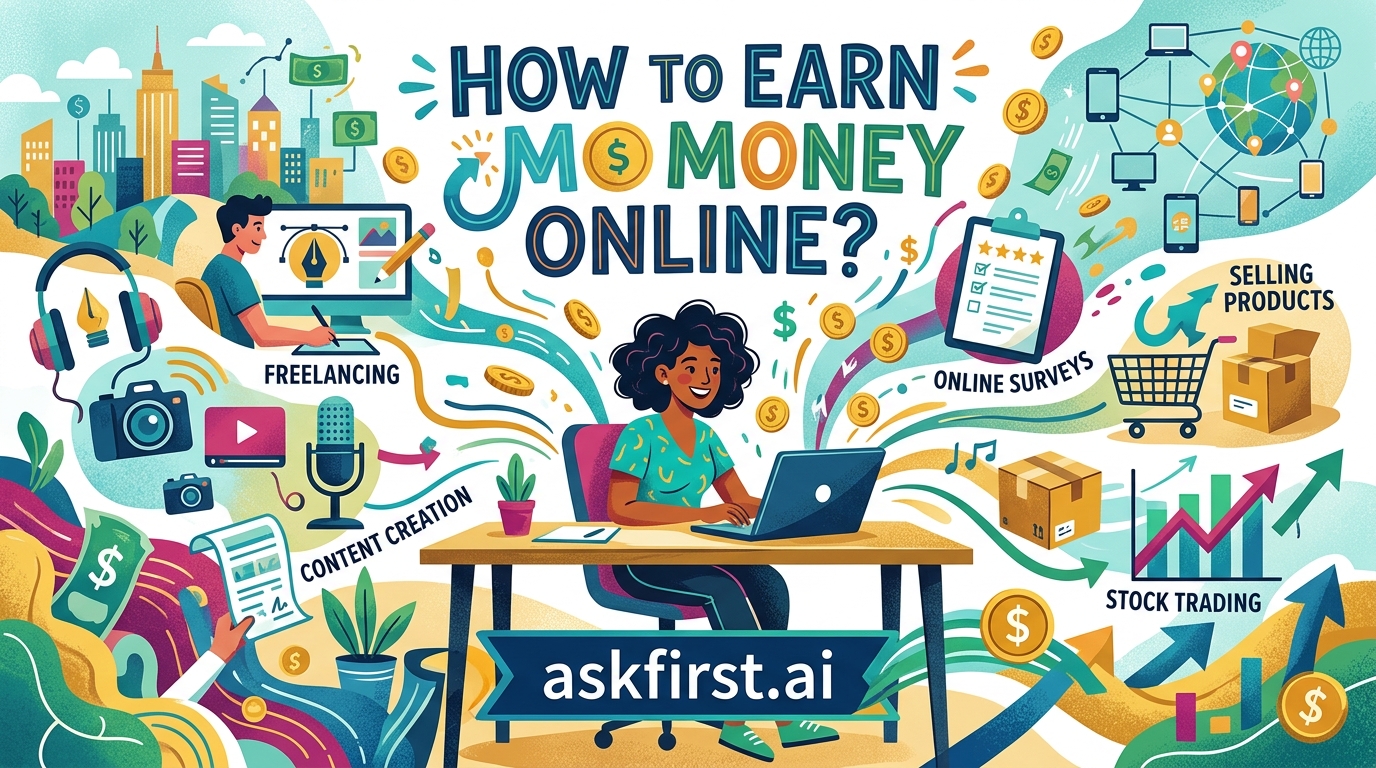
The most immediate way to generate revenue online is by trading your skills for capital. This is often referred to as the "Freelance Economy." Platforms like Upwork, Toptal, and Fiverr have standardized the process of connecting experts with clients globally.
To excel here, you must niche down. Generalists are easily replaced by automated tools or lower-cost labor, but specialists—such as senior software engineers, UX/UI designers, or high-level copywriters—command premium rates.
- Consulting: If you have deep industry knowledge, you can offer consulting services. For example, a marketing strategist might charge $200+ per hour to audit a company’s sales funnel.
- Technical Writing and Coding: As noted by Cal Newport in his seminal book Deep Work, the ability to perform cognitively demanding tasks is a rare and valuable skill. Programmers who specialize in niche frameworks (like Rust or Go) or cloud infrastructure (AWS/Azure) are consistently among the highest-paid online workers.
Building Scalable Digital Assets: Content and Information
Unlike service-based work, where you trade time for money, digital assets allow for "decoupled" income, where your earnings are not directly tied to the hours you work. This is the realm of content creation and information products.
- Information Products: Creating an online course or an e-book is one of the most effective ways to monetize expertise. Platforms like Teachable or Kajabi allow creators to host curriculum-based learning. The key here is "transformation"—you are not selling information (which is free on Google), you are selling a structured path to a specific result.
- Affiliate Marketing: This involves promoting other companies' products and earning a commission for every sale generated through your unique referral link. Successful practitioners, such as Pat Flynn of Smart Passive Income, emphasize that trust is your greatest asset. If you recommend products you do not use or believe in, your audience will abandon you.
- Niche Websites: By building a site around a specific problem (e.g., "best home office setups for ergonomic health"), you can monetize through display advertising (like Mediavine or Ezoic) and affiliate marketing. This requires a long-term commitment to SEO (Search Engine Optimization), as outlined in the definitive guide The Art of SEO by Eric Enge, Stephan Spencer, and Jessie Stricchiola.
The E-commerce Revolution: Selling Physical and Digital Goods
E-commerce has shifted from traditional storefronts to "Direct-to-Consumer" (DTC) models. You no longer need a physical warehouse; you can leverage the "Dropshipping" model or "Print-on-Demand."
- Dropshipping: You list products on your site, and when a customer orders, a third-party supplier ships the item directly to them. While margins are thinner, the risk is significantly lower because you do not hold inventory.
- Print-on-Demand (POD): This is ideal for artists and designers. You upload your designs to platforms like Printful or Redbubble. When a customer buys a shirt or mug with your design, the platform prints and ships it. You collect the royalty.
Navigating the Creator Economy and Personal Branding
In 2026, the "Creator Economy" is perhaps the most potent force in digital finance. Building a personal brand on platforms like LinkedIn, X (formerly Twitter), or YouTube creates a "moat" around your business.
As Naval Ravikant, the famed investor and philosopher, notes in his "Almanack," the goal is to own equity in your work and to build something that scales without your constant presence. By building an audience, you create a distribution channel that you own. If you have an audience of 10,000 highly engaged followers, you can launch a product, secure a sponsorship, or find a job without ever submitting a traditional application.
The Reality of Sustainability
It is critical to understand that earning money online is a business, not a hobby. It requires the same discipline as a physical enterprise. You must account for:
- Taxes and Legal Structure: Depending on your jurisdiction, you may need to form an LLC or a Sole Proprietorship to manage your taxes properly.
- Customer Acquisition Costs (CAC): Whether it is organic social media growth or paid advertising, you must understand how much it costs to acquire a single customer.
- Consistency: Most online ventures fail because the creator gives up after three months. According to data from the Small Business Administration, most profitable online businesses require at least 12 to 18 months of consistent effort before reaching significant monthly recurring revenue (MRR).
Conclusion
The internet has democratized the ability to generate wealth, but it has also increased the competition. To earn money online effectively, you must choose a lane: Service (immediate cash flow), Content/Products (long-term scalability), or E-commerce (volume-based growth). The most successful individuals often combine these, using their personal brand to drive traffic to their products and services. Regardless of the path you choose, focus on solving real-world problems for real people. Value, delivered consistently, is the only currency that will sustain you in the digital age.