The Foundation of Persuasive Negotiation: The Power of Tactical Empathy
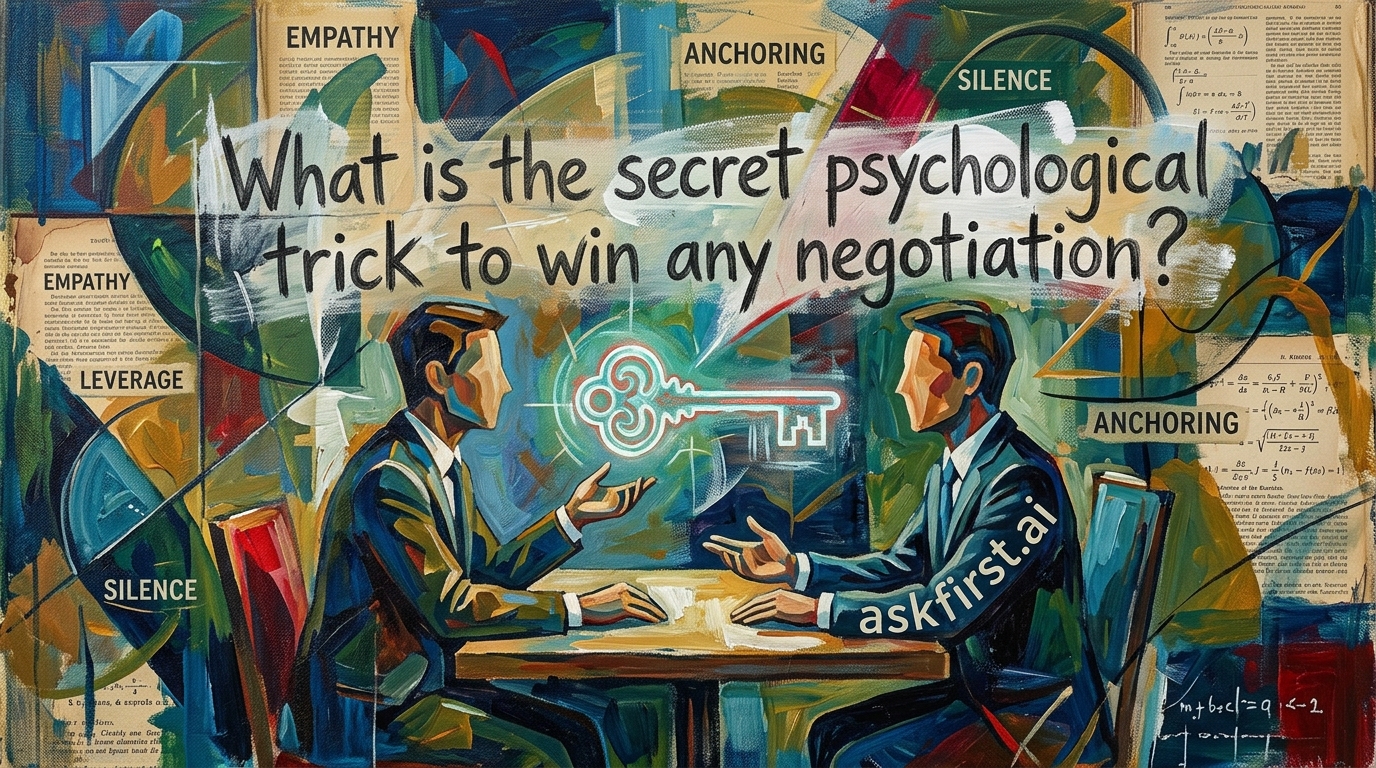
Negotiation is often misconstrued as a battle of wills, a zero-sum game where one party gains at the expense of another. However, the true 'secret' that professional negotiators utilize is not manipulation, but Tactical Empathy. Developed and popularized by former FBI hostage negotiators, Tactical Empathy is the ability to recognize another person's perspective and emotional state and influence them by validating that understanding. It is not about agreeing; it is about demonstrating that the other side has been heard.
Why Emotional Intelligence Trumps Logic
Human decisions are rarely purely logical. Even in corporate boardrooms, decisions are driven by cognitive biases, insecurities, and the fundamental human need to be validated. When a negotiator forces their point through raw data, they often encounter the 'Backfire Effect', where the other party digs in their heels to protect their ego. Tactical Empathy bypasses this defensive posture.
The Mechanics of Tactical Empathy: Labels and Mirrors
To master this, one must utilize specific linguistic tools that lower cortisol levels and build subconscious trust:
- Mirroring: This is the act of repeating the last three words (or the most critical one to three words) of what the counterpart has just said. It acts as a conversation bridge, prompting the other person to elaborate and revealing their underlying constraints without the negotiator asking a direct, interrogative question. If a client says, 'We simply cannot afford that price point,' the negotiator should gently respond, 'The price point?' This simple repetition forces the client to explain their 'why,' potentially uncovering a specific budget constraint that can be navigated.
- Labeling: Labeling involves identifying the emotions of the other party and verbalizing them. Using phrases such as 'It seems like you feel...' or 'It sounds like you are concerned about...' validates the other side's feelings. When you label an emotion, it loses its power to control the individual. This move essentially puts you on the same side of the table as your counterpart.
The Power of the Calibrated Question
Direct 'Yes' or 'No' questions are dangerous. 'Yes' can be a hollow commitment, while 'No' is often used as a defense mechanism to feel safe. The secret to controlling a negotiation is the use of Calibrated Questions—open-ended questions that start with 'How' or 'What.'
Instead of asking, 'Can you do this?' (which invites a 'No'), ask, 'How am I supposed to do that?' This phrase is remarkably powerful. It forces the other person to step into your shoes, take responsibility for your constraints, and solve the problem on your behalf. By presenting yourself as a partner with a problem rather than an adversary with a demand, you trigger the human instinct to provide solutions.
Avoiding the 'Neediness' Trap
One of the most profound psychological principles in negotiation is the Principle of Detachment. If you are perceived as needing the outcome more than the other person, you have already lost. The negotiator who is prepared to walk away is the one who holds the most power. This is often referred to as the 'Best Alternative to a Negotiated Agreement' (BATNA). By solidifying your BATNA before the conversation begins, you project confidence and remove the 'scarcity mindset' that causes people to make poor, rushed concessions.
The Silent Weapon: Effective Pausing
Silence is perhaps the most uncomfortable but effective tool in a negotiator's arsenal. Most people have an innate fear of silence and rush to fill it with more words, information, or apologies. By pausing after you ask a question or make a statement, you create an 'information vacuum.' The other party, feeling the pressure of the quiet, will often speak to fill that void. Frequently, they will concede more information, offer a better deal, or clarify their position simply because they could not handle the silence. Mastery of the pause is a sign of high emotional intelligence.
Summary of the Strategy
To summarize the secret: winning isn't about dominance. It is about gathering information. The person who speaks less and listens more (with specific intent) gains the upper hand. By utilizing Tactical Empathy, employing Mirrors and Labels, asking Calibrated Questions, and embracing the Strategic Pause, you transform a transaction into a collaboration. When you make the other side feel safe, heard, and in control, they become infinitely more willing to reach an agreement that satisfies both parties' needs. This is the hallmark of true influence in any human interaction, whether in business, personal life, or complex diplomatic settings.