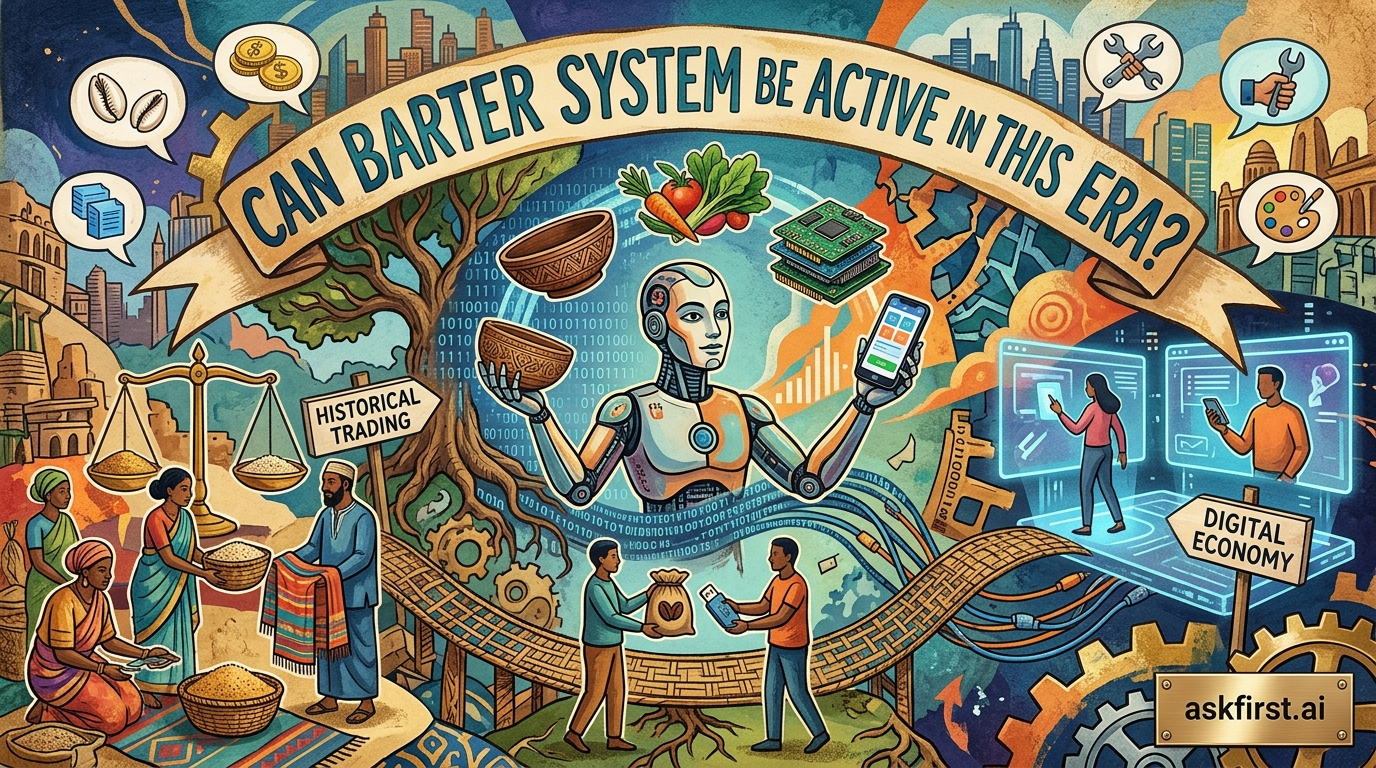
The Resurgence of the Barter System in the Modern Digital Age
The barter system—the direct exchange of goods and services without the use of a medium of exchange like currency—is often erroneously dismissed as a primitive relic of pre-civilization. However, contrary to the popular economic myth popularized by Adam Smith in The Wealth of Nations (1776), where he posited that barter was the awkward predecessor to money, the system is far from extinct. In today’s hyper-connected, digital-first global economy, barter has not only survived; it has evolved into a sophisticated, multi-billion-dollar industry that serves as a vital economic buffer during times of instability.
The Modern Evolution: From Informal Swaps to Corporate Trade Exchanges
In our current era, the barter system has transcended the "cow for grain" model. It now operates through Corporate Trade Exchanges and Digital Barter Platforms. Organizations like the International Reciprocal Trade Association (IRTA) track a global industry where companies trade excess inventory or unused capacity—such as empty hotel rooms or idle manufacturing hours—for services they need, such as advertising or legal counsel.
Consider the example of a boutique hotel in downtown Chicago. If the hotel has low occupancy on a Tuesday, they might trade these rooms to a media agency in exchange for a national digital marketing campaign. The hotel gains exposure it otherwise couldn't afford, and the agency gains assets it can use for employee incentives or client entertainment. This is not "primitive"; it is highly efficient asset utilization.
The Role of Digital Technology and Cryptocurrency
The primary historical limitation of barter—the "double coincidence of wants"—has been largely neutralized by technology. In a traditional barter system, I must have exactly what you want, and you must have exactly what I want. Today, Trade Credits act as a universal unit of account within closed-loop systems.
If I am a web designer and I provide services to a hardware manufacturer, I receive "trade dollars" in my digital account. I can then spend those dollars with a restaurant or a logistics firm within the same network. This effectively turns barter into a multilateral, non-cash economy. Furthermore, the rise of blockchain technology has enabled "barter-like" smart contracts. Platforms like Bartercard have digitized these transactions, allowing businesses to maintain liquidity while preserving their cash reserves for overheads that absolutely require fiat currency, such as payroll or taxes.
Economic Resilience and Crisis Management
The barter system gains the most traction during periods of economic volatility. According to the research presented by economists like Felix Martin in his book Money: The Unauthorized Biography, barter is often the "shadow" economy that keeps societies functioning when traditional financial systems falter.
During the 2008 financial crisis, and more recently during the supply chain disruptions of 2021-2022, small businesses turned to barter networks to maintain operations when credit lines dried up. By trading goods instead of using scarce cash, companies were able to:
- Preserve cash flow: Keeping physical currency for essential fixed costs.
- Liquidate dead stock: Turning unsold inventory into usable services.
- Build local networks: Creating symbiotic relationships with neighboring businesses, fostering community resilience that global supply chains often fail to provide.
The Challenges of Modern Barter
Despite its efficiency, the barter system faces significant hurdles in the 21st century. The most prominent is the Tax and Regulatory Framework. In the United States, the Internal Revenue Service (IRS) mandates that barter transactions be reported at their fair market value as taxable income. This removes the "anonymity" of the transaction and requires meticulous accounting, which can be a deterrent for small businesses.
Furthermore, there is the issue of Valuation Subjectivity. Determining the "fair value" of a custom-made software package versus a load of raw timber requires a level of trust and negotiation that is inherently more time-consuming than simply paying a set price in a national currency. As noted by anthropologist David Graeber in Debt: The First 5,000 Years, the social complexity of barter requires a high degree of interpersonal trust, which is why modern barter networks often rely on heavily regulated, membership-based platforms rather than open-market interactions.
Conclusion: A Complementary Economic Tool
Can the barter system be active in this era? The answer is an unequivocal yes. It is not, however, a replacement for the modern monetary system. Instead, it functions as a highly sophisticated, secondary economic layer. In an era of inflation, high interest rates, and global supply chain fragility, barter offers a mechanism for businesses to bypass the limitations of fiat currency.
By leveraging digital platforms, companies can transform idle assets into productive capital, proving that the oldest form of trade is perfectly suited for the modern world. Whether it is a freelance graphic designer trading a logo for dental work or a corporation trading excess manufacturing capacity for air travel, the barter system remains an essential, enduring, and increasingly digital pillar of the global economy. It is not a step backward into the past, but a strategic step forward into a more flexible and resilient future.