The Evolution of Labor: Will Artificial Intelligence Replace Human Work?
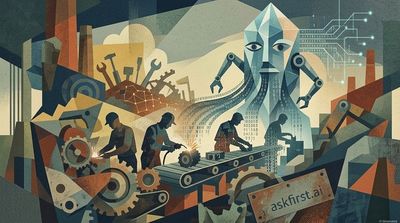
The question of whether artificial intelligence (AI) will "take over" human work is perhaps the most significant socio-economic inquiry of the 21st century. As we stand in May 2026, the integration of machine learning, generative models, and autonomous systems into the global workforce has transitioned from speculative fiction to daily reality. To understand the future of labor, one must move past the binary of "total replacement" versus "no impact" and instead analyze the nuanced process of task transformation.
The Historical Context of Technological Displacement
History provides a roadmap for understanding technological shifts. In his seminal work The Second Machine Age, authors Erik Brynjolfsson and Andrew McAfee of the MIT Sloan School of Management argue that just as the steam engine augmented human muscle during the Industrial Revolution, AI acts as a "general-purpose technology" that augments human cognition.
Historically, technology has rarely eliminated jobs entirely; rather, it has eliminated tasks. When the automated teller machine (ATM) was introduced in the 1970s, many predicted the end of the bank teller. Instead, the cost of operating a bank branch decreased, leading to an expansion of branches. The role of the teller shifted from counting cash to complex customer service and relationship management. This phenomenon, known as the "Jevons Paradox," suggests that as technology increases the efficiency with which a resource is used, the total consumption of that resource increases rather than decreases.
The Shift from Job Replacement to Task Augmentation
The most authoritative research on this topic, such as the report The Future of Jobs by the World Economic Forum, emphasizes that while AI will displace certain routine cognitive tasks—such as data entry, basic accounting, and repetitive customer support—it simultaneously creates new categories of labor.
We are currently witnessing a shift toward "Human-in-the-loop" (HITL) systems. In fields like radiology, AI algorithms are now capable of identifying anomalies in medical imaging with high precision. However, this has not replaced the radiologist; it has empowered them to process more scans with higher diagnostic confidence. The expert is no longer just a "looker" of images, but a "synthesizer" of AI-generated insights and clinical history.
Consider the following sectors:
- Software Engineering: AI coding assistants (like those developed by GitHub or Anthropic) allow junior developers to write code faster. The bottleneck for development is no longer syntax or basic logic, but rather high-level system architecture and user requirements—tasks that require human empathy and strategic foresight.
- Creative Arts: Generative AI has lowered the barrier to entry for graphic design and copywriting. However, it has also increased the demand for "curation" and "brand voice," where humans must act as editors and creative directors rather than manual laborers.
The "Human Premium": Where AI Fails
Despite the rapid advancement of neural networks, there remain distinct domains where AI is fundamentally limited. In Human Compatible: Artificial Intelligence and the Problem of Control, computer scientist Stuart Russell notes that AI systems lack "common sense" and a moral compass.
- Complex Decision-Making and Ethics: AI can optimize for a goal, but it cannot determine if that goal is ethically sound. A legal AI can draft a contract, but a human lawyer must evaluate the nuance of intent and the socio-legal implications of the agreement.
- Emotional Intelligence (EQ) and Empathy: In healthcare, education, and therapy, the "human touch" is not a luxury—it is a functional requirement. Patients in hospice care or students in primary education require social-emotional connection that an algorithm cannot replicate.
- Ambiguity and Novelty: AI thrives on historical data. In situations of extreme volatility or "black swan" events—where there is no precedent—human intuition and the ability to adapt to radically new environments remain superior.
The Economic Necessity of Adaptation
The primary risk is not that AI will take our jobs, but that those who know how to leverage AI will replace those who do not. This is a shift in the "Skill Premium." As noted by Daron Acemoglu and Simon Johnson in their book Power and Progress: Our Thousand-Year Struggle Over Technology and Prosperity, the direction of technological change is a choice. We can either design systems that automate humans out of existence or systems that make humans more productive and valuable.
To remain competitive, the workforce must pivot toward:
- AI Literacy: Understanding the capabilities and limitations of Large Language Models (LLMs).
- Strategic Thinking: Focusing on high-level problem framing rather than execution.
- Interdisciplinary Expertise: Combining technical knowledge with humanities, ethics, and psychology.
Conclusion
The narrative that AI will simply "take over" is an oversimplification that ignores the complexity of economic evolution. AI is not a monolith coming for our livelihoods; it is a toolset, as transformative as the printing press or the internet. While the transition period will undoubtedly be disruptive, requiring significant policy intervention regarding workforce retraining and economic safety nets, the future of work is not one of human obsolescence. Instead, it is a future where the most tedious aspects of our labor are stripped away, allowing us to focus on the uniquely human capacities of creativity, ethics, and strategic synthesis. We are not being replaced; we are being upgraded.