The Hidden Language of Ancient Commerce
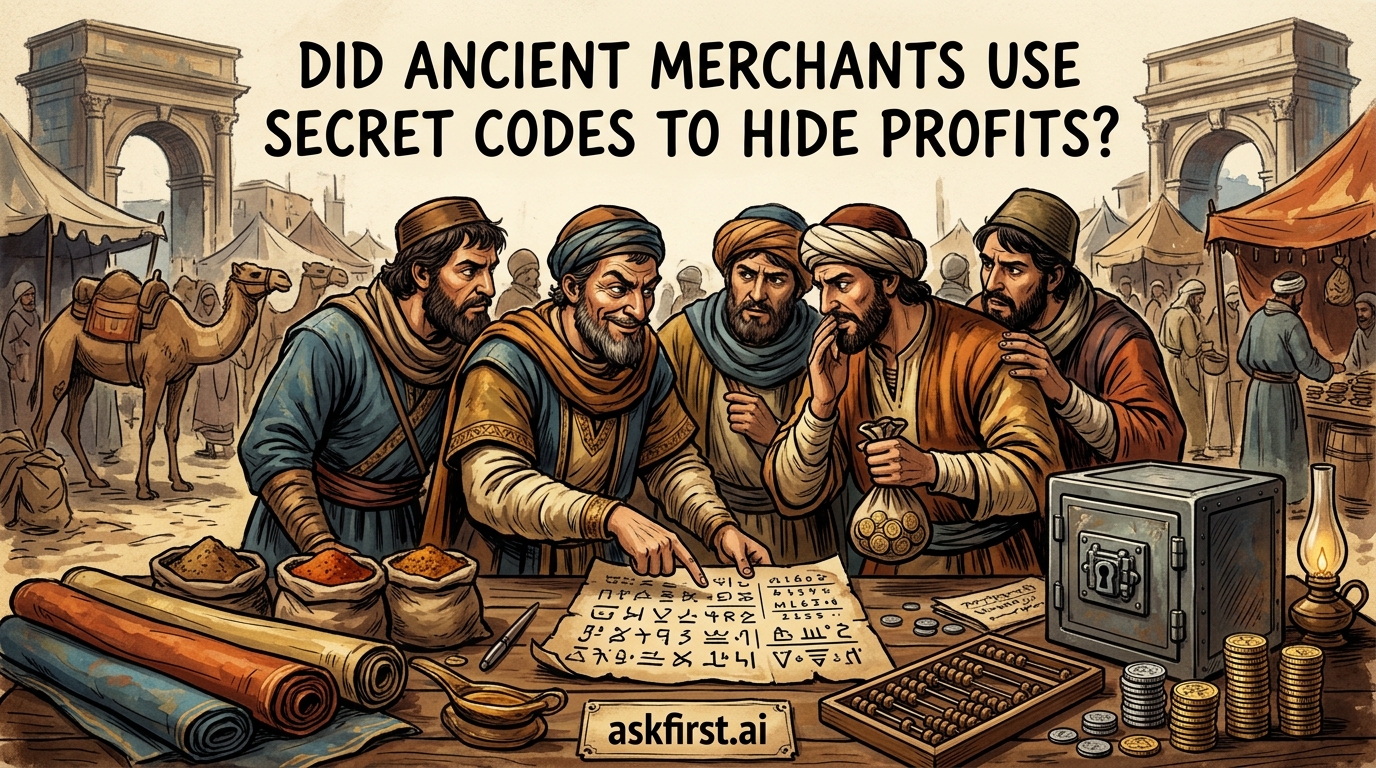
For millennia, the driving force of human civilization has been trade. From the silk-laden caravans traversing the Gobi Desert to the maritime spice routes connecting the Mediterranean to the East, merchants have navigated complex political landscapes and hazardous terrain. Central to the mystery of these ancient operations is the question: Did they utilize cryptographic techniques to shield their profits from rivals, tax collectors, or opportunistic bandits? The answer is a resounding yes, though the mechanisms were far more creative and culturally integrated than the binary ciphers of today.
The Necessity of Secrecy
Ancient commerce operated in an environment of extreme information asymmetry. A merchant in Mesopotamia or the Roman Empire was essentially operating in a world without centralized banking, public auditing, or standardized international regulations. To survive, protecting trade routes, supplier costs, and total profit margins was not merely a matter of greed; it was a matter of physical security. If competitors or local governors discovered the exact profitability of a shipment of frankincense or gold, the risks of extortion or predatory pricing surged. Consequently, the development of proto-cryptography became an essential tool of the trade.
Encoding Through Cuneiform and Hieroglyphs
One of the earliest documented instances of obfuscated commercial records dates back to the Old Babylonian period. Scholars have discovered clay tablets where scribes, acting as merchant agents, utilized specific lexical variations or non-standard symbols to record transaction prices. By substituting common symbols with rarer logograms, merchants ensured that only those trained in that specific mercantile house’s dialect could interpret the ledger. This served a dual purpose: protecting trade secrets and ensuring that junior scribes did not accidentally leak profit margins during bureaucratic inspections.
The Roman Tally and Cipher Traditions
During the peak of the Roman Empire, merchants relied heavily on informal ciphers. While historians often cite the "Caesar Cipher" as a military encryption tool, anecdotal evidence suggests that mercantile guilds utilized similar shift-ciphers for private correspondence. By adjusting numerals in a specific, agreed-upon ratio, a merchant in Alexandria could inform a partner in Rome about the true net profit after deductions without fear of an intercepted letter exposing their margins to Roman tax farmers, known as publicani.
- Numerical Obfuscation: Often, merchants used additive offsets, where a base value was added to all profit figures, effectively hiding the actual cash flow while keeping the mathematical proportions intact.
- Lexical Hiding: Merchants used 'slang' or substitution names for valuable goods, referring to luxury items as 'stones' or 'grain' to prevent thieves from knowing the true value of a caravan’s cargo.
Cultural Cryptography: The Role of Merchant Guilds
In the medieval period—the direct successor to ancient commercial systems—the rise of organized guilds formalized these practices. The Italian merchant-bankers of the Renaissance took this to an art form. By the time of the Medici family, double-entry bookkeeping was standard, but the 'private ledger' remained a deeply guarded secret. These private books often contained coded entries that translated public, audited figures into true, post-cost-benefit realities.
Why This Matters Today
This history teaches us that the desire for financial privacy is an innate human trait. Whether through the substitution ciphers of the Levant or the complex ledger systems of the Silk Road, ancient merchants understood that profit is a delicate, vulnerable aspect of survival. They did not have the benefit of modern cybersecurity, yet their innovative methods of data concealment reveal a sophisticated understanding of market competition.
Conclusion: The Legacy of Concealment
While we may not find 'Enigma' machines in archaeological digs, the evidence of ancient secret coding is embedded in the very foundations of economic history. From the intentional use of archaic dialects to the manipulation of standard ledger symbols, these methods allowed merchants to thrive in volatile environments. They understood that information was the most valuable commodity of all—and that keeping that information shielded was the only way to ensure the long-term prosperity of their enterprises. Exploring these ancient methods provides a fascinating look at the origin of modern financial privacy and the enduring human drive to protect what has been earned.