Navigating the digital economy in 2026 requires a discerning eye and a cautious approach. While the internet has democratized wealth creation, it has simultaneously created a fertile breeding ground for sophisticated schemes designed to exploit those looking for quick financial gains. To build a sustainable, long-term income stream online, one must first learn how to identify and avoid the common traps that lead to financial loss and wasted time.
The Mirage of "Get Rich Quick" Schemes
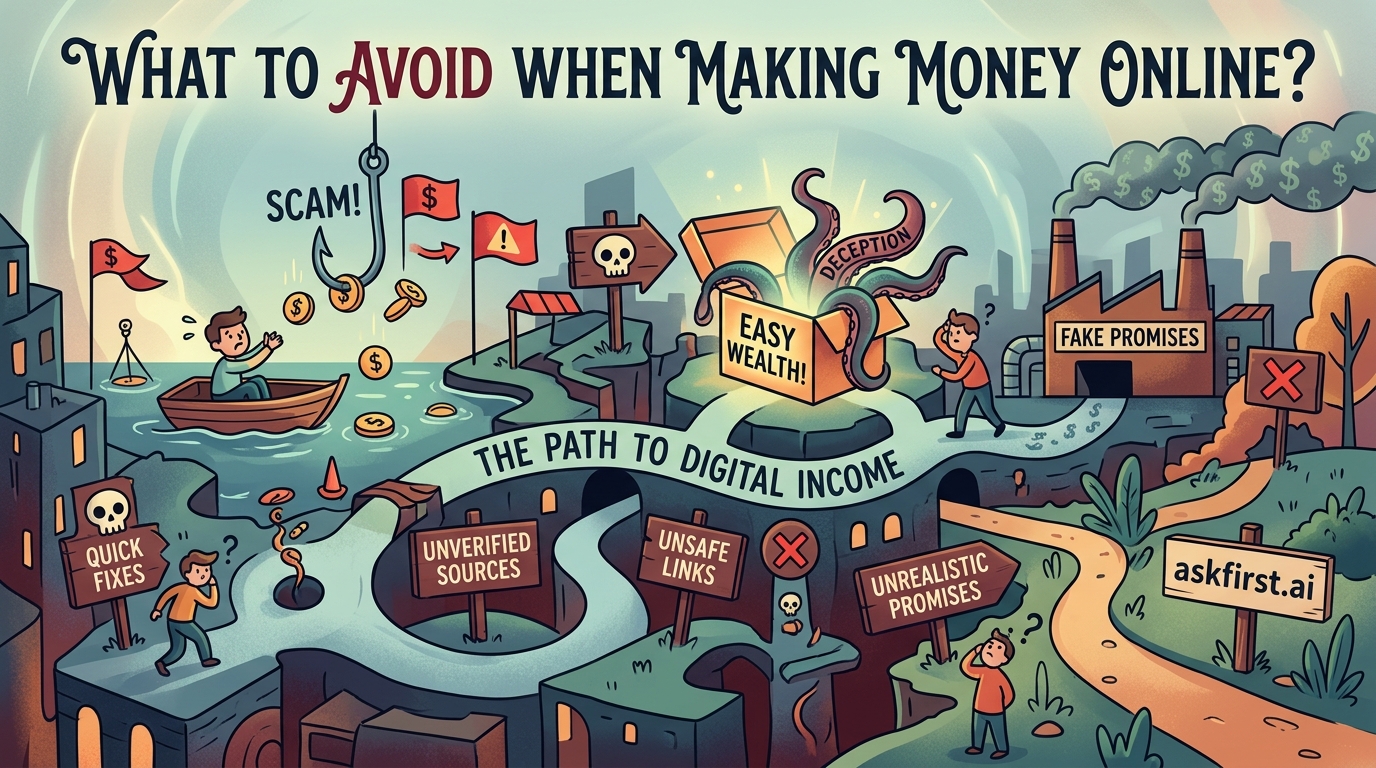
The most pervasive trap in the online world is the promise of effortless, immediate wealth. Whether it is automated trading bots, "secret" dropshipping loopholes, or multi-level marketing (MLM) structures disguised as business opportunities, these models almost always rely on the exploitation of the participant rather than the generation of real value.
In his seminal work, The Millionaire Fastlane, MJ DeMarco distinguishes between "wealth transfer" and "wealth creation." Schemes that promise high returns for minimal effort are essentially wealth transfers: they take money from new participants to pay those who joined earlier. If an opportunity requires a high upfront "buy-in" fee, promises guaranteed returns, or emphasizes recruiting others over selling a genuine product to an external market, treat it as a high-risk red flag. Genuine business building—whether through content creation, software as a service (SaaS), or professional freelancing—is characterized by a slow, compounding growth curve, not an overnight explosion of wealth.
Beware of "Guru" Culture and Low-Value Information Products
We live in an era where information is abundant but wisdom is scarce. A significant portion of the "make money online" industry is built on selling courses about how to make money online. This creates a circular economy where the only people consistently profiting are the course creators themselves.
Avoid purchasing expensive masterclasses that promise "insider secrets" or "proprietary blueprints." According to research highlighted by Cal Newport in his book Deep Work, true mastery and professional success come from deep, focused practice and the acquisition of rare, valuable skills. If a course creator’s primary income comes from selling courses rather than the skill they are teaching, you should be highly skeptical. Before investing in any educational material, ask yourself: Is this information available for free through primary sources, documentation, or open-source communities? If the answer is yes, you are paying for convenience, not value.
The Trap of "Shiny Object Syndrome"
One of the most common reasons individuals fail to monetize their online efforts is the inability to focus on a single path. This phenomenon, often referred to as "Shiny Object Syndrome," occurs when an entrepreneur abandons a perfectly viable project the moment they encounter a minor setback or hear about a "better" opportunity elsewhere.
In Atomic Habits, James Clear emphasizes the power of consistency and the danger of constant context switching. When you try to run an affiliate marketing site, a TikTok automation channel, and a crypto-arbitrage business simultaneously, you inevitably fail to reach the threshold of competence required to succeed in any of them. To build a sustainable income, choose one business model, dedicate at least 12 to 18 months to it, and iterate based on data rather than chasing the next trend.
Ignoring the Fundamentals of Business and Compliance
Many beginners assume that the rules of traditional business do not apply to the digital space. This is a dangerous misconception. Whether you are selling digital products or offering consulting services, you are subject to the laws of your jurisdiction and the realities of the marketplace.
- Financial Record-Keeping: Failing to track expenses and revenue leads to tax liabilities and poor decision-making. You must treat your online activity as a formal business from day one.
- Platform Dependency: Relying entirely on a single platform—such as building your entire income on a specific social media algorithm or a third-party marketplace like Amazon—is a massive risk. If the platform changes its terms of service or bans your account, your income hits zero instantly. Always focus on building an owned audience, such as an email list or a personal website, which you control.
- Intellectual Property and Ethics: Using stolen content, unauthorized copyrighted material, or engaging in deceptive marketing practices will eventually lead to legal repercussions or permanent platform bans. As highlighted by Seth Godin in This is Marketing, trust is the most valuable currency you possess. Once you compromise your reputation for a quick buck, it is nearly impossible to regain.
Conclusion
Building wealth online is a marathon, not a sprint. It requires the same dedication, strategic planning, and risk management as any brick-and-mortar enterprise. To succeed, you must avoid the siren call of instant riches, resist the urge to jump between trends, and prioritize the development of high-value skills over the purchase of "secret" information. Focus on providing genuine utility to a specific audience, maintain control over your digital assets, and approach your online venture with the patience and professionalism that long-term success demands. By steering clear of these common pitfalls, you position yourself not just to survive in the digital economy, but to thrive within it.