The Psychology of Appearance: Does Clothing Dictate Compensation?
For decades, researchers have investigated the link between personal appearance and economic success. The concept of Enclothed Cognition—a term coined by researchers Hajo Adam and Adam Galinsky—suggests that the clothes people wear influence their psychological processes and, by extension, their professional performance and perceived authority. In the modern global economy, the unspoken language of attire acts as a silent signal to employers, clients, and partners. This article explores the multifaceted relationship between professional grooming, garment choices, and lifetime earnings.
The 'Halo Effect' and Professional Perception
At the core of the attire-earning connection is the Halo Effect, a cognitive bias where the perception of one positive trait, such as a well-tailored suit or professional dress, influences the perception of other unrelated traits, like intelligence, competence, and reliability. When a job candidate or an employee presents themselves in a manner consistent with industry expectations, stakeholders subconsciously assume they possess higher levels of professional discipline.
- Perceived Competence: Individuals who dress in 'aspirational' attire are often granted the benefit of the doubt in high-pressure situations.
- Trust and Reliability: Certain styles are culturally coded to denote honesty and attention to detail. This builds initial trust, which often converts into higher negotiated salaries or larger client contracts.
The Economic Evidence: Is There a Direct Correlation?
Multiple studies, including those published in the Journal of Applied Psychology, have shown that professional appearance correlates positively with hiring probability and starting salaries. In industries such as finance, law, and corporate consulting, the 'Uniform' serves as a signal of social status and capability.
- Anchoring Effects: A person appearing polished acts as an anchor for a higher financial valuation. If one presents as a high-value asset, the negotiation room for a salary increase begins from a higher baseline.
- The Authority Shift: Research suggests that wearing clothing associated with authority actually triggers cognitive changes in the wearer. Leaders who adopt a formal, well-structured aesthetic often perform better during high-stakes negotiations, leading to better financial outcomes.
Breaking the Myth of 'Casual Excellence'
While the rise of tech culture and remote work has popularized casual attire, the data remains consistent: Contextual alignment matters more than the specific garment. The correlation between clothing and earnings is strongest when the attire matches the social expectations of the professional environment. If an individual in a high-stakes executive environment ignores the dress code, the perception of their 'fit' for the organization may decline, potentially plateauing their career progression.
- The Power of Intentionality: Those who understand the 'dress code of the next level' often find themselves being promoted faster. It is not about the cost of the clothes, but the intentionality behind the presentation.
- Cultural Context: In creative fields, 'professional' might look like avant-garde design, whereas in corporate law, it looks like traditional tailoring. The earnings bump comes from demonstrating that one understands and respects the cultural norms of their specific domain.
Long-Term Career ROI: The Investment Perspective
Viewing attire as an investment rather than an expense is a hallmark of high earners. Quality pieces that project longevity and care suggest that the individual treats their professional brand with the same rigor they apply to their work output. This is not about superficiality; it is about signal transduction.
- Confidence Levels: When an individual feels that their attire is appropriate and impressive, their self-efficacy levels rise. Higher self-efficacy is directly linked to better performance, which in turn leads to bonuses and promotions.
- Non-Verbal Communication: Your clothes speak before you do. In a boardroom, an outfit that conveys power and precision allows the speaker to focus on their argument rather than their perceived level of seniority.
Conclusion: The Strategic Advantage
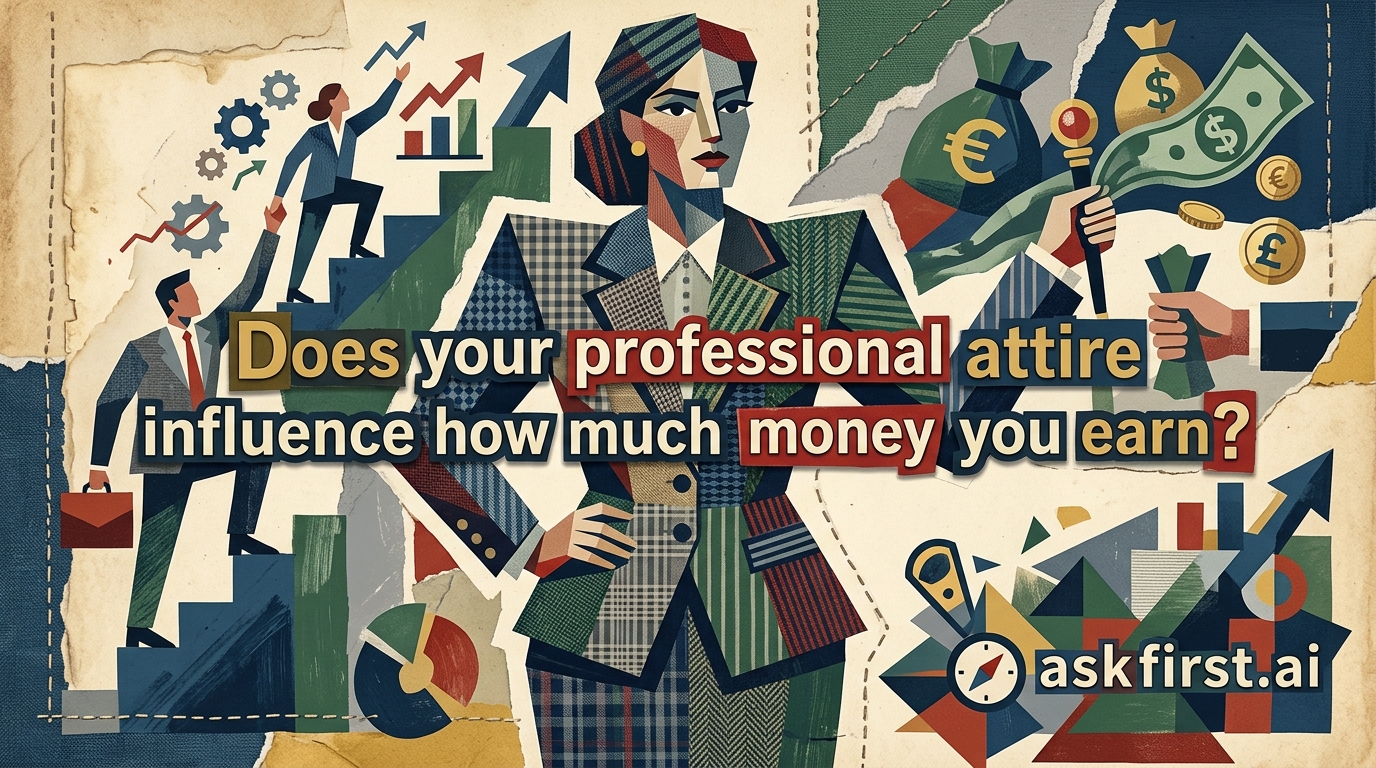
Does attire influence earnings? The evidence strongly suggests it does. It is a subtle, yet pervasive factor that informs the subconscious decisions of those who hold the purse strings. By treating professional attire as a strategic tool for self-presentation, individuals can bridge the gap between their actual capability and the perception of their value in the marketplace. While skill, hard work, and technical expertise are the foundational pillars of financial success, the visual 'packaging' of those talents acts as the accelerator that helps these attributes reach their full economic potential. Mastering the intersection of style and professionalism is not merely about fashion; it is a profound exercise in career management and economic optimization.