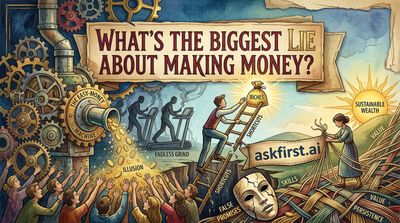
The pursuit of supplemental income has transformed from a niche hobby into a cornerstone of the modern economic landscape. With the rise of digital infrastructure, the barriers to entry for side hustles have plummeted, yet the noise surrounding "get rich quick" schemes has never been louder. To identify what actually works, one must look toward high-leverage activities that utilize specialized skills, scalability, or the arbitrage of time and assets.
The Foundation of High-Value Side Hustles
The most successful side hustles share a common DNA: they solve a specific problem for a specific audience. According to Chris Guillebeau in his seminal work, The $100 Startup, the most sustainable ventures are those that connect a passion or skill to a market need. The "hustle" is not about working harder, but about working on high-value tasks that people are willing to pay for.
1. High-Skill Freelancing (The Arbitrage of Expertise)
This remains the most reliable path to significant income. Unlike gig-economy apps that rely on volume, high-skill freelancing relies on expertise. If you possess skills in B2B copywriting, software development, data analysis, or UI/UX design, you are not a commodity; you are a consultant.
- Why it works: Businesses are increasingly moving toward fractional staffing. They prefer to pay a premium for a high-level expert on a per-project basis rather than hiring a full-time employee.
- Concrete Example: A financial analyst who spends their evenings building complex Excel dashboards or financial models for small business owners on platforms like Upwork or Toptal can easily charge $75–$150 per hour. The key here is building a portfolio that demonstrates "outcome-based value" rather than just a list of tasks performed.
2. Digital Product Creation (The Power of Scalability)
As Naval Ravikant, the famed entrepreneur and investor, often points out in his "Almanack," wealth is generated through assets that earn while you sleep. Digital products—such as e-books, online courses, or software templates—are the ultimate example of this.
- The Mechanism: You invest your time upfront to create a product, and then you sell it repeatedly with zero marginal cost of reproduction.
- Concrete Example: If you are an expert in gardening, instead of teaching one-on-one sessions, you create a comprehensive video course titled "The Urban Permaculture Guide." Once the course is hosted on platforms like Teachable or Gumroad, your only recurring task is marketing. This breaks the link between your time and your income.
3. Specialized Content Creation and Niche Media
Content creation is often misunderstood as "being an influencer." In reality, the most lucrative form of content creation is niche authority building. Creating a newsletter, a podcast, or a YouTube channel that serves a specific professional community allows you to monetize through sponsorships, affiliate marketing, or paid subscriptions.
- Strategy: Focus on the "1,000 True Fans" theory proposed by Kevin Kelly. You do not need millions of followers; you need 1,000 people who trust your expertise enough to buy whatever you recommend or offer.
- Concrete Example: A cybersecurity professional who writes a weekly Substack newsletter analyzing new threats and software vulnerabilities can command high-ticket sponsorships from cybersecurity firms looking to reach a highly targeted, professional audience.
4. Asset Rental and Arbitrage
If you lack specific technical skills, you can leverage the assets you already own. This is the "sharing economy" in its purest form.
- Vehicles and Space: Renting out a spare room on Airbnb or a vehicle on Turo remains a viable strategy, provided you are in a high-demand area.
- The Pivot: For those without assets, "service arbitrage" works. This involves finding clients who need a service (like landscaping or cleaning) and hiring reliable, vetted contractors to perform the work while you handle the client acquisition and management. This is the business model described in The 4-Hour Workweek by Tim Ferriss, where the entrepreneur acts as the system designer rather than the laborer.
The Pitfalls of Low-Yield Hustles
It is critical to distinguish between a "hustle" and a "job." Many people fall into the trap of low-yield activities—such as online surveys, micro-tasking, or delivering food through apps. While these provide immediate cash, they offer no growth, no skill acquisition, and no scalability. They are essentially trading your time for a fixed, often depreciating, wage. Avoid these if your goal is long-term financial independence.
Conclusion: The Metric of Success
The side hustles that actually work are those that allow for compounding. Whether you are compounding your reputation through freelancing, your audience through content, or your assets through digital products, the goal should always be to move away from trading your time directly for money.
Start by auditing your current professional skills. Ask yourself: "What do I know that others find difficult?" Then, package that knowledge into a format that can be sold or a service that can be scaled. The most profitable side hustles are the ones that eventually evolve into a business that functions independently of your constant, manual intervention. By focusing on high-value, scalable output, you transform a "side hustle" into a robust secondary income stream that provides both security and freedom.