Generating revenue from social media has evolved from a hobbyist’s pastime into a sophisticated, multi-billion-dollar industry. To succeed in this landscape, one must move beyond the basic concept of "going viral" and instead focus on building a sustainable business model centered on audience trust, niche authority, and diversified income streams. Whether you are a content creator, a brand owner, or a consultant, the mechanics of monetization rely on transforming attention into measurable economic value.
The Foundation: Building Social Capital
Before any monetization strategy can be implemented, you must establish what marketing expert Seth Godin calls "the smallest viable audience." In his book This Is Marketing, Godin argues that it is better to have 1,000 true fans who trust your advice than 100,000 passive followers who provide no engagement. Monetization is a byproduct of influence, and influence is a byproduct of consistent, high-quality value delivery.
To monetize effectively, you must first choose a niche—finance, fitness, technology, or lifestyle—and provide content that solves problems or provides entertainment. Without a defined niche, your audience remains fragmented, making it difficult for brands or platforms to categorize your value proposition.
1. Affiliate Marketing and Performance-Based Revenue
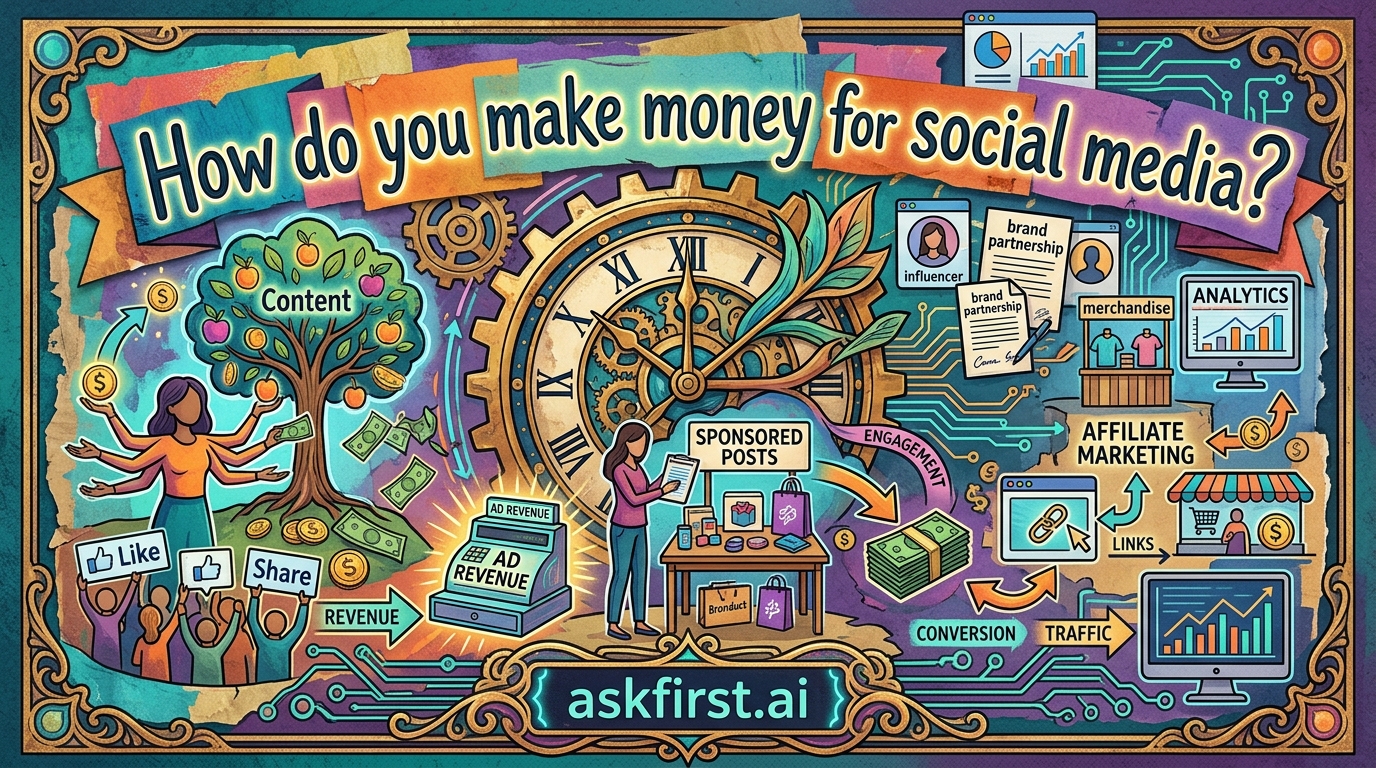
Affiliate marketing remains one of the most accessible entry points for monetization. This involves promoting third-party products or services and earning a commission for every sale generated through your unique tracking link.
- How it works: You integrate product recommendations into your content—such as a review video on YouTube or a tutorial on Instagram Stories.
- Concrete Example: If you run a YouTube channel focused on home office setups, you can join the Amazon Associates program. By linking to the specific ergonomic chairs or lighting kits you use, you earn a percentage of every purchase made via your link.
- Expert Insight: According to Pat Flynn, author of Superfans, the key to affiliate success is radical transparency. Never promote a product you haven't tested; if your audience senses dishonesty, your long-term earning potential will collapse.
2. Brand Partnerships and Sponsored Content
Once you have established a consistent engagement rate (typically 2% to 5% on Instagram or TikTok), you become attractive to brands looking for "influencer marketing."
- The Strategy: Brands pay you a flat fee to create content that highlights their product. Unlike affiliate marketing, this is a fixed contract.
- The Shift: Modern brands are moving away from "mega-influencers" with millions of followers in favor of "micro-influencers" (10,000–50,000 followers) because the latter often have much higher trust levels.
- Pro Tip: Use platforms like AspireIQ or Grin to connect with brands, or better yet, create a professional "Media Kit" that outlines your demographics, reach, and past campaign performance, and pitch brands directly via email.
3. Direct Monetization: Selling Digital Products
The most profitable creators eventually move away from relying on external companies and instead sell their own intellectual property. This allows for higher profit margins and total control over the customer experience.
- E-books and Guides: If you are a fitness coach, sell a 12-week workout plan in PDF format.
- Online Courses: Platforms like Teachable or Kajabi allow you to host video courses. Gary Vaynerchuk, in his book Crushing It!, emphasizes that "your personal brand is your greatest asset." By teaching a skill, you are capitalizing on the expertise your followers already attribute to you.
- Membership Communities: Platforms like Patreon or Substack allow your most dedicated followers to pay a monthly subscription fee for exclusive access, behind-the-scenes content, or direct Q&A sessions.
4. Platform-Specific Creator Funds and Ad Revenue
Major platforms have recognized that their success depends on the success of their creators. Consequently, many have introduced monetization programs.
- YouTube Partner Program (YPP): YouTube remains the gold standard for long-form monetization through AdSense, where creators earn a share of the revenue generated from advertisements shown on their videos.
- Short-form Incentives: TikTok and Instagram have introduced various "Creator Funds" and "Bonus Programs." However, these should be viewed as "supplemental income" rather than a primary business model, as payouts are often volatile and subject to algorithm changes.
The Importance of Diversification
The biggest mistake creators make is relying on a single source of income. If you rely solely on brand deals, a change in market trends could wipe out your revenue. If you rely solely on YouTube ad revenue, a shift in the algorithm could drastically reduce your monthly earnings.
Successful creators treat their social media presence like a media company. They build an email list (using tools like ConvertKit or Mailchimp), which serves as their "insurance policy." An email list is the only asset you truly own, independent of platform algorithms. When you have a direct line to your audience via email, you can sell products, announce events, or drive traffic to new content regardless of whether a platform decides to suppress your post.
Conclusion
Monetizing social media is not a "get rich quick" scheme; it is the process of building a digital business. By focusing on high-value niche content, fostering genuine community trust, and diversifying your revenue streams—through affiliate marketing, brand partnerships, and self-owned digital products—you can turn your online presence into a robust engine for income. The transition from "content creator" to "digital entrepreneur" requires discipline, data analysis, and an unwavering commitment to providing value to your audience. When you focus on helping your followers achieve their goals, the revenue will naturally follow as a result of the value you have provided.