Revolutionizing Customer Support: A Strategic Guide for Small Businesses
In the modern hyper-competitive marketplace, the speed and quality of your response to customer dissatisfaction can be the single greatest determinant of long-term brand loyalty. For small businesses, which often lack the sprawling customer service departments of multinational corporations, the advent of sophisticated Artificial Intelligence (AI) tools has leveled the playing field. By integrating intelligent automation into your support workflow, you can move from reactive firefighting to proactive, data-driven relationship management.
1. Leveraging AI-Powered Sentiment Analysis
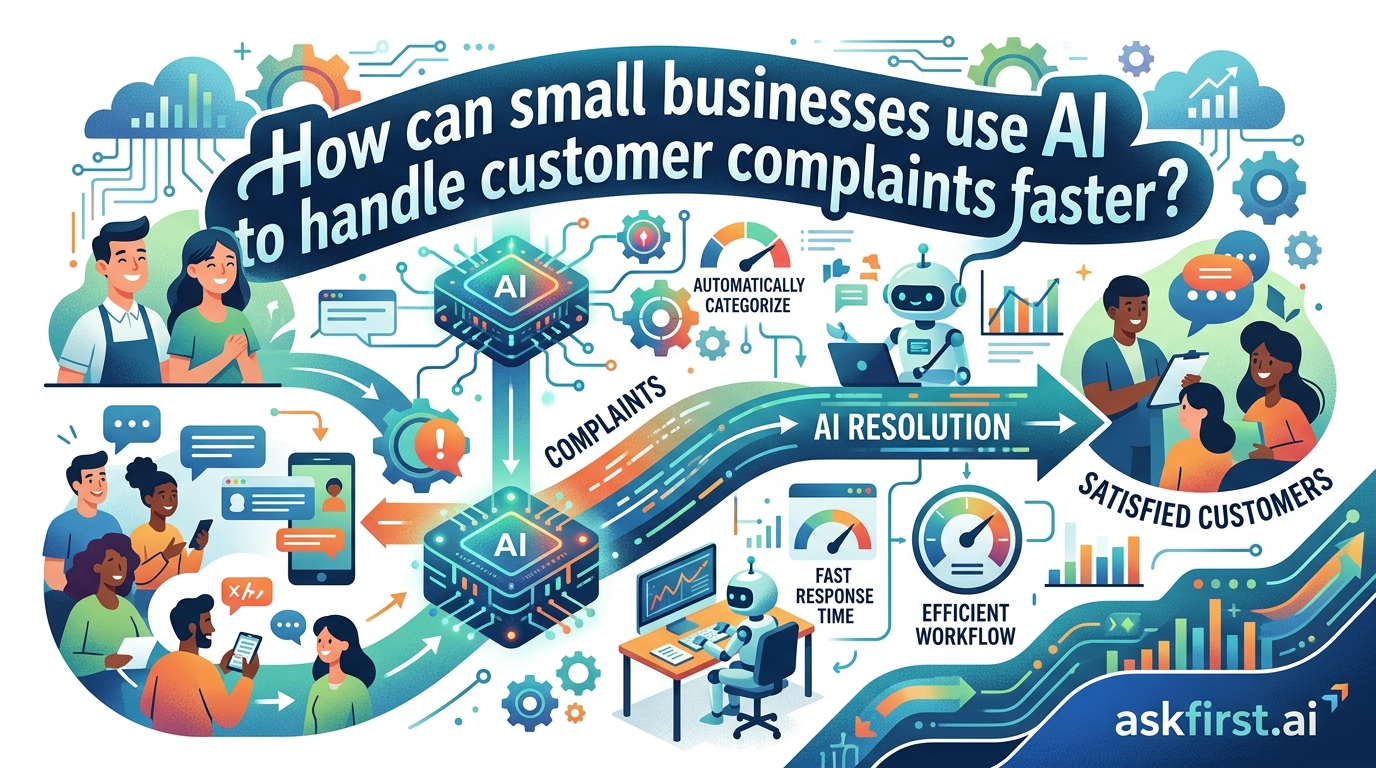
Before a complaint can be resolved, it must be understood. AI-powered sentiment analysis tools, such as those integrated into platforms like Zendesk or Freshdesk, use Natural Language Processing (NLP) to scan incoming emails, social media mentions, and chat logs. These systems categorize messages based on emotional tone—identifying urgency, frustration, or disappointment.
For instance, if a customer sends an email using aggressive language or keywords indicating a threat to leave a review, the AI automatically tags the ticket as "High Priority" and routes it to your most senior staff member. This ensures that the most volatile situations are addressed before they escalate into public relations disasters. As noted by Thomas H. Davenport in his seminal work The AI Advantage, the ability to prioritize data based on contextual importance is the primary value proposition of machine learning in business operations.
2. Implementing Intelligent Chatbots for Instant Triage
Small businesses often struggle with the "after-hours" gap, where complaints filed overnight go unanswered for twelve hours or more. Modern AI chatbots, powered by Large Language Models (LLMs), act as a 24/7 front-line defense. Unlike the rudimentary, rule-based bots of the past, today’s AI can engage in fluid, human-like dialogue to troubleshoot common issues.
Consider a boutique e-commerce store. If a customer complains about a missing package, an AI chatbot can verify the order number, check the tracking status via an API integration with the shipping carrier, and offer an immediate resolution—such as a discount code or a promise of expedited reshipment—without human intervention. This provides the customer with an instantaneous sense of resolution, which is often more important than the solution itself. According to research published by the Harvard Business Review, customers are willing to forgive a service failure if the response time is near-instantaneous.
3. Automating Knowledge Base Suggestions
One of the most effective ways to reduce the burden on your support team is to empower the customer to resolve their own complaints through AI-driven self-service. By implementing a "Smart Search" function on your FAQ page, the AI can analyze the user's query and surface the exact paragraph or video tutorial needed to fix their problem.
For example, if a customer types, "My printer is making a grinding noise," the AI doesn't just return a list of links; it provides a specific, step-by-step guide on how to clear a paper jam. This reduces the total volume of incoming complaints, allowing your human team to focus on complex, high-empathy scenarios where a machine simply cannot provide the necessary emotional nuance.
4. Enhancing Human Productivity with AI Assistance
The goal of AI in a small business is not to replace humans, but to serve as a "co-pilot." Tools like Grammarly Business or custom-trained AI prompts allow your staff to draft professional, empathetic responses in seconds. When a customer writes a long, complex complaint, an AI can summarize the core issue into three bullet points, allowing your employee to understand the context immediately without reading through five paragraphs of venting.
Furthermore, AI can suggest "Next Best Actions." If a customer is complaining about a delayed delivery, the AI can suggest that the representative offer a 15% refund or a free shipping voucher based on the customer’s lifetime value (LTV). This removes the guesswork for your staff and ensures consistency in your company’s policies.
5. Data Synthesis and Trend Identification
Finally, the most powerful aspect of AI for small businesses is its ability to identify recurring complaints that you might otherwise miss. By aggregating data from every interaction, AI can generate reports highlighting the "root cause" of dissatisfaction.
If your AI identifies that 30% of your complaints over the last month are related to a specific product batch, you can pivot your supply chain strategy or issue a proactive communication before the issue spreads. This is what Eric Ries describes in The Lean Startup as a "validated learning" loop. By using AI to turn customer complaints into actionable business intelligence, you stop viewing complaints as nuisances and start viewing them as free consulting services that tell you exactly how to improve your product.
Conclusion
For the small business owner, AI is not a luxury; it is an essential utility for survival. By deploying sentiment analysis to prioritize issues, utilizing intelligent chatbots for immediate triage, and using AI to provide your staff with real-time assistance and deep analytical insights, you can transform the customer complaint process from a drain on resources into a cornerstone of your brand’s reputation. The key is to implement these tools incrementally, ensuring that you maintain the human touch where it matters most while allowing technology to handle the heavy lifting of speed and data management.