The Olfactory-Immune Connection: A Biological Symbiosis
Modern science has uncovered an intriguing link between the scents of those closest to us and the internal workings of our immune system. While often viewed through the lens of romance or mere comfort, the phenomenon of scent-based biological signaling runs much deeper, potentially acting as a sophisticated mechanism for health optimization and evolutionary success.
The Major Histocompatibility Complex (MHC) Hypothesis
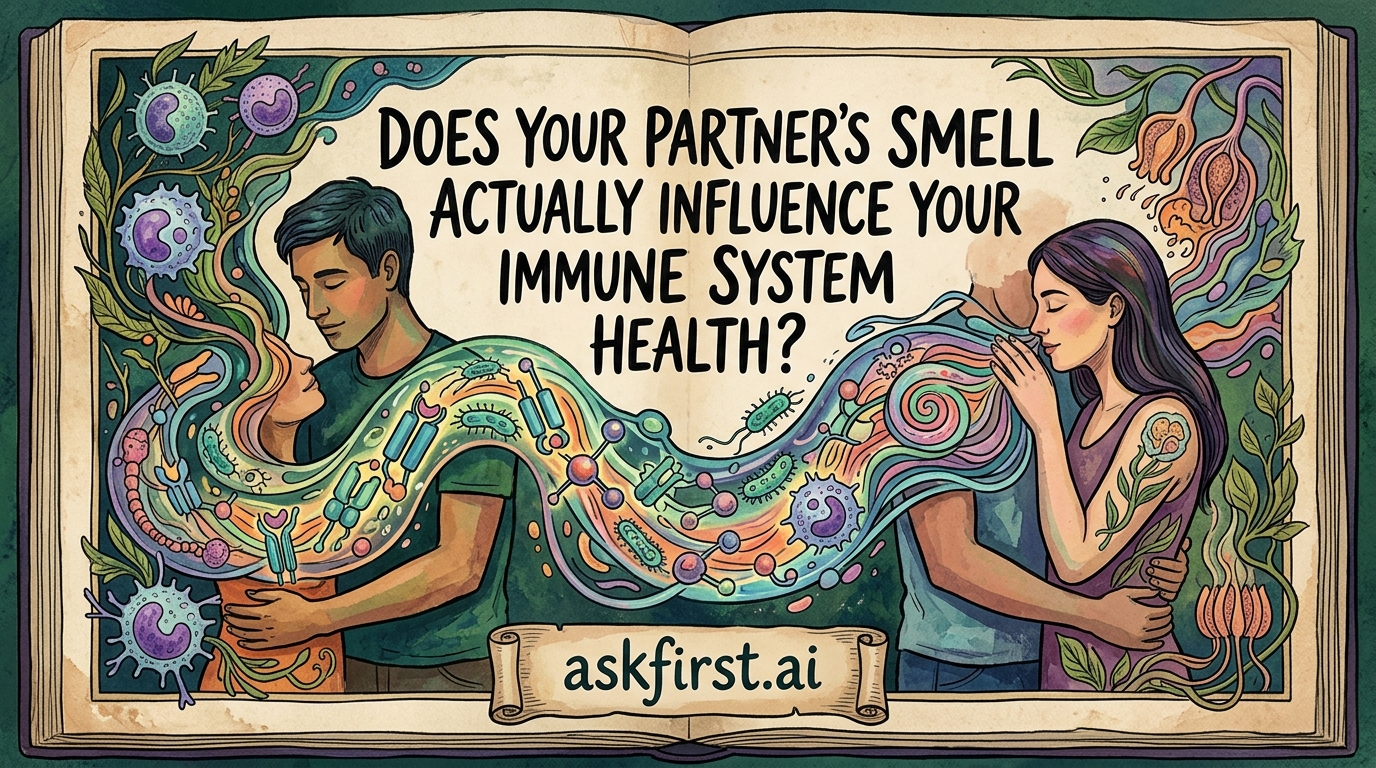
At the heart of this interaction is the Major Histocompatibility Complex (MHC), a set of genes that play a crucial role in our immune system by helping it recognize foreign pathogens. Research suggests that humans, much like other mammals, are subconsciously drawn to the scent profiles of individuals whose MHC genes differ from their own. This 'dissimilarity preference' is believed to serve a dual evolutionary purpose: it reduces the risk of inbreeding and creates offspring with a more diverse, and therefore more robust, immune system.
How Scent Modulates Immune Responses
When an individual is exposed to the specific pheromonal markers of a partner, the brain processes these olfactory inputs via the limbic system, the area responsible for emotion and memory. Evidence suggests that this sensory processing can trigger endocrine responses, influencing the release of cortisol, oxytocin, and even cytokines—proteins that serve as signaling molecules in immune regulation.
- Stress Mitigation: The familiarity and comfort associated with a partner’s scent have been shown to lower physiological stress levels. By reducing systemic cortisol, the body’s immune system is less likely to be suppressed, allowing for better homeostasis.
- Pheromonal Signaling: It is hypothesized that the chemosensory cues emitted by skin flora, which are modulated by individual genetic profiles, interact with the vomeronasal organ or general olfactory epithelium to subtly calibrate immune sensitivity.
The 'Social' Immune System
Beyond individual health, scientists describe the concept of a 'social immune system.' This is the idea that our immune health is not solely an internal project but a collaborative one. By surrounding ourselves with partners whose scent profiles promote physiological well-being, we effectively outsource some of the immune regulation tasks. This form of 'biological buffering' means that the mere presence—and specifically the scent—of a partner can act as a regulator for the autonomic nervous system.
Scientific Observations and Evidence
Studies conducted by biological anthropologists have frequently highlighted that women, in particular, show a heightened sensitivity to MHC-related scents during different phases of their hormonal cycles. While these signals are often subtle, they create a 'chemically-informed' preference that correlates with health outcomes in long-term relationships. Furthermore, research on oxytocin—often called the 'bonding hormone'—indicates that scent-induced bonding increases the expression of genes involved in cellular repair and pathogen defense, effectively boosting the body's baseline resistance.
Practical Applications for Wellbeing
Understanding this dynamic transforms how individuals view personal attraction. It suggests that attraction is not purely superficial but is a deep-seated biological drive towards immune optimization.
- Environment Matters: Surrounding oneself with familiar, 'compatible' scents is linked to better sleep quality, which is the cornerstone of a functional immune system.
- Stress Reduction: Utilizing a partner’s scent—such as wearing a worn garment during travel—has been proven in psychological studies to mitigate the negative health impacts of isolation and separation-induced stress.
- Holistic Health: Integrating olfactory awareness into overall wellness can encourage healthier interpersonal connections that sustain the body through complex chemical feedback loops.
Conclusion: A Legacy of Evolution
The influence of a partner’s smell on the immune system is a testament to the complexity of human biology. We are fundamentally connected to our environment and each other through a constant, invisible exchange of chemical data. While we may experience this as mere affection, it is, in reality, a high-functioning biological mechanism designed to ensure survival and health. By acknowledging and valuing these subtle olfactory signals, we gain a better appreciation for the profound, microscopic ways in which human relationships fortify our existence.