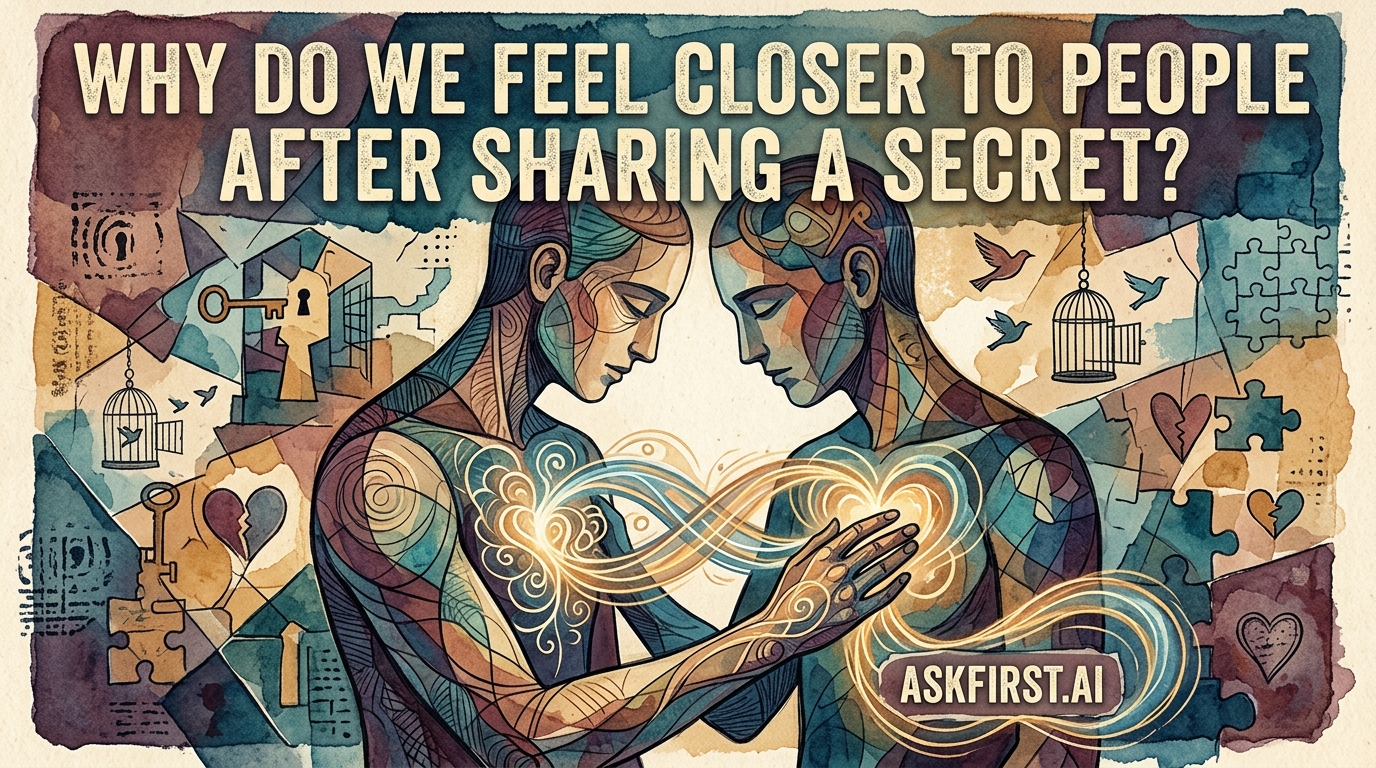
The Psychology of Vulnerability and Intimacy
The phenomenon of feeling an immediate, deepened connection with another individual after sharing a secret is a cornerstone of human social bonding. This experience is not merely an emotional accident; it is rooted in evolutionary psychology, neurobiology, and social theory. When individuals share confidential information, they engage in a reciprocal process that shifts the dynamic of a relationship from casual acquaintance to profound confidant.
The Mechanism of Self-Disclosure
At the heart of this experience is Self-Disclosure, a concept pioneered by psychologists Irwin Altman and Dalmas Taylor in their Social Penetration Theory. This theory posits that relationships develop through the systematic exchange of personal information. The process operates like an onion: surface-level interactions represent the outer layers, while deeply guarded secrets exist at the core. When a person chooses to share a secret, they effectively 'peel' back these layers, signaling a high level of trust. This act forces the receiver to evaluate their own willingness to be vulnerable, creating a psychological feedback loop.
The Neurobiology of Trust
When a secret is shared, the brain releases oxytocin, often referred to as the 'bonding hormone' or the 'cuddle chemical.' This neurotransmitter facilitates social recognition and builds trust. The act of sharing a secret triggers a release of oxytocin that lowers the brain's defense mechanisms, specifically in the amygdala, which regulates the fear response. By lowering these physiological barriers, the brain perceives the recipient as a safe harbor, thereby solidifying the bond. Furthermore, the secretion of dopamine during this exchange provides a sense of reward, reinforcing the desire to continue the interaction and deepen the intimacy.
The Power of Reciprocity
Humans are biologically wired for reciprocity. When one party shares a secret, the other party feels a powerful social pressure to reciprocate. This 'dyadic effect' suggests that if person A shares something personal, person B will feel compelled to match that level of vulnerability. This mutual exchange acts as a verification process for the relationship. If the recipient responds with empathy and support rather than judgment, the bond is validated. This validation confirms that the secret-sharer is 'safe' with this person, resulting in a sudden, intense feeling of closeness that might otherwise take months to build through standard conversation.
The Illusion of Shared Identity
Sharing a secret also fosters the sense of a 'private world' shared exclusively by two individuals. This creation of a shared reality acts as a social glue. By holding a piece of information that is not available to the public, the two participants form a coalition. Psychologically, this creates an 'in-group' dynamic, where the boundaries of the self are expanded to include the other person. The secret becomes a symbolic artifact of the relationship, functioning as a marker of the exclusive history shared between the two.
Risk-Reward Assessment
It is essential to recognize that this sensation is fueled by the inherent risk involved. Sharing a secret involves the risk of being judged, rejected, or having that information leaked. Because the cost of vulnerability is high, the brain perceives the act of surviving this disclosure as a significant achievement. This survival bias makes the relationship feel stronger; the subconscious registers that the connection has withstood a test of trust. As noted in the work of researcher Bren Brown, 'vulnerability is the birthplace of connection,' and the inherent danger of sharing a secret is exactly what gives the resulting connection its transformative power.
Practical Applications and Ethical Considerations
While sharing secrets can bridge gaps, it is important to handle this mechanism with emotional intelligence. The intensity of this connection can sometimes be mistaken for deeper commitment than exists in reality, a phenomenon often observed in professional or acquaintance-based settings. To ensure long-term stability in relationships:
- Prioritize Empathy: The recipient's reaction determines the survival of the bond.
- Maintain Boundaries: Not all secrets are healthy to share in every environment.
- Practice Active Listening: Acknowledging the weight of a secret is as important as the act of disclosure itself.
In summary, the rush of closeness experienced after sharing a secret is a sophisticated biological and psychological reaction to trust, risk, and emotional investment. It is the human brain's way of rewarding us for choosing to be authentic, ultimately turning two separate individuals into a singular, interconnected social unit.