The Cognitive Rewiring of Software Development
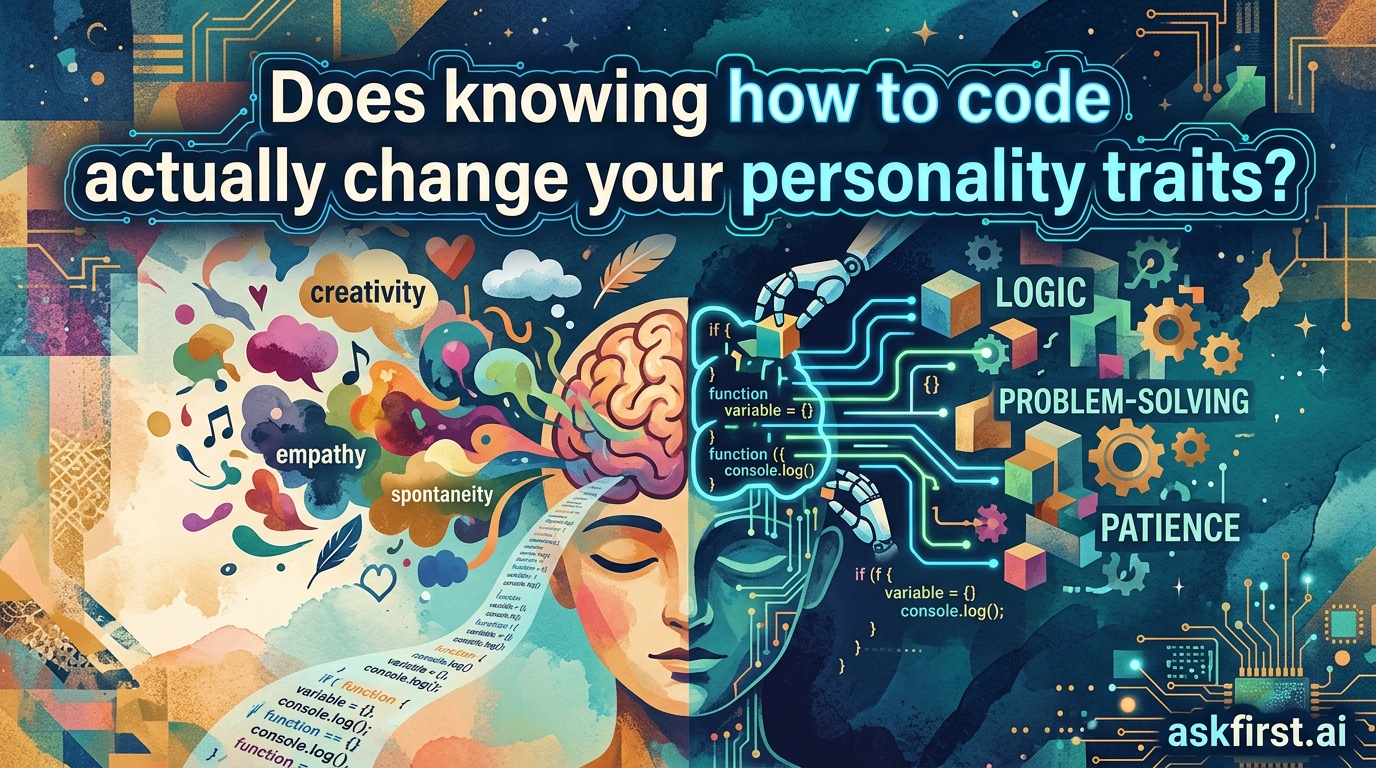
Recent psychological inquiry into the intersection of programming and cognition suggests that learning to code is not merely an acquisition of technical skills. Instead, it represents a fundamental shift in how the human brain processes information, approaches problem-solving, and reacts to failure. While personality traits—often categorized by the 'Big Five' model—are historically considered stable, the rigorous demands of algorithmic thinking exert a measurable influence on the cognitive frameworks that govern behavior.
The Systematic Mindset: Shift Toward Conscientiousness
One of the most profound impacts of programming is the cultivation of Conscientiousness. Software engineering requires an extreme attention to detail, as a single missing semicolon or an off-by-one error can collapse an entire system. This constant vigilance trains the prefrontal cortex to value order, organization, and meticulous planning. Individuals who code often find that this trait bleeds into their personal lives, leading to a heightened preference for structured environments and improved time-management skills.
- Attention to Detail: Programmers develop a 'debugging' mindset that forces them to examine the root cause of every discrepancy.
- Persistence: The cycle of encountering an error, researching, and iterating builds a psychological resilience known as 'grit'.
Neuroplasticity and Analytical Problem-Solving
Neuroscientific studies indicate that tasks requiring intensive logical processing, such as reading complex codebases or architecting software, engage the same neural pathways as learning a foreign language. This leads to Neuroplasticity, where the brain literally builds new synaptic connections to handle the demands of abstract thought. This leads to a personality trait characterized by increased analytical curiosity. Coders tend to view everyday life as a set of logical flows, looking for inefficiencies to optimize, which is a personality trait commonly referred to as 'systemizing'.
The Impact on Openness and Intellectual Curiosity
Programming inherently involves exploring new frameworks, languages, and paradigms. This exposure to constant technological evolution fosters a higher level of Openness to Experience. Because the field changes so rapidly, the personality trait of 'intellectual flexibility' becomes a survival mechanism. Coders are forced to abandon 'sunk cost' mentalities—if a codebase is inefficient, they must have the emotional detachment to refactor or rewrite it entirely. This translates into a personality that is more adaptable, more open to change, and less tethered to outdated traditions.
Reshaping Responses to Failure
In most professional domains, a failure is a permanent record of incompetence. In the world of coding, however, failure is merely 'compilation feedback'. This shift in perspective is the most significant personality development a programmer undergoes. By viewing an error message as a neutral data point rather than a moral failure, the programmer develops a Growth Mindset. This trait protects the ego and allows the individual to approach challenges with curiosity rather than anxiety. It effectively lowers the reactivity of the amygdala, the brain's alarm system, when encountering obstacles.
The Paradox of Introversion and Social Cognition
While there is a stereotype that coding fosters social withdrawal, it actually promotes a specific type of Analytical Communication. Effective programming requires the ability to explain complex abstractions to others through documentation and code reviews. Over time, this often softens the 'socially awkward' persona, replacing it with a pragmatic, direct communication style that prioritizes clarity over fluff. This is not a change in sociability but rather a refinement of social efficiency.
Synthesis of Traits
To summarize, the transformation involves:
- Refinement of Conscientiousness: Through constant testing and debugging cycles.
- Expansion of Openness: Due to the relentless evolution of the tech stack.
- Development of Emotional Stability: By reframing 'bugs' as learning opportunities rather than threats.
The Longevity of the 'Code Brain'
This transformation is not temporary. Because these cognitive habits are practiced daily, they become hardwired mental shortcuts. By 2030 and beyond, the ability to decompose problems—the 'computational thinking' trait—will likely be considered a foundational personality component for the modern professional. The discipline of coding does not just make one a better software engineer; it optimizes the user's interface with reality, making them more patient, more analytical, and significantly more resilient to the unpredictability of the modern world.