The Paradox of Subjective Time
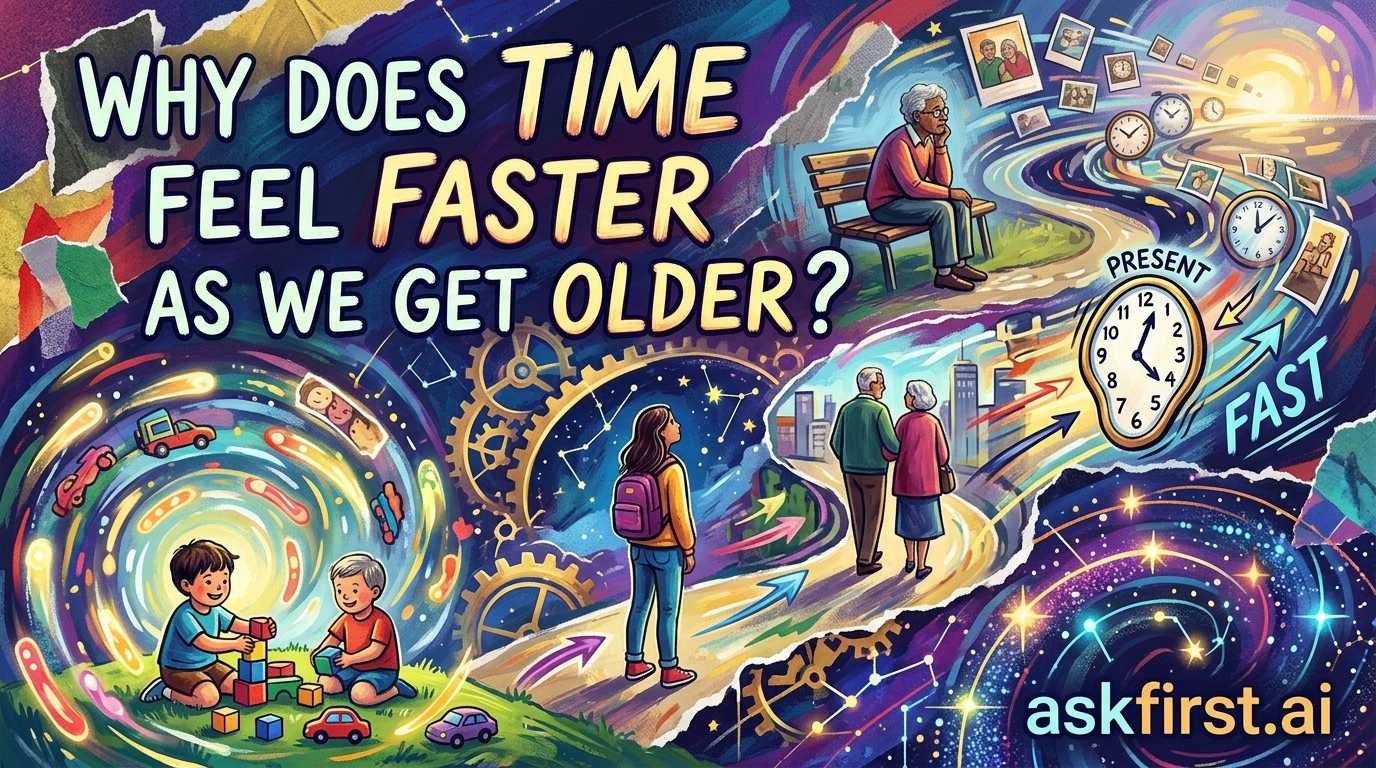
The perception that time accelerates as humans age is one of the most pervasive and well-documented psychological phenomena. While a clock ticks with unwavering mechanical precision, the human brain acts as a subjective filter, constantly reinterpreting the flow of seconds, days, and years. This phenomenon, often referred to as the 'Holiday Paradox' or the 'Proportional Theory,' suggests that as we gather more years, each individual unit of time represents a smaller percentage of our total existence. For a five-year-old, a single year accounts for twenty percent of their entire life experience. By contrast, for a fifty-year-old, one year is merely two percent. This mathematical perspective offers a foundation, but the reality is deeply rooted in neural processing.
The Role of Novelty and Memory
At the core of the perception of time lies the mechanism of memory encoding. When individuals encounter novel experiences—learning a new language, traveling to a foreign country, or starting a new career—the brain captures high-fidelity data, creating dense, intricate memories. Neurological research suggests that the brain requires more processing power to encode new stimuli. Because the brain is working harder to log these 'first-time' events, the retrospective experience of that time period feels longer. As life becomes more routine, the brain transitions into an autopilot mode. When there is no new data to encode, the brain essentially skips over periods of repetitive daily activity. Consequently, when looking back at a year filled with monotonous routines, there are fewer 'mental milestones' to anchor the experience, causing the brain to compress those months into what feels like a blink of an eye.
The Proportional Theory Explained
Beyond neurobiology, the Proportional Theory provides a compelling framework for understanding the speed of life. As proposed by philosopher Paul Janet in the late 19th century, this theory posits that our brain constructs time based on the ratio of the duration to our total lifespan. In early childhood, the brain is developing rapidly, and everything is new, creating a vibrant landscape of sensory input. As the years mount, these inputs become familiar. When an adult repeats a task that has been performed thousands of times before, the neural pathways are so well-established that the cognitive effort required to perform the action is negligible. This reduction in cognitive 'friction' translates directly into the feeling of time passing with frictionless speed.
How to Slow Down Subjective Time
Recognizing the mechanisms behind this phenomenon offers a unique opportunity to reclaim the sensation of time. To counteract the perception of acceleration, experts often recommend the following strategies:
- Cultivate Novelty: Actively seek out new hobbies, travel to unfamiliar places, or alter your daily commute. By breaking patterns, you force the brain out of its autopilot state and back into high-fidelity encoding.
- Mindfulness Practices: Engaging in deep, focused awareness—such as meditation—forces the mind to reside in the present moment rather than reflecting on the past or planning for the future. Mindfulness stops the brain from 'fast-forwarding' through the day.
- Documenting Experience: Keeping a journal or writing down unique daily observations encourages the brain to look for new details, effectively slowing down the subjective pace of life by assigning importance to everyday events.
- Learning New Skills: Mastery of a complex skill, such as playing a musical instrument, requires sustained attention and neuroplasticity. This forces the brain to spend more 'time' in the learning phase, which expands the perceived duration of the weeks and months spent in training.
The Scientific Consensus
Neuroscientists argue that the way our brains process information is essentially a calculation of entropy and predictability. The more predictable a life becomes, the more efficient the brain becomes at predicting the environment, and the less time the brain needs to 'spend' analyzing the input. It is this efficiency that leads to the subjective feeling of haste. In essence, the faster your brain processes your daily life, the faster your life seems to move. While this is an incredibly efficient evolutionary trait for navigating a complex world, it comes at the cost of the slow, deliberate time characteristic of childhood. By consciously introducing change and complexity, individuals can effectively 'stretch' their perceived time, leading to a richer and seemingly longer life experience.