The Invisible Influence: Olfactory Perception in Social Dynamics
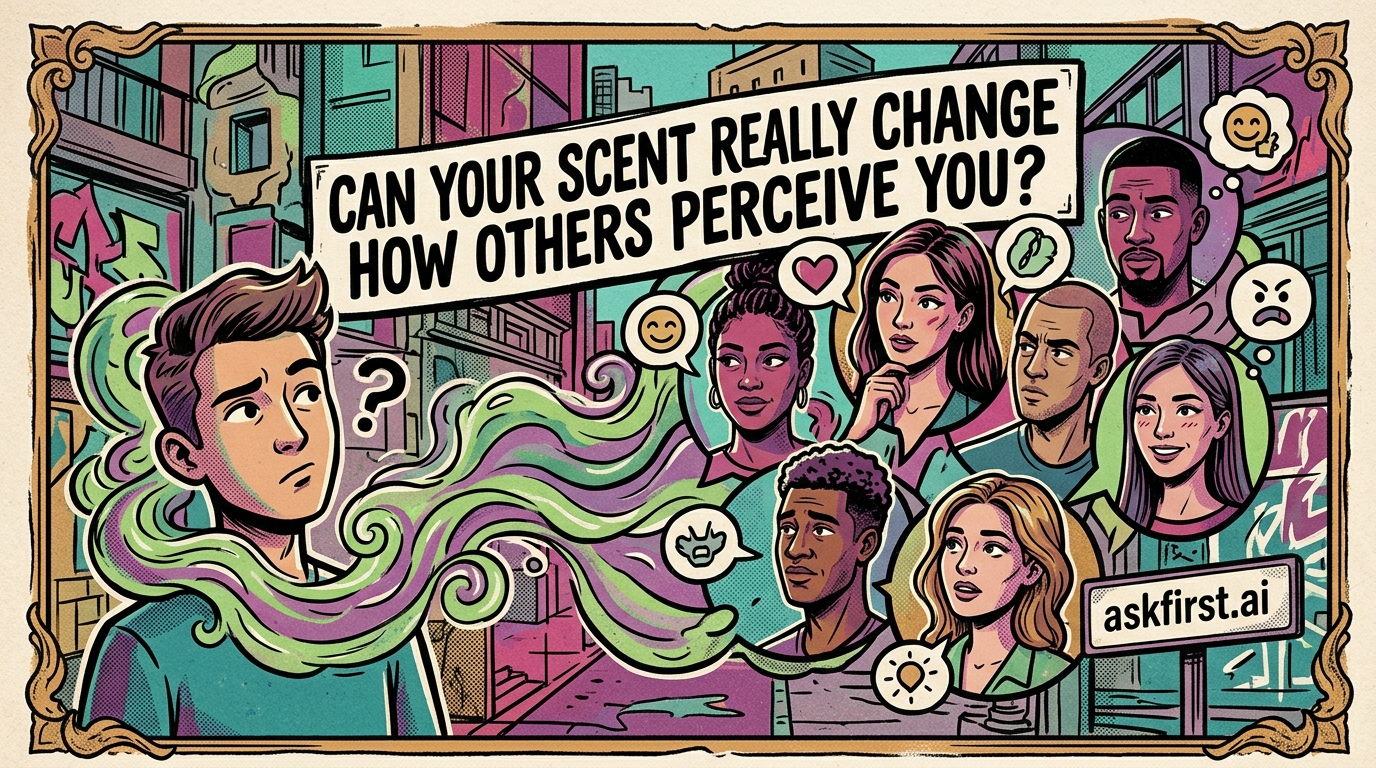
Human interaction is fundamentally multisensory, yet the role of scent remains the most overlooked and undervalued driver of social perception. While individuals prioritize visual cues like clothing or facial expressions, biological evidence suggests that the olfactory system acts as a silent arbiter of attraction, status, and trustworthiness. Scent does not merely decorate the surface of an individual; it penetrates the subconscious mind of the observer, triggering physiological responses that occur long before a conscious judgment is formed.
The Neurobiology of Smell
The reason scent is so powerful lies in the limbic system, the oldest part of the brain. Unlike sight or sound, which must be processed through the thalamus, olfactory signals travel directly to the amygdala and the hippocampus. These structures control emotion and memory. When an individual smells a particular scent, they are not simply 'noticing' it; they are experiencing an immediate, visceral emotional reaction. This is the physiological basis for the 'Proustian phenomenon,' where a scent triggers a flood of complex, subconscious associations that dictate how a person is perceived within seconds of an encounter.
How Scent Shapes Social Perception
1. Trustworthiness and Cooperation
Research published in studies regarding social cognition indicates that certain pleasant scents, such as citrus or floral notes, can prime the brain for prosocial behavior. When an environment is subtly infused with clean, fresh scents, participants in experiments have shown an increased willingness to trust strangers and engage in cooperative behavior. By wearing a fragrance that aligns with these olfactory markers, an individual can subconsciously signal 'openness' and 'reliability,' thereby lowering the defensive barriers of others before a conversation even begins.
2. Authority and Dominance
Scents also play a role in the perception of status. Woody, musky, and deep amber notes are often associated with strength, maturity, and authority. In professional environments, these scents can project an air of confidence and leadership. Conversely, overly synthetic or aggressively sweet scents can sometimes be perceived as a lack of professional calibration. The key is olfactory congruency: when the scent matches the professional context, the wearer is perceived as more capable and authoritative.
3. Attraction and Biological Compatibility
Beyond cultural conditioning, there is an evolutionary component to scent. The Major Histocompatibility Complex (MHC)—a set of genes involved in immune system functioning—influences personal body odor. Studies have suggested that humans may be naturally attracted to the scents of individuals whose MHC genes differ from their own, as this suggests a robust immune system for potential offspring. While modern perfume masks these subtle markers, the application of high-quality, subtle scents can enhance one's overall appeal by creating a balanced, non-offensive 'olfactory signature' that suggests vitality and health.
Practical Strategies for Olfactory Branding
To effectively harness the power of scent, consider the following evidence-based strategies:
- Consistency is Key: Develop an 'olfactory signature.' Using the same high-quality fragrance across professional and social contexts creates a Pavlovian association for those who interact with you regularly. It builds a sense of 'predictability,' which the brain equates with safety.
- Less is More: The goal of scent in social perception is to be discovered, not to be announced. If a scent is detectable from across the room, it triggers a 'defensive' response in the observer, which can lead to negative perceptions regarding narcissism or lack of social awareness.
- Contextual Calibration: Adjust fragrance choices based on the goal. A high-stakes meeting may call for subtle, earthy, or 'clean' scents that imply focus and composure. A social gathering or date might favor warmer, more complex fragrances that lean into intimacy and creativity.
The Science of Scent Memory
Memory and scent are inextricably linked. Because the brain codes odors and memories in the same region, the scent an individual chooses becomes an anchor. When someone encounters that scent again, the memory of that interaction—and the perception of the person associated with it—is reignited with emotional intensity. This is the ultimate tool in personal branding. If one consistently projects a 'warm and inviting' olfactory profile, others will eventually hardwire the expectation of friendliness into their perception of that person.
Conclusion
Scent is an invisible form of communication that bypasses logical scrutiny and goes straight to the emotional center of the brain. By understanding the psychological and biological impact of fragrance, individuals can deliberately curate the subconscious impressions they leave on others. It is not about changing one's identity, but about optimizing the silent cues that define how the world perceives the essence of a person.