The Neurobiological Transformation of Love
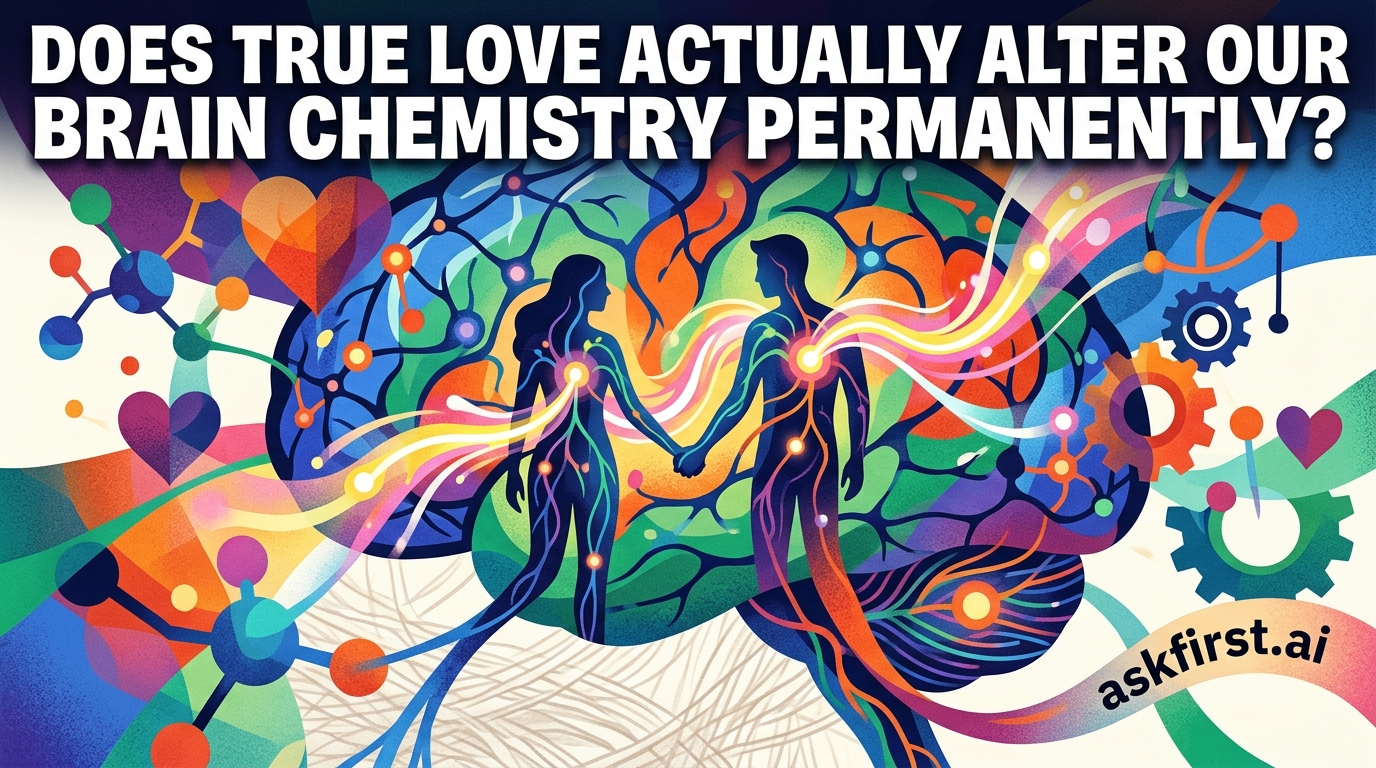
Love is often romanticized as a mystical experience, yet modern neuroscience reveals it to be a profound biological event capable of remapping the neural architecture of the human brain. The question of whether this alteration is permanent hinges on how the brain utilizes neuroplasticity to adapt to significant, long-term emotional bonds. When an individual enters a state of deep, committed attachment, the brain undergoes shifts in neurotransmitter regulation, hormonal balance, and structural synaptic connectivity.
The Neurochemical Cascade: Initial Attraction vs. Lasting Attachment
In the early stages of romantic love, the brain is flooded with dopamine, the primary neurotransmitter associated with reward and motivation. This creates a state of euphoria often compared to the neural patterns seen in substance addiction. However, as a relationship matures into deep, stable affection—what many characterize as 'true love'—the chemical profile shifts from dopamine-heavy reward seeking to a profile dominated by oxytocin and vasopressin.
- Oxytocin: Known as the 'cuddle hormone,' oxytocin is synthesized in the hypothalamus and released by the pituitary gland. It fosters social bonding, trust, and empathy. Repeated exposure to oxytocin during long-term partnerships effectively lowers the threshold for emotional connection, making the brain more responsive to the presence of the partner over time.
- Vasopressin: Linked to territoriality and protective behavior, vasopressin supports the drive to maintain long-term commitments, providing the biological foundation for monogamous tendencies.
Neuroplasticity: Rewiring for Two
Neuroplasticity is the brain's ability to reorganize itself by forming new neural connections throughout life. True love acts as a potent driver for this process. Studies in affective neuroscience suggest that long-term romantic attachment can lead to functional changes in the prefrontal cortex and the amygdala.
- Emotional Regulation: Research indicates that long-term partners exhibit synchronized neural oscillations in regions responsible for emotional regulation. The brain begins to rely on the partner as an 'external regulator' for stress, which physically alters the way the brain perceives external threats.
- Reward Sensitivity: Over years, the reward pathways become highly sensitized to the specific stimuli associated with the loved one. This is not merely a psychological preference; it is a structural reinforcement of synaptic pathways that value the partner's presence as a fundamental baseline for homeostasis.
Is the Change Permanent?
While neuroplasticity is inherently dynamic, meaning the brain is always capable of further change, the alterations induced by long-term love are remarkably enduring. Because these pathways are strengthened through thousands of repetitive interactions, they become 'engraved' in the neural circuitry. Even in the event of a separation, the brain retains the residual markers of these connections. This is why the emotional impact of a long-term partner is so profound; the brain has literally been rewired to function in tandem with another individual.
The Evolutionary Purpose of Neural Change
From an evolutionary biology perspective, this permanent alteration is a survival mechanism. By chemically and structurally tethering individuals, humans increase the likelihood of collaborative child-rearing and mutual protection. The brain does not 'forget' these deep configurations because they represent successful social strategies that maximized reproductive fitness and safety throughout human history.
Summary of Biological Impacts
- Synaptic Weighting: Long-term partners increase the synaptic weight between the hippocampus (memory) and the ventral striatum (reward), creating a brain that treats the partner as a 'top priority' stimulus.
- Cortisol Modulation: Long-term love effectively blunts the HPA-axis (hypothalamic-pituitary-adrenal axis), meaning individuals in healthy, long-term relationships show lower baseline levels of cortisol, the primary stress hormone.
- Cognitive Integration: The sense of 'we' is not just a poetic metaphor. Functional MRI scans show that the self-referential processing areas of the brain begin to overlap with those of the partner, physically expanding the neurological definition of 'self.'
Conclusion
True love does not merely influence the brain; it physically modifies it. Through the release of specialized neurochemicals and the activation of neuroplastic processes, our brains reorganize to accommodate the deep, long-term bonds that define our humanity. While the brain remains capable of change, the structural foundation laid by a lifetime of love is one of the most permanent and influential alterations an adult brain can undergo. It is a biological signature that fundamentally changes how we perceive the world, manage stress, and experience joy.