The Eternal Sweetness: Why Honey Defies Time
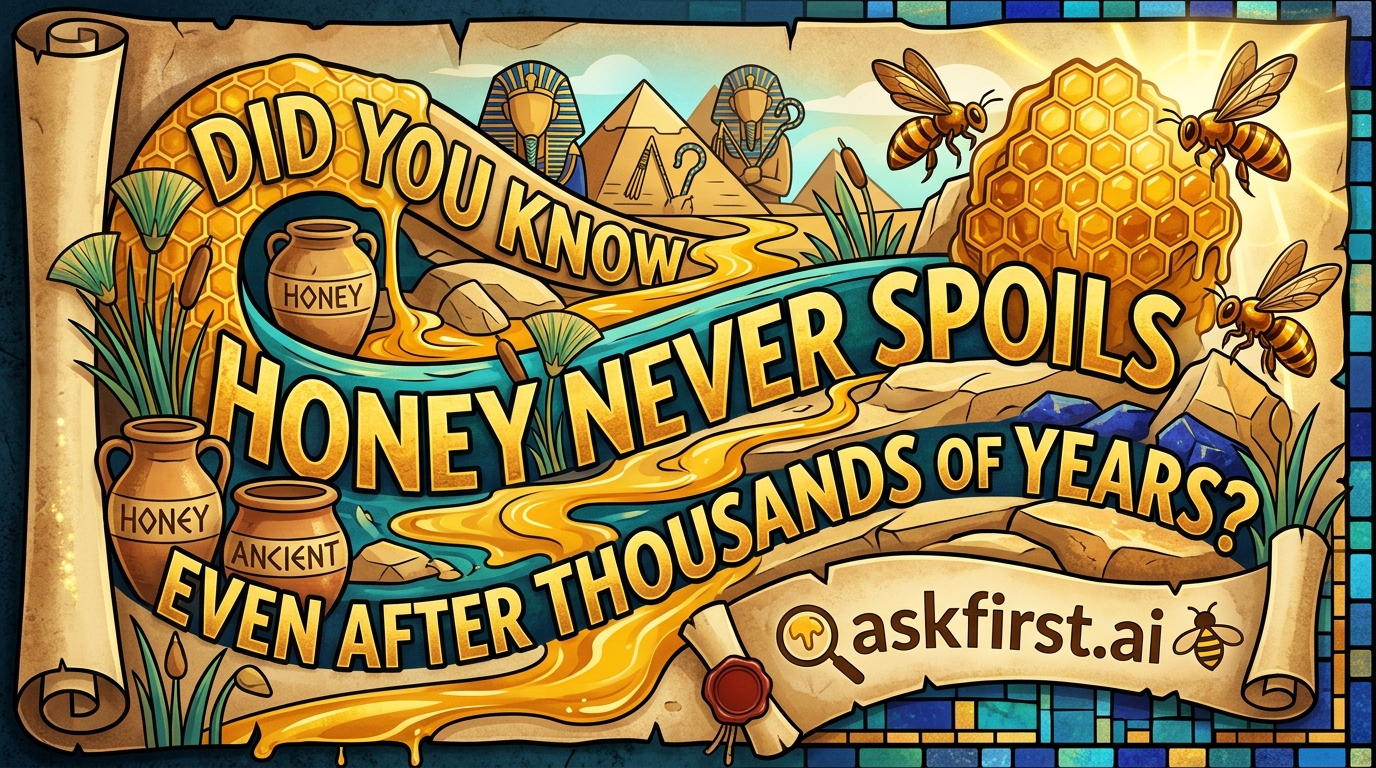
Honey, often referred to as the 'nectar of the gods,' is one of nature’s most fascinating substances. It is widely acknowledged that honey is the only food product capable of remaining edible indefinitely. Archaeologists have famously excavated pots of honey from ancient Egyptian tombs—dating back over 3,000 years—that were still perfectly preserved, viscous, and arguably edible. This phenomenon is not magic; it is a masterpiece of biological and chemical engineering orchestrated by honeybees.
The Chemical Secret: Why Spoilage Cannot Occur
To understand why honey does not spoil, one must look at its unique chemical composition and the environment that bees create within the hive. The endurance of honey is attributed to several critical factors:
- Low Moisture Content: Nectar, the raw material for honey, is primarily water and sugar. However, bees reduce the water content through rapid wing flapping, which evaporates excess moisture. Honey typically contains less than 18% water. Most bacteria and microorganisms require a moist environment to thrive and reproduce. With such low water activity, honey creates an osmotic pressure that effectively dehydrates any microorganism attempting to settle in it.
- High Acidity: Honey has a pH level ranging from 3 to 4.5. This level of acidity is sufficient to inhibit the growth of most bacteria that would normally cause food spoilage.
- Hydrogen Peroxide Production: When bees produce honey, they also secrete an enzyme called glucose oxidase. When this enzyme mixes with nectar, it breaks down into gluconic acid and hydrogen peroxide. The hydrogen peroxide acts as a potent antibacterial agent, serving as a defensive barrier against microbial invaders.
The Role of Osmosis
Osmosis is perhaps the most significant reason honey remains shelf-stable. Because honey is extremely concentrated in sugar (a supersaturated solution), it draws water out of any living cell that enters it through a process called osmotic shock. Should a stray yeast cell or bacterium land in a jar of honey, the sugar concentration effectively sucks the water out of the cell, dehydrating and killing it before it can cause any damage. This is the same principle that allows salt to cure meat; it creates an environment where life cannot persist.
Misconceptions: The Crystallization Myth
One common error consumers make is assuming that honey has 'gone bad' when it begins to crystallize. Crystallization is not a sign of spoilage; it is a natural, physical process. Because honey is a supersaturated sugar solution, the glucose molecules eventually precipitate out of the liquid state and form tiny crystals. This is influenced by the floral source of the nectar and the ambient temperature. To restore honey to its original, smooth texture, one simply needs to gently warm the jar in a water bath. This process reverts the crystals back into the liquid phase without affecting the nutritional value or the longevity of the honey.
Environmental Factors and Proper Storage
While honey is technically eternal, it remains susceptible to the surrounding environment. Because honey is hygroscopic—meaning it naturally absorbs moisture from the air—storing it in an improperly sealed container can lead to an increase in water content. If the moisture levels rise above 20%, the honey becomes vulnerable to fermentation, as wild yeasts can then activate. Therefore, to ensure that honey lasts for decades or even centuries, the following protocols should be observed:
- Seal Tightly: Always keep the lid tightly closed to prevent the absorption of ambient humidity.
- Stable Temperatures: While extreme heat can degrade the flavor profile and color over many years, cool, room-temperature environments are ideal for storage.
- Avoid Contamination: Never introduce moisture or foreign organic material (such as crumbs) into the jar, as this provides a localized environment where bacteria could potentially survive.
The Evolutionary Brilliance of the Honeybee
Humans have utilized honey for thousands of years not only as a sweetener but as a medicinal treatment for wounds and burns. Historically, honey was used as a topical dressing due to its antibacterial properties. The combination of its low water content, high acidity, and the presence of hydrogen peroxide makes it a hostile environment for infection. This evolutionary gift from the Apis mellifera is a testament to the complex synergy between flora and fauna. By creating a substance that survives the harshest of conditions, bees ensure a permanent energy reserve that remains stable regardless of the season. Honey is truly a marvel of natural preservation, bridging the gap between ancient history and modern convenience.