The Eternal Nectar: Why Honey Defies Time
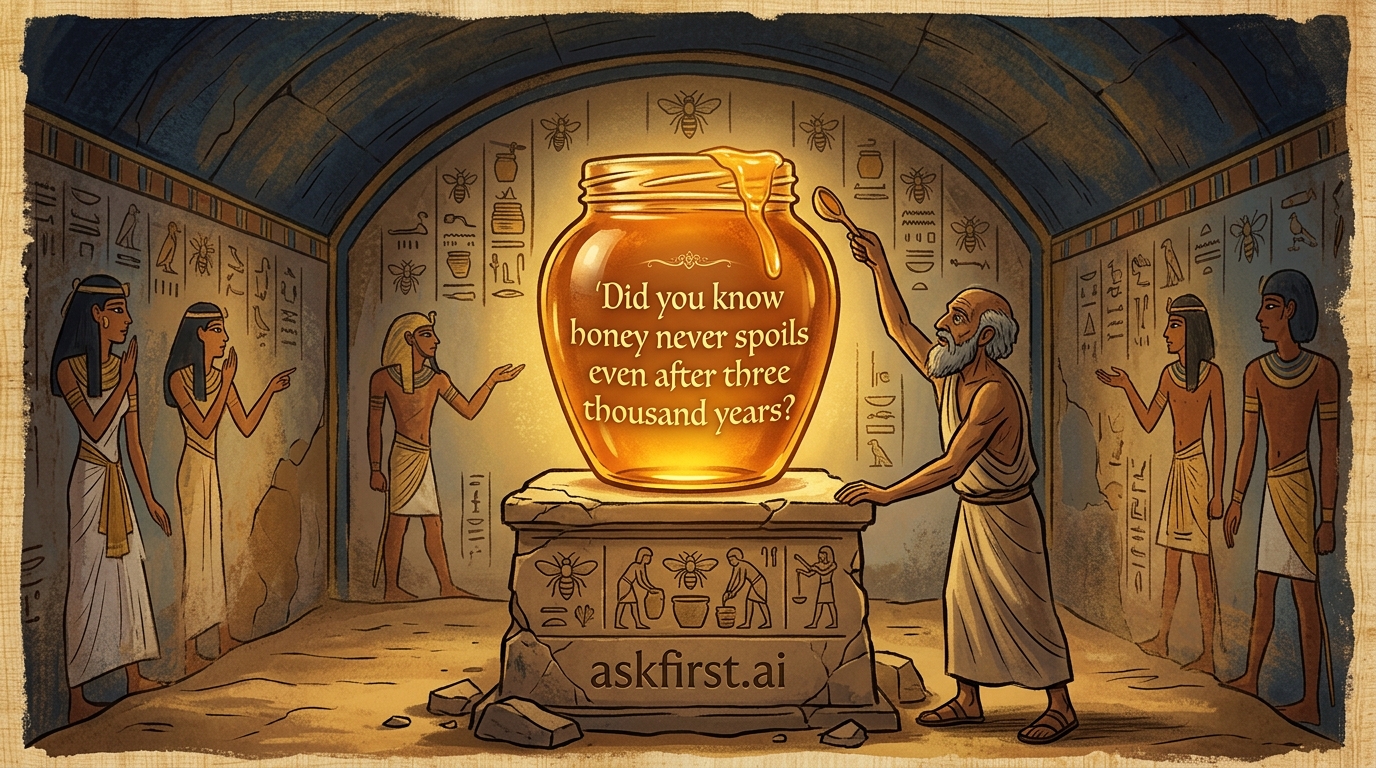
Honey, the golden liquid produced by bees, stands as one of nature's most extraordinary anomalies. It is a biological miracle that functions as a functional food capable of remaining edible for millennia. Archeologists have famously unearthed pots of honey in ancient Egyptian tombs, dating back over three thousand years, that were still perfectly preserved. But what are the scientific mechanisms that allow this substance to cheat the very nature of decay?
The Chemistry of Immortality
There are several distinct factors that work in harmony to prevent honey from spoiling:
- Low Water Content (Hygroscopic nature): Raw honey is naturally low in water. It is highly hygroscopic, meaning it absorbs moisture from its surroundings. Because bacteria and microorganisms require moisture to thrive, the low water content in honey effectively dehydrates any bacteria that attempt to colonize it, leading to their demise.
- High Acidity: Honey has a pH level that typically ranges between 3 and 4.5. This level of acidity is inhospitable to most pathogens and microbial life forms, acting as a natural barrier against contamination.
- Hydrogen Peroxide Production: During the process of turning nectar into honey, bees add an enzyme called glucose oxidase. When honey is exposed to the air, this enzyme reacts to produce hydrogen peroxide, a mild antiseptic that inhibits the growth of unwanted bacteria.
The Role of the Honey Bee
It is essential to recognize the architectural labor performed by the bee. Through the rapid beating of their wings, bees essentially air-dry the nectar, evaporating excess water until the substance reaches the ideal concentration of sugar. This collaborative, highly efficient processing technique ensures the substance remains shelf-stable indefinitely, provided it is sealed properly.
Crystallization: A Sign of Authenticity
Many consumers mistakenly believe that if honey turns into a solid, sugary mass, it has spoiled. This is a common misconception. Crystallization is a natural physical process caused by the high glucose content in the substance. When glucose separates from the water in the honey, it forms crystals. This does not impact the safety or nutritional quality of the food. If this happens, simply placing the jar in warm water will return the honey to its liquid state. It is actually a marker of high-quality, pure honey.
Nutritional and Medicinal Legacy
Beyond its shelf-life, honey has been utilized throughout human history as a medicinal staple. It acts as a natural humectant and possesses antioxidant properties. Historical texts from the Greeks, Romans, and Egyptians highlight honey's role not just as a sweetener, but as a treatment for burns, skin ailments, and respiratory issues. Its ability to maintain its chemical integrity over long periods ensures that these benefits remain intact regardless of how long the honey has been stored.
Storage Considerations
While honey does not spoil, its quality can be affected by improper storage. To maintain its flavor profile and prevent crystallization, consider the following:
- Airtight Sealing: Ensure the container is tightly closed to prevent moisture absorption, which could technically lower the sugar concentration enough to allow yeast to grow.
- Cool, Dry Environments: Keep containers away from direct sunlight or extreme temperature fluctuations. A pantry shelf is generally the ideal location.
- Metal Interaction: Avoid storing honey in metal containers for long periods, as the acidity of the honey can react with certain metals, affecting the flavor profile.
Conclusion
Honey represents one of the most reliable food sources in human civilization. Its unique combination of acidity, enzyme activity, and low moisture content creates an environment where nothing can survive. As a product of both natural chemistry and industrious insect labor, honey remains an evergreen testament to the power of nature. When one opens a jar, they are potentially accessing the same biological perfection that bees produced centuries ago. It is a beautiful synergy of science and sustenance that continues to fascinate researchers and food enthusiasts globally.