The Harmony of Personality and Sound
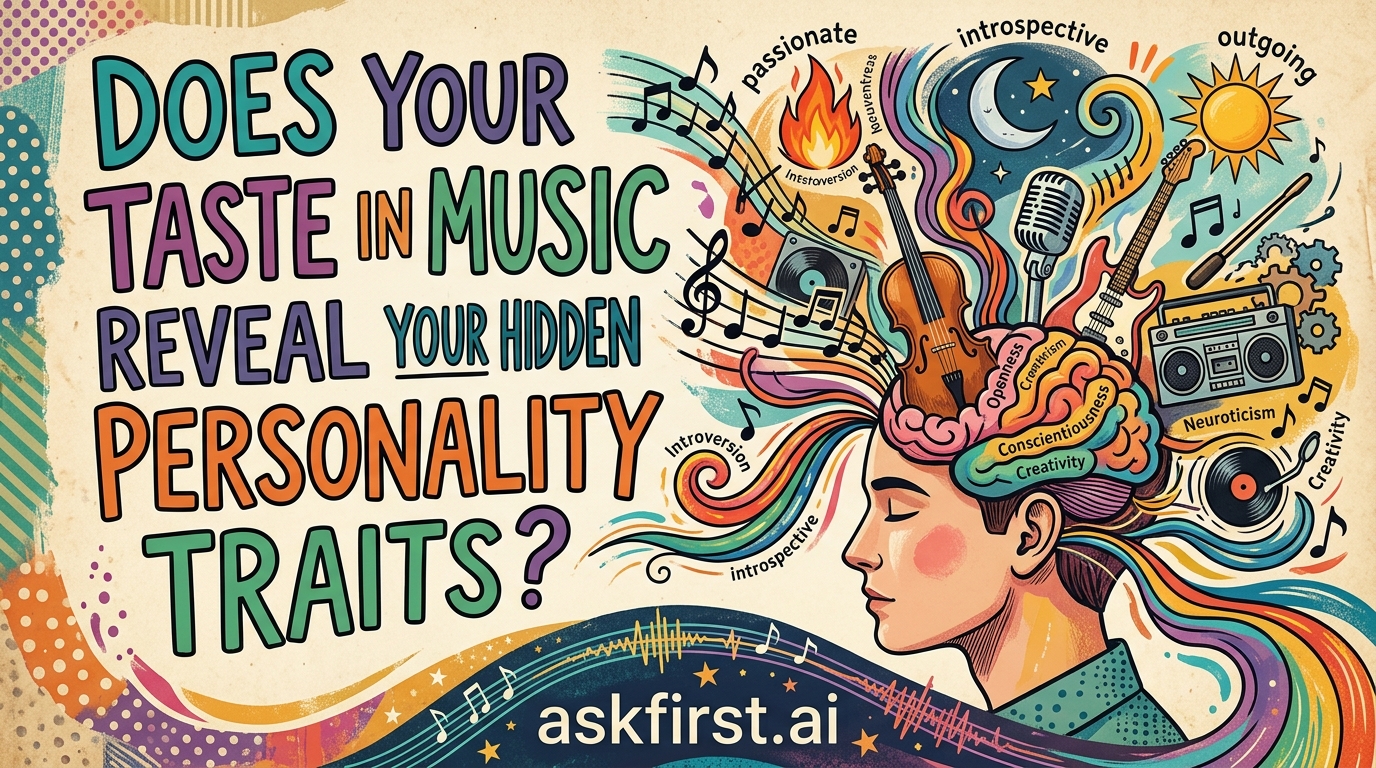
Scientific research into music psychology suggests that personal playlists serve as a digital fingerprint of the human psyche. The intersection between melodic preference and core psychological dimensions—often measured by the Big Five personality traits: Openness, Conscientiousness, Extraversion, Agreeableness, and Neuroticism—reveals that music is far more than mere entertainment. It is a psychological reflection of how an individual processes the world.
The Openness to Experience Connection
Individuals who score high in the 'Openness to Experience' trait frequently gravitate toward complex, intricate, and non-conventional musical genres. This includes styles such as jazz, classical, folk, and experimental electronic music. These listeners prioritize novelty and complexity over repetition. Psychological studies indicate that this openness often translates into a desire for new experiences, intellectual curiosity, and a willingness to challenge established norms. The cognitive engagement required to decode complex jazz structures mirrors the cognitive flexibility associated with creative thinking and problem-solving.
Extraversion and Energy-Driven Genres
Extraverts are historically linked to music characterized by heavy basslines, upbeat tempos, and high-energy production. Pop, hip-hop, and certain subgenres of dance music typically dominate the libraries of those who thrive on external stimulation. The preference for high-arousal music stems from the need to match or amplify physiological arousal levels. Because extraverts naturally seek social engagement and sensory stimulation, they are magnetically drawn to music that fills a space, creates a social atmosphere, or provides a rhythmic foundation for movement and interaction.
Agreeableness and the Emotional Landscape
Individuals who score high on Agreeableness—the trait associated with empathy, cooperation, and altruism—tend to prefer music with positive emotional valence. This often involves acoustic tracks, soft pop, or romantic compositions. For these listeners, music serves as a vehicle for emotional connection and social bonding. They often utilize music to regulate interpersonal relationships and maintain a peaceful internal state. Research suggests that high agreeableness correlates with a preference for melodic simplicity, as it avoids the confrontational dissonance found in heavier or highly abstract genres.
Conscientiousness: The Order of Sound
Conscientious individuals, who prioritize organization, discipline, and achievement, often display a preference for structured and predictable music. While this might suggest an avoidance of complexity, it actually points to an appreciation for technical mastery and lyrical clarity. Think of listeners who appreciate country, religious, or well-produced acoustic pop. These genres often feature clear narratives and stable rhythms, which align with the psychological need for coherence and order in the environment.
The Neuroticism and Emotional Regulation Axis
Neuroticism involves a greater sensitivity to negative emotions. People who score high in this area often use music as a form of emotional regulation, but in a different way than others. They may gravitate toward intense music—not necessarily to feel 'sad,' but to feel 'understood.' This explains why some people find comfort in darker, melancholic, or intense rock music. It provides an outlet for catharsis, allowing for the processing of complex emotional states that might otherwise feel overwhelming. It is not necessarily about the genre, but about the specific emotional depth and intensity of the composition.
The Science of 'Musical Sophistication'
Psychologists David Greenberg and Peter Rentfrow have championed the 'MUSIC' model, which categorizes preferences into five dimensions: Mellow, Unpretentious, Sophisticated, Intense, and Contemporary.
- Mellow: Associated with low-arousal, emotional, and reflective personality traits.
- Unpretentious: Correlates with a need for stability and reliability.
- Sophisticated: Tied to high IQ and creative openness.
- Intense: Linked to a desire for sensation-seeking and emotional depth.
- Contemporary: Reflects an interest in current cultural trends and social status.
Why This Matters: The Mirror of Identity
Understanding these patterns helps dismantle the myth that music choice is purely a matter of upbringing or cultural exposure. While environment plays a role, individual personality dictates the selection within that environment. When individuals select their favorite songs, they are subconsciously reinforcing their own identity.
Practical Implications for Modern Life
- Workplace Productivity: Knowing if one prefers complex music (for flow states) or mellow music (for stress reduction) can optimize task performance.
- Social Dynamics: Recognizing these patterns can foster empathy. Understanding that a peer listens to 'intense' music not out of aggression, but as a mechanism for emotional regulation, changes the nature of the social connection.
- Self-Discovery: By analyzing a personal playlist through this lens, one might uncover hidden facets of their own temperament.
Ultimately, while one's personality is multifaceted and complex, the music one returns to time and again acts as an enduring companion. It provides a consistent acoustic map of the internal landscape, documenting how one feels, thinks, and relates to the world.