The Psychology of Persistent Regret: An Evolutionary Insight
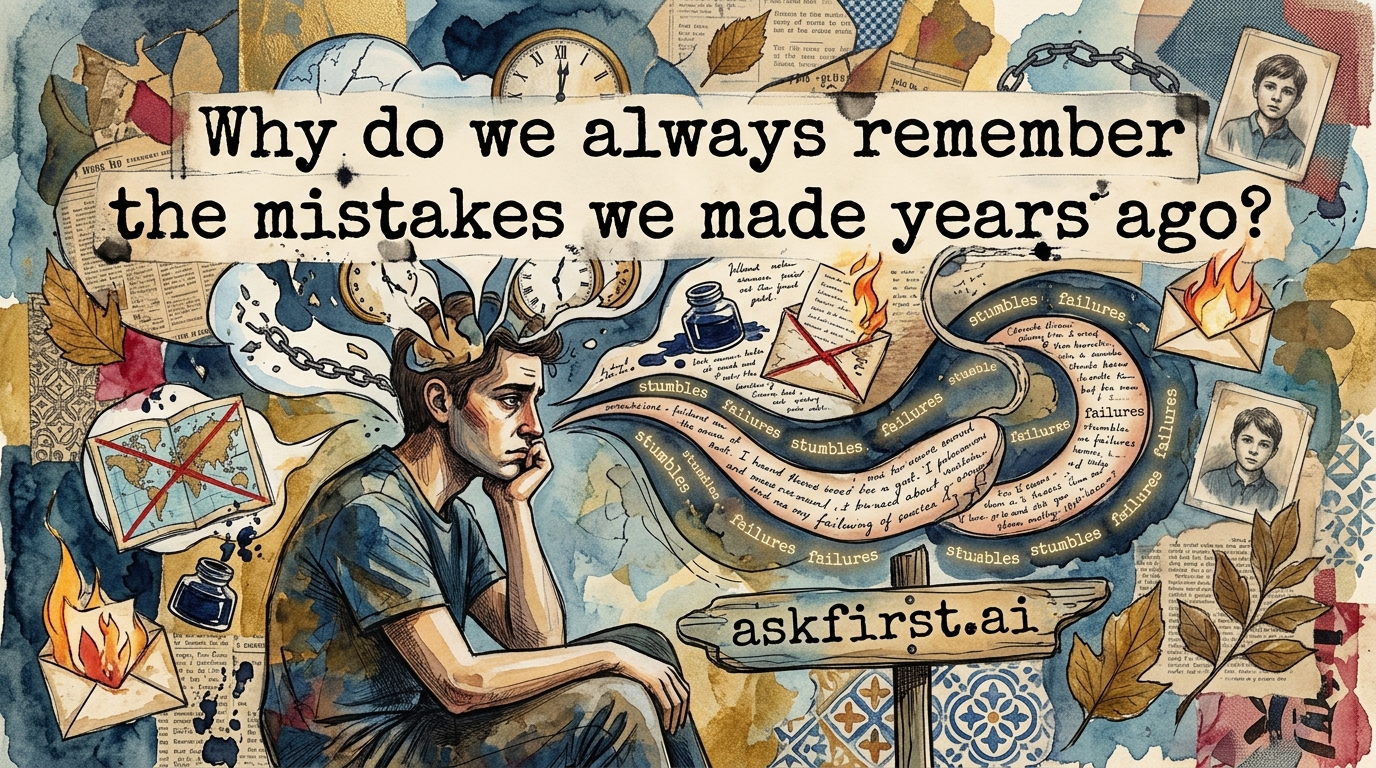
Human memory is not a perfect historical archive; rather, it is a highly selective survival tool designed by evolution to ensure future prosperity. When an individual recalls a mistake made years prior—the social faux pas at a decade-old party or a poor career choice from early adulthood—it is not merely an accident of neural firing. Instead, this phenomenon represents the brain's attempt to optimize future decision-making through a mechanism known as Negativity Bias.
The Role of Negativity Bias
Negativity bias dictates that human beings are neurologically hard-wired to prioritize negative information over positive experiences. From an ancestral standpoint, failing to remember a predator or a toxic plant had dire consequences, while forgetting the location of a plentiful berry bush was merely inconvenient. Consequently, the brain allocates more cognitive resources to process and store information regarding errors, dangers, and social rejections. This is why the 'sting' of a mistake remains sharp long after the joy of a success has faded.
- The Zeigarnik Effect: This psychological principle suggests that the human brain retains greater recall for interrupted or incomplete tasks compared to finished ones. Mistakes often represent 'unfinished business' in the internal narrative, leaving the brain in a state of high alert until it perceives a resolution or learning outcome.
- Social Signaling: For social creatures, reputational damage is a severe threat. Remembering past mistakes serves as a psychological safety buffer, constantly reminding the individual of behaviors that triggered negative reactions from their community, thereby preventing future ostracization.
The Cognitive Anatomy of Rumination
When these memories surface, they often trigger rumination, the process of repetitively thinking about past events. While often viewed as a negative cycle, rumination functions as an internal simulation engine. By mentally 'replaying' the scenario, the brain attempts to find alternative paths or corrective strategies that could have yielded a better result. This is an essential component of high-level problem-solving and social intelligence.
- Re-simulation: The brain simulates the mistake to verify that it now possesses the tools or knowledge required to avoid a repetition of the event.
- Threat Assessment: It cross-references current circumstances against the old memory to ensure that the individual is no longer in a vulnerable position.
- Self-Correction: The emotional weight attached to the memory acts as a 'pain signal,' reinforcing the behavior to avoid repeating the specific error.
The Role of Emotional Tagging
Memories are rarely stored in isolation; they are deeply intertwined with emotional states. This process, known as Emotional Tagging, involves the amygdala—the brain's emotional processing center—sending signals to the hippocampus to strengthen the storage of events associated with strong emotional arousal. Because mistakes are often accompanied by shame, embarrassment, or fear, these memories are effectively 'highlighted' in the neural network, making them far easier to retrieve than neutral or mundane experiences.
Harnessing the Power of Past Mistakes
Instead of viewing these intrusive memories as purely detrimental, one might consider them a diagnostic tool for personal growth. When a memory from years ago feels particularly vivid, it indicates that the mind is still attempting to derive value from that experience. Rather than avoiding the thought, professional psychology often suggests the following strategies to transition from rumination to resolution:
- Cognitive Reframing: Consciously shift the narrative from 'I was foolish' to 'I was learning.' Recognize that the person who made the mistake lacked the experience, wisdom, or context held today.
- Externalization: Write down the mistake and, more importantly, write down the lesson learned. This provides the brain with a sense of 'completion,' potentially satisfying the requirements of the Zeigarnik Effect and allowing the memory to shift from active processing to long-term storage.
- The Perspective Gap: Understand the 'Spotlight Effect,' where individuals overestimate the degree to which others notice and remember their personal mistakes. While the memory is vivid to the actor, it is often non-existent in the minds of others.
Conclusion: The Brain as a Historian
Ultimately, the ability to vividly remember past errors is a testament to human resilience and learning capacity. By refining its internal database, the brain attempts to create a more efficient, successful version of the individual. Remembering mistakes is not a sign of a flawed mind; it is a sign of a mind that is constantly striving for improvement, safety, and social alignment in an unpredictable world.