The Chronological Illusion: Why Time Accelerates With Age
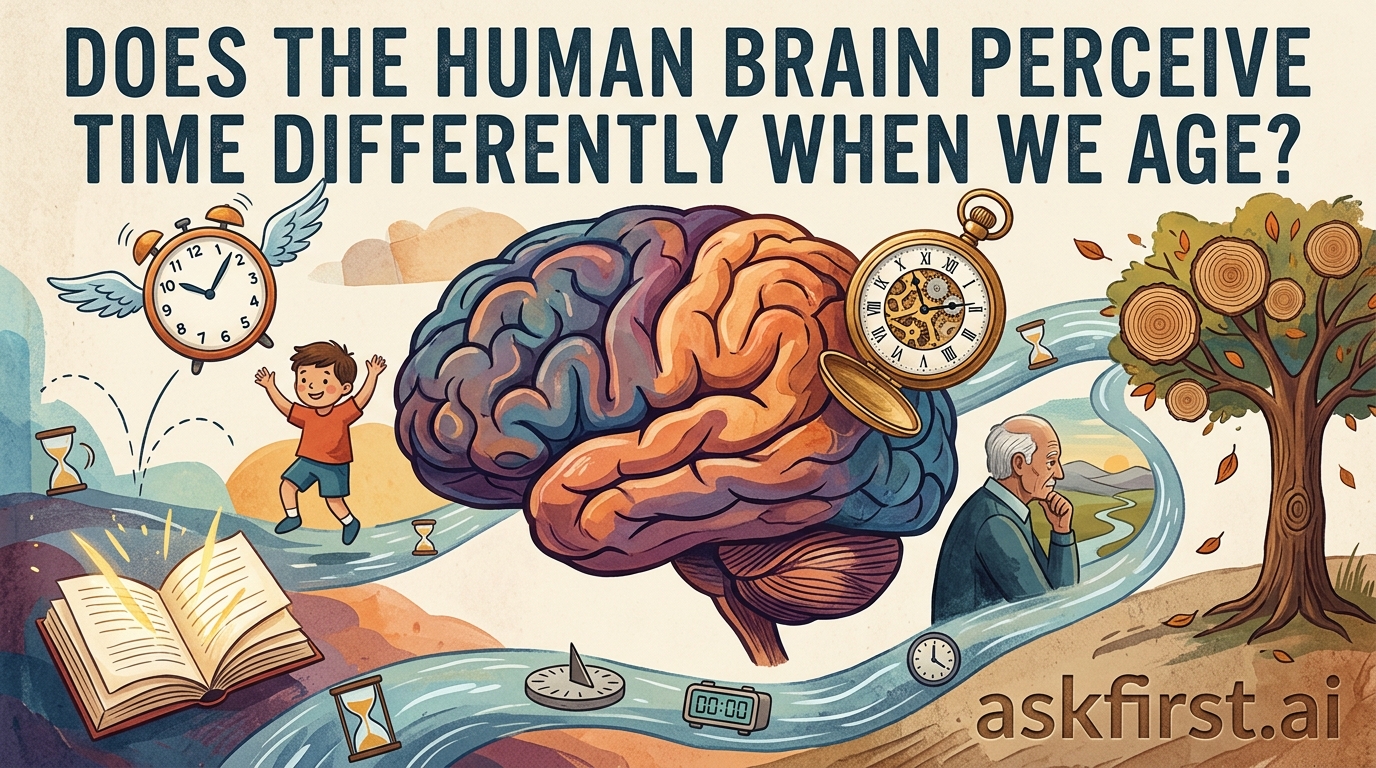
It is a universal experience that as individuals transition from childhood into adulthood and then into seniority, the perceived speed of time appears to accelerate significantly. Summers that once felt like infinite stretches of discovery in youth seem to compress into mere fleeting moments in later life. This phenomenon is not merely a nostalgic quirk; it is a subject of rigorous scientific inquiry involving cognitive psychology and neurobiology. The brain does not possess a singular "clock" organ; rather, time perception is a constructive process built from various sensory inputs and memory consolidation patterns.
The Proportional Theory of Perception
One of the most compelling explanations for the shifting perception of time is the Proportional Theory, first proposed by Paul Janet in 1877. This theory posits that the perceived duration of a year is proportional to the total amount of time a person has already lived. For a five-year-old child, one year represents twenty percent of their entire life experience. In contrast, for a fifty-year-old, a single year represents only two percent of their existence. Consequently, as the "unit" of time becomes a smaller fraction of the total life span, the brain instinctively perceives it as passing more quickly. This mathematical framework provides a robust foundation for why the subjective velocity of life seems to increase incrementally.
Memory Encoding and Novelty
Another critical factor involves the way the brain stores memories. The brain is an efficiency machine that prioritizes the encoding of new, novel information. When a child experiences the world, almost every day involves encountering new stimuli—new faces, new environments, and new academic challenges. Because these experiences are novel, the brain allocates more neural resources to process and "write" them into long-term memory.
- Novelty leads to density: More dense memory structures result in the retrospective feeling that a period lasted longer.
- Routine leads to compression: As we age, life becomes more predictable. Habits, routines, and familiar environments require less "cognitive energy" to process.
When the brain records fewer unique details during a day, there is less raw data for the mind to review when looking back at a period of time. This lack of rich memory markers creates an "illusion of speed," where weeks or months appear to evaporate because they are stored as repetitive, low-detail segments rather than vivid, high-definition sequences.
Neurobiological Mechanisms of Timing
Neurological research indicates that the rate at which our internal "clocks" tick may also be influenced by the maturation of the brain. The neurotransmitter dopamine plays a central role in how we perceive intervals. Studies suggest that dopamine levels can influence the firing rates of neurons in the basal ganglia, which is linked to our internal timing mechanism. As individuals age, changes in dopaminergic pathways might alter the frequency of internal "ticks," causing the brain to register external events at a slightly different rhythmic pace. Furthermore, the slow degradation of signal processing speeds in the nervous system—a natural byproduct of aging—may cause the brain to perceive the external world as moving faster simply because the internal processing of "now" is slightly less rapid than it was in youth.
Practical Implications for "Slowing Down" Time
If the perception of time is tied to the density of new information and novelty, then the antidote to the feeling that life is accelerating lies in the conscious pursuit of new experiences. This is often referred to as psychological expansion.
- Introduce Novelty: By deliberately breaking routines—learning a new instrument, traveling to unfamiliar locations, or engaging in cognitively demanding tasks—we force the brain to increase its sampling rate of experience.
- Practice Mindfulness: Being fully present in the current moment forces the brain to dwell on sensory details, preventing the "autopilot" mode that leads to time compression.
- Document and Reflect: Engaging in reflective activities, such as journaling or practicing gratitude, helps to solidify experiences in memory, effectively "thickening" the timeline of one's own history.
Conclusion: The Subjective Nature of Reality
Ultimately, time is not merely a rigid measurement on a mechanical clock; it is a cognitive construction. The brain serves as both the architect and the witness of our experience. While we cannot stop the mechanical march of years, understanding the neuro-cognitive mechanisms of time perception allows individuals to reclaim their experience of the present. By choosing to embrace curiosity and novelty, one can effectively widen the window of life, ensuring that the years ahead feel as expansive and rich as the years behind.