The Psychology of Persistent Memory
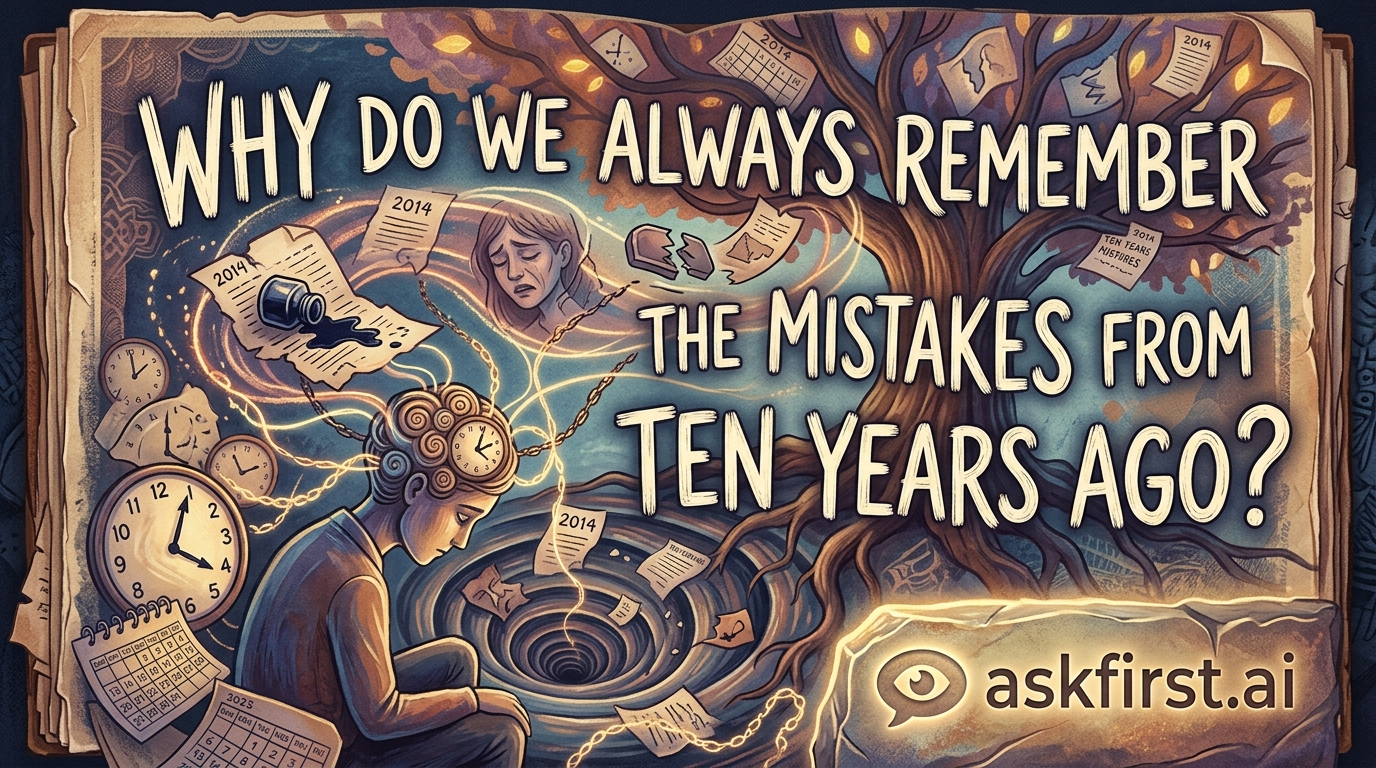
The human brain is not a passive recording device. It does not store experiences with equal weight; instead, it operates as a selective, survival-oriented filter. When the mind fixates on a blunder from a decade ago, it is not merely reliving a moment of shame. It is engaging in a complex neurobiological process known as the Zeigarnik Effect coupled with the Negativity Bias. The human brain is evolutionarily wired to prioritize survival, which necessitates paying far more attention to potential threats—including social rejection—than to mundane successes.
The Zeigarnik Effect: Why Unfinished Business Lingers
Named after psychologist Bluma Zeigarnik, this principle dictates that the human brain remembers uncompleted tasks better than completed ones. When a mistake occurs, it often represents an unresolved social or professional interaction. If the situation was not "closed" with a resolution, the brain keeps the memory in an active state of high-priority retrieval. It essentially labels the mistake as an "open loop," causing it to periodically surface in consciousness as a reminder that the brain has not yet learned the necessary lesson to prevent future recurrence.
The Negativity Bias and Emotional Salience
Science suggests that negative experiences are more cognitively "sticky" than positive ones. This phenomenon, known as the Negativity Bias, is a crucial survival mechanism. From an evolutionary perspective, forgetting a mistake could lead to repeated danger. Therefore, the brain invests more resources into encoding negative events with high emotional intensity. When an event is tied to an intense emotion—such as embarrassment, guilt, or fear—the amygdala alerts the hippocampus, which governs memory consolidation. This tag tells the brain: 'This information is vital for survival; do not delete this.'
The Role of Rumination and Overthinking
For many, the act of remembering is fueled by rumination. This is the repetitive focus on the causes, symptoms, and consequences of one's distress. When one repeatedly thinks about a past error, they strengthen the neural pathways associated with that memory. Essentially, by obsessing over a mistake from ten years ago, an individual is physically reinforcing the memory trace in their brain. This is often referred to as Long-Term Potentiation (LTP)—the process by which synaptic connections strengthen based on recent patterns of activity.
Adaptive Memory and the Learning Loop
While persistent negative memories feel burdensome, they serve a fundamental educational purpose. The brain is an inferential engine. It constantly compares current situations against historical data. When one recalls an old mistake, the brain is performing a "stress test" on its own predictive models. It asks: 'If I were in this situation now, would I still make the same error?' If the answer is no, the brain has successfully extracted value from the past. The frustration felt during recollection is often the byproduct of the brain attempting to optimize its social navigation skills.
Strategies for Managing Memory Interference
- Reframing Through Cognitive Behavioral Techniques: Instead of viewing the memory as a badge of failure, view it as data. Ask, 'What specific skill did I lack ten years ago that I possess now?'
- The Spotlight Effect Audit: Recognize that the Spotlight Effect—the tendency to overestimate how much others notice our behavior—likely means that while you remember the mistake, others have long forgotten it.
- Externalization: Writing down the event, the lesson learned, and why it is no longer relevant can help 'close the loop' for the brain, signaling that the information is now safely archived.
Conclusion: The Gift of Perspective
Ultimately, the endurance of these memories is evidence of personal growth. If one did not find the memory painful or cringe-worthy, it would indicate a lack of evolution. The discomfort felt when reflecting on a decade-old error is actually a measure of how far one has traveled since that day. The brain remembers, and in doing so, it provides a benchmark of one's progress. Instead of viewing these memories as enemies, one can acknowledge them as silent mentors that have shaped the person one has become today. Embracing this cognitive complexity allows for peace of mind, transforming the ghosts of the past into the foundation for future wisdom.