The Phenomenon of Compressed Time
The perception that time accelerates as human beings transition from childhood into adulthood is a pervasive psychological mystery. While the clock ticks at a consistent rate defined by the rotation of the Earth and atomic precision, the subjective human experience of duration is highly elastic. This phenomenon, often termed the 'holiday paradox' or 'proportional theory,' suggests that our internal clocks are not merely keeping time, but are constantly interpreting it based on novelty and memory storage.
The Proportional Theory: A Mathematical Perspective
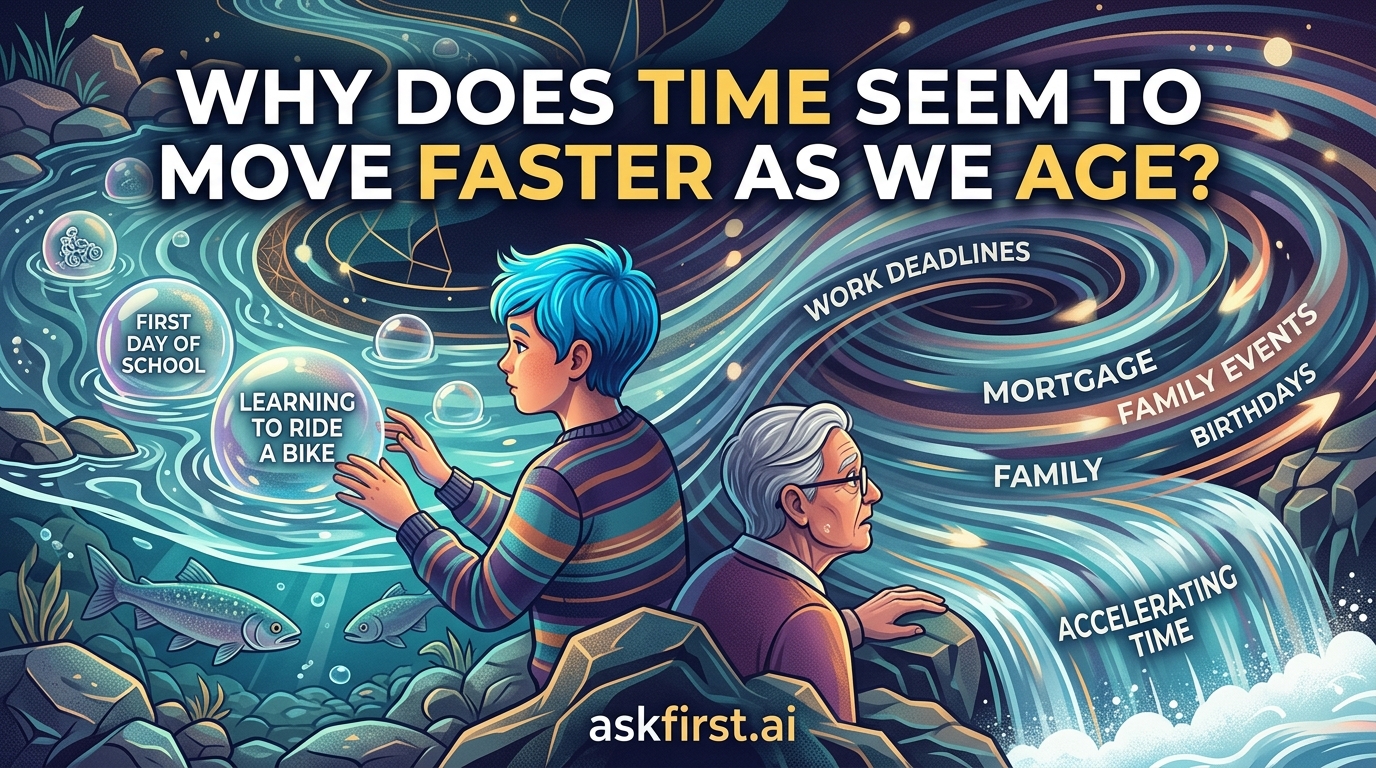
One of the most prominent explanations for the acceleration of time is the Proportional Theory, first proposed by French philosopher Paul Janet in 1877. This hypothesis posits that our perception of a duration is proportional to the total time we have already experienced. To a five-year-old, one year represents twenty percent of their entire life history. It is a massive, significant chunk of their existence. However, to a fifty-year-old, one year represents only two percent of their life. Because our brains process time relative to our past experiences, as our 'baseline' grows larger, any given year feels comparatively smaller and thus, objectively 'faster.'
The Role of Novelty and Neural Processing
Beyond simple mathematics, the Novelty Hypothesis plays a critical role in how the brain records memory. In childhood, the world is a stage of constant discovery. Every new experience—learning to ride a bike, tasting a exotic fruit, or starting school—requires the brain to dedicate immense computational resources to encode those memories. These high-detail recordings create a vast internal database of experiences. When we look back on these periods, the abundance of recorded data makes that timeframe feel long and rich.
In contrast, as we enter adulthood, our lives become defined by routines and patterns. The brain, which seeks efficiency, enters an 'autopilot' mode. When performing a familiar commute or a repetitive task, the brain stops paying close attention to the sensory details of the moment. Because the brain is not creating vivid, memory-dense 'snapshots' of these days, the mind essentially 'skips' the record of these events. When the brain reviews these periods, it perceives them as having passed in a blink of an eye because there are fewer significant milestones or unique emotional markers to anchor the passage of time.
The Physiological Clock
Some researchers argue that biological changes contribute to this shift. As we age, our metabolic rate slows down, and the firing speed of our neurons can shift. Some studies suggest that the frequency of sensory processing may decrease with age. If the brain receives fewer images per second as it ages, external time will effectively appear to move faster. Think of it like a low-frame-rate video; events appear to blur together more rapidly.
Strategies to 'Slow Down' Time
Understanding the mechanics of subjective time offers a fascinating opportunity to reclaim it. If the acceleration is driven by routine and a lack of novel input, the antidote is deliberate intentionality. To expand the subjective duration of your life, consider the following evidence-based strategies:
- Embrace Newness: Regularly introduce new hobbies, travel to unfamiliar places, or learn a challenging skill. Novelty forces the brain to switch from 'autopilot' to 'active engagement,' creating denser memory files.
- Mindfulness and Presence: Practicing mindfulness forces the brain to notice the fine-grained details of the current environment. By heightening focus on sensory inputs—the wind on your skin, the specific shade of light, the nuances of conversation—you are training the brain to store more data per second.
- Break the Routine: Even small changes in daily habits, such as taking a different path to work or rearranging your furniture, prevent the neural habituation that causes time to blur.
Summary of Findings
The perception of time is a cognitive construct, not a physical constant. By shifting away from the familiarity of routine and leaning into the discomfort of the new and unknown, individuals can effectively widen their subjective experience of life. While we cannot change the ticking of the clock, we hold significant power over the internal lens through which we view the passing years. By prioritizing a life of learning and active observation, the feeling that 'the years are flying by' can be significantly mitigated, allowing for a more profound and elongated experience of the human journey.