The Harmonic Fingerprint: Deciphering Personality Through Sound
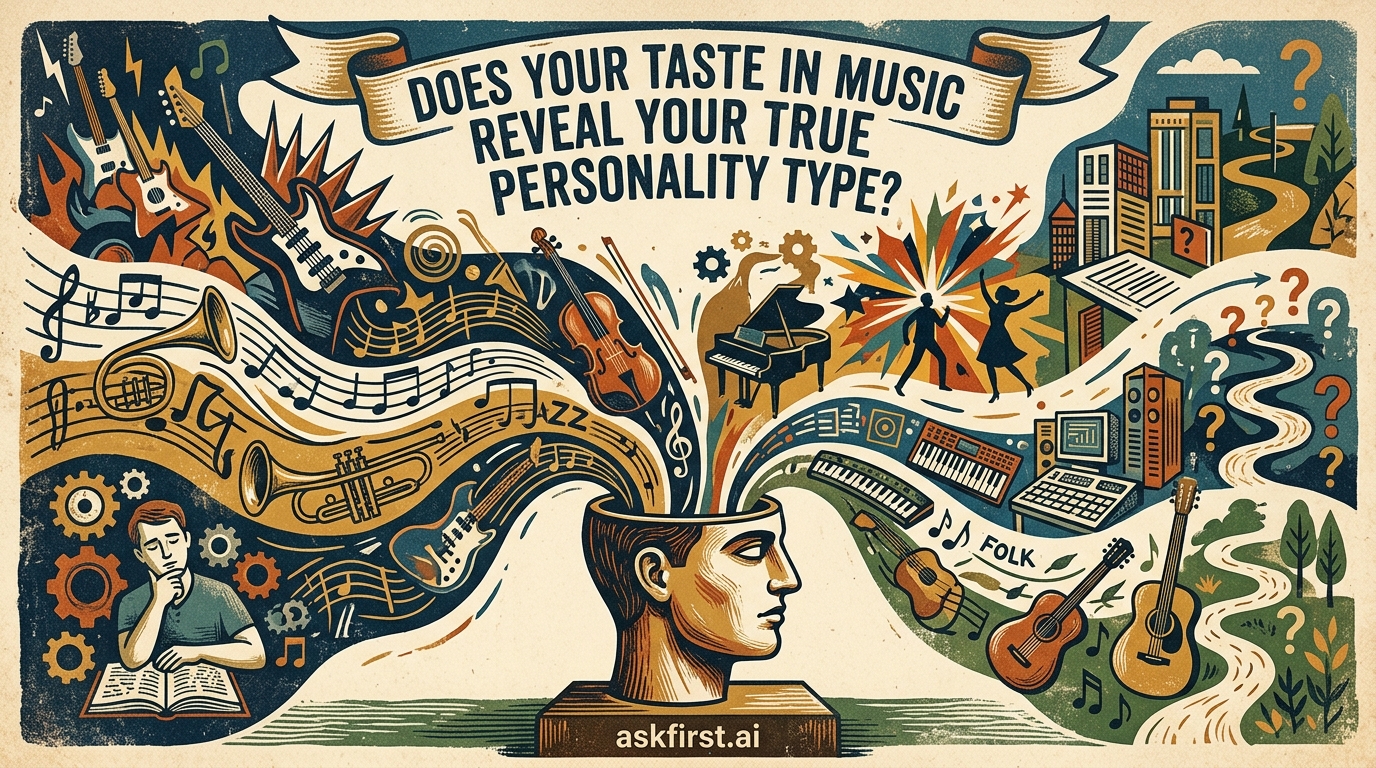
Music is more than mere aesthetic preference; it acts as a mirror reflecting the intricate architecture of the human psyche. For decades, psychologists have investigated the correlation between auditory habits and internal traits, discovering that the genres one chooses often align with stable psychological profiles. This phenomenon, often referred to as the 'music-personality link,' suggests that sonic preferences serve as a behavioral indicator of underlying cognitive functions.
The OCEAN Model of Personality
To understand this connection, researchers frequently utilize the Big Five Personality Traits (OCEAN model): Openness, Conscientiousness, Extraversion, Agreeableness, and Neuroticism. Research conducted by institutions such as the University of Cambridge has demonstrated significant statistical overlaps between these markers and specific genre preferences.
- Openness to Experience: Individuals scoring high in openness gravitate toward complex, intricate, and non-conventional music. This includes genres such as jazz, classical, blues, and experimental world music. These listeners value cognitive stimulation and are typically intellectually curious and aesthetically sensitive.
- Extraversion: Those who exhibit high levels of extraversion often prefer music that is energetic, rhythmic, and socially oriented. Upbeat pop, high-tempo electronic dance music (EDM), and chart-topping hits often appeal to this group because the music mirrors their high-arousal preference and desire for social synchronization.
- Agreeableness: Empathetic and cooperative individuals tend to prefer mellow, soft, and acoustic genres. Soft pop, soul, and light jazz are frequently enjoyed by those who value communal harmony and emotional warmth.
- Conscientiousness: While harder to map, research suggests that those with high conscientiousness often avoid aggressive styles, favoring music that is structured and familiar. They may prefer predictable rhythms that do not interfere with goal-oriented tasks.
Complexity and Cognitive Style
One of the most robust findings in psychology involves the distinction between empathizing and systematizing cognitive styles.
- Empathizers (The Feelers): People who focus on social nuances and emotional depth often prefer music that is mellow, sad, or acoustic. This allows them to process emotions deeply and feel a sense of connection.
- Systematizers (The Thinkers): Those who prefer analyzing patterns, rules, and mathematical structures often gravitate toward high-intensity music or complex, instrumental compositions. They appreciate the technical prowess required for jazz or the technical complexity found in classical pieces.
The Science of 'Mismatched' Preferences
It is vital to note that music is also a tool for emotional regulation. Individuals may listen to specific genres to 'balance' their personality rather than merely express it. For example, a highly stressed individual might listen to calm, lo-fi beats to induce relaxation, effectively using music as a cognitive intervention. This means that personality is not a 'fixed' music taste setter; rather, the relationship is a dynamic interplay between self-expression and emotional modulation.
Evolutionary Significance
Why does music remain a universal human constant? Evolutionary psychologists propose that music evolved as a tool for social cohesion. Rhythmic synchronization during group activities served as an 'evolutionary glue,' signaling shared identity and intent. Today, the playlists curated on digital platforms act as modern-day tribal markers, allowing individuals to signal their identity to peers instantly. Sharing a playlist has become a proxy for vulnerability, revealing one's inner world without the need for complex linguistic description.
Myth-Busting: Genre vs. Intelligence
One prevalent myth suggests that listening to a certain genre (such as classical music) makes a person inherently smarter—the 'Mozart Effect.' Modern research refutes this as a direct causative agent. Instead, it is likely that individuals with high 'Openness to Experience' are more likely to seek out both complex academic challenges and complex music. Therefore, music taste is a correlated outcome of personality traits like intellect and openness, rather than the cause of them.
Conclusion: The Ever-Evolving Soundscape
In summary, music functions as a secondary language for the soul. While it does not serve as a foolproof 'personality test,' it offers an incredibly reliable heuristic for understanding how people experience, process, and regulate their internal states. Whether one finds solace in the chaotic beauty of free-form jazz or the predictable comfort of pop anthems, the choice is rarely random. It is a precise, subconscious reflection of how one navigates the complexities of the human experience.