The Mechanics of Photosynthesis: Nature’s Solar Power Plant
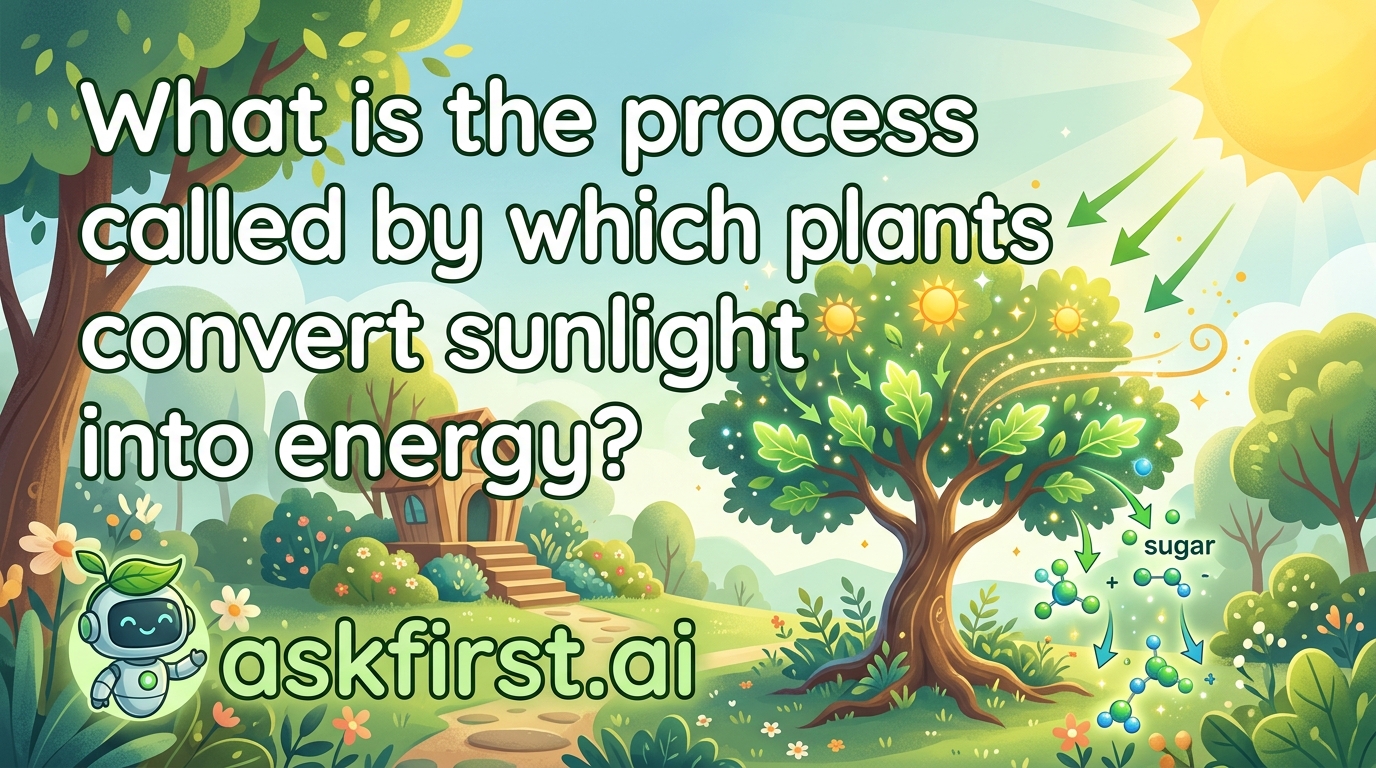
The process by which plants, algae, and certain bacteria transform light energy into chemical energy is known as photosynthesis. This biological miracle is the foundation of almost all life on Earth, providing the primary source of organic compounds and the oxygen necessary for aerobic respiration. Without this sophisticated conversion, the biosphere as we know it would cease to function, as photosynthesis acts as the ultimate bridge between the sun’s radiant energy and the metabolic requirements of living organisms.
The Biochemical Equation
At its core, photosynthesis is a redox reaction. Plants take in carbon dioxide ($CO_2$) from the atmosphere and water ($H_2O$) from the soil. Utilizing the energy captured from sunlight, they convert these inorganic molecules into glucose ($C_6H_{12}O_6$) and oxygen ($O_2$). The simplified chemical equation is:
6CO₂ + 6H₂O + Light Energy → C₆H₁₂O₆ + 6O₂
This process takes place primarily within the leaves, specifically inside specialized organelles called chloroplasts. Within these organelles, the pigment chlorophyll absorbs light, predominantly in the blue and red parts of the electromagnetic spectrum, while reflecting green light—which is why plants appear green to the human eye.
The Two-Stage Process
Photosynthesis is not a single chemical reaction but a complex, two-stage process that occurs in different parts of the chloroplast.
1. The Light-Dependent Reactions
Occurring in the thylakoid membranes of the chloroplast, these reactions require direct sunlight. When photons strike the chlorophyll molecules, they excite electrons to a higher energy state. These electrons travel through an electron transport chain, a concept famously detailed by Dr. Melvin Calvin in his Nobel Prize-winning work on carbon assimilation. During this stage, water molecules are split (photolysis), releasing oxygen as a byproduct and creating ATP (adenosine triphosphate) and NADPH, which are energy-carrying molecules.
2. The Light-Independent Reactions (The Calvin Cycle)
Also known as the Calvin Cycle, these reactions take place in the stroma (the fluid-filled space surrounding the thylakoids). Despite the name, this stage does not strictly require darkness; rather, it uses the ATP and NADPH generated in the first stage to "fix" carbon dioxide. Through a series of enzyme-mediated steps—most notably involving the enzyme RuBisCO (Ribulose-1,5-bisphosphate carboxylase/oxygenase)—the plant converts $CO_2$ into G3P (glyceraldehyde 3-phosphate), a simple sugar that is eventually synthesized into glucose. As noted in Biochemistry by Jeremy M. Berg, John L. Tymoczko, and Lubert Stryer, RuBisCO is arguably the most abundant and important protein on the planet, serving as the gateway for carbon to enter the biosphere.
Factors Influencing Efficiency
The rate of photosynthesis is not constant; it is governed by several environmental variables known as limiting factors. These include:
- Light Intensity: As light increases, the rate of photosynthesis typically rises until the plant reaches a saturation point.
- Carbon Dioxide Concentration: Higher levels of $CO_2$ generally boost the rate of glucose production, provided other factors are not limiting.
- Temperature: Because photosynthesis relies heavily on enzymes like RuBisCO, it is sensitive to heat. If temperatures become too extreme, these proteins denature, effectively halting the process.
- Water Availability: Drought stress causes plants to close their stomata (tiny pores on the leaf surface) to prevent water loss, which inadvertently restricts $CO_2$ intake and inhibits photosynthesis.
Ecological Significance and Evolution
The evolution of oxygenic photosynthesis, which occurred roughly 2.4 billion years ago during the Great Oxidation Event, fundamentally altered the Earth's atmosphere. Before this, the atmosphere was largely anaerobic. The massive release of oxygen by cyanobacteria allowed for the development of the ozone layer and the subsequent evolution of complex, multi-cellular life forms that rely on oxidative metabolism.
In modern research, scientists are looking at the efficiency of photosynthesis to solve global challenges. For instance, the work of Dr. Robert Blankenship in Molecular Mechanisms of Photosynthesis explores how we might mimic these natural pathways to create artificial leaves or high-efficiency solar fuels. By studying the light-harvesting complexes in plants, engineers hope to develop technologies that capture solar energy with the same elegance and precision as a simple blade of grass.
Conclusion
Photosynthesis is far more than a simple conversion of sunlight; it is a highly evolved, multi-step metabolic pathway that sustains the global food web. By capturing light and fixing atmospheric carbon, plants provide the chemical scaffolding for all heterotrophic life. From the microscopic activity within the thylakoid membranes to the global regulation of our climate, the process remains the most significant biological engine on our planet. Understanding its intricacies—from the quantum mechanics of electron excitation to the complex enzymatic cycles of the stroma—is essential for both biological science and the future of sustainable energy technology.