The Psychology of Cinematic Intimacy
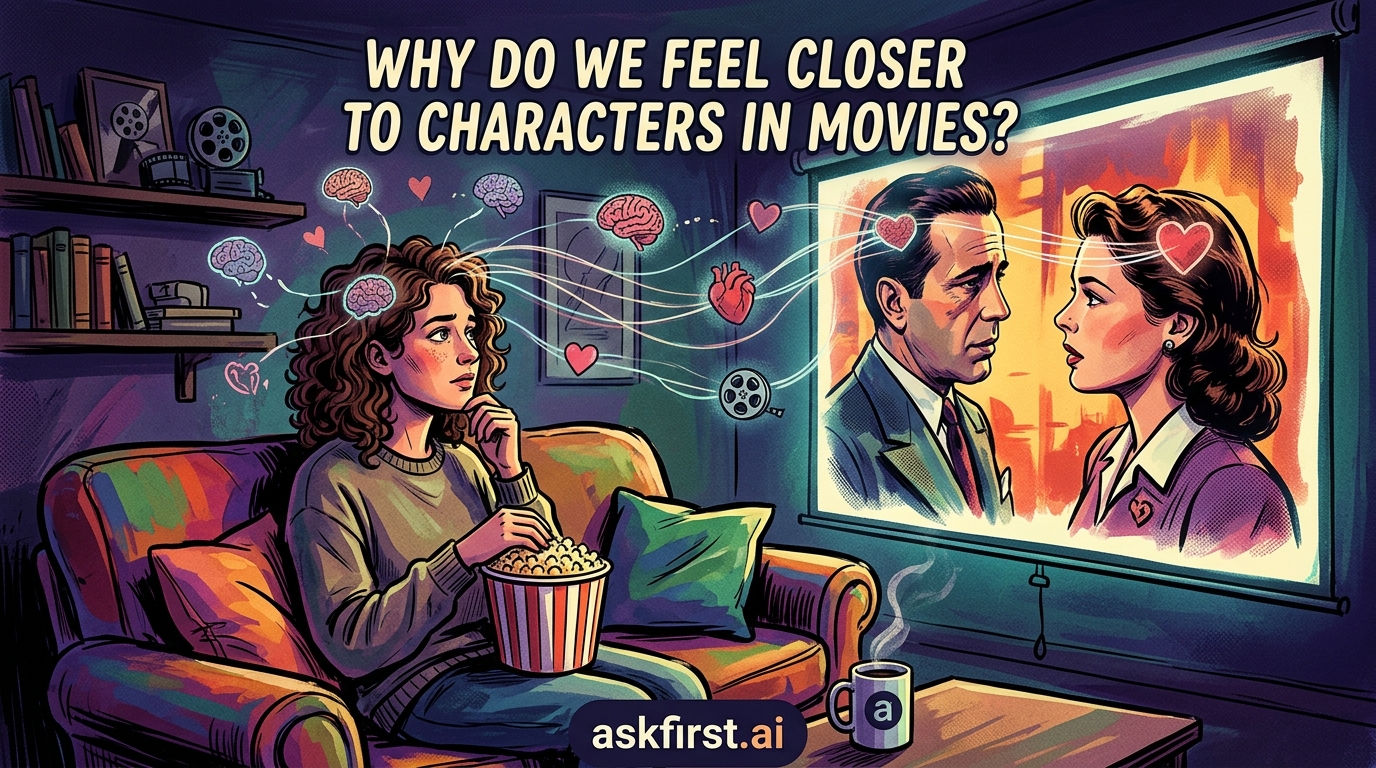
The phenomenon of feeling profound emotional proximity to fictional characters, often referred to in psychological circles as a parasocial relationship, is a testament to the sophistication of the human brain. While humans cognitively understand that characters are constructs of screenwriting, performance, and digital manipulation, the emotional centers of the brain—specifically the amygdala and the ventromedial prefrontal cortex—often struggle to distinguish between real social interactions and high-fidelity simulated ones. This article explores the cognitive, evolutionary, and neurological reasons behind this captivating illusion.
The Evolutionary Basis for Storytelling
From an evolutionary perspective, human beings are social animals hardwired for survival through group cohesion. Throughout history, stories served as crucial simulations for life. When ancient humans sat around fires sharing narratives, they were learning social cues, survival strategies, and emotional intelligence. Today, cinema functions as a modern 'campfire.' The brain processes narratives in a way that allows individuals to 'experience' the trials of others without the actual physical risk. By observing a character's struggle, the viewer's brain simulates those same stressors, effectively practicing emotional responses for potential real-world scenarios. This cognitive rehearsal creates a bond, as the brain perceives the character as a member of one's 'extended tribe.'
Mirror Neurons and Empathy
At the core of this connection lies the mirror neuron system. When a viewer watches an actor experience joy, grief, or fear, specific neurons in the observer’s brain fire in patterns nearly identical to those firing in the actor's brain—or the brain of the character they represent. This neurobiological feedback loop is the physical mechanism of empathy. When a protagonist achieves a hard-won victory, the viewer releases dopamine, the neurotransmitter associated with reward and motivation. Conversely, when a character suffers a setback, the viewer experiences a genuine dip in mood. Because this biological reaction is involuntary, the brain begins to associate the character with the emotional spikes and valleys of a real-world friend, solidifying the parasocial attachment.
The Role of Cinematic Techniques
Film directors employ specific visual and auditory cues designed to facilitate this intimacy:
- The Close-Up Shot: By isolating a character’s face, directors force the audience into a spatial bubble that is typically reserved for personal interactions. This removes environmental distractions and highlights micro-expressions.
- Point-of-View (POV) Framing: Placing the camera in the position of a character allows the audience to 'see through their eyes,' which triggers a stronger identification process.
- The Soundtrack: Music bypasses the logical brain and taps directly into the limbic system, priming the viewer to feel the same emotional valence as the character on screen.
The 'Transportation' Effect
Psychologists refer to the state of being deeply absorbed in a narrative as narrative transportation. When a viewer becomes transported, they experience a temporary reduction in critical awareness of the outside world. In this state, the 'reality-monitoring' processes—the part of the brain that keeps track of what is real versus what is imagined—become less active. This makes the experiences of characters feel deeply personal. Over the course of a two-hour film or a multi-season series, the cumulative hours spent in a character's company allow for a sense of longitudinal investment. This 'time spent' is one of the most powerful predictors of perceived relationship closeness in real life, and it translates seamlessly into the medium of film.
Why This Connection Matters
It is vital to recognize that these bonds are not inherently 'fake' or pathological. On the contrary, research suggests that for many individuals, parasocial relationships serve a compensatory function. When real-world social circles feel insufficient or isolating, characters provide consistent, reliable, and non-judgmental company. These fictional 'friends' can provide comfort, serve as role models for personal development, and act as a safe space for exploring complex emotions like grief or ambition. By watching others navigate the complexities of life, viewers gain insights into their own psyches, fostering personal growth in an environment that is entirely low-stakes and risk-free.
In conclusion, the feeling of closeness to characters is an inevitable outcome of a brain optimized for social learning. Through the interplay of mirror neurons, narrative transportation, and the evolutionary need for storytelling, characters become more than just lights on a screen; they become companions who inhabit the shared landscape of the human experience.