The Fall of the Berlin Wall: A Watershed Moment in Modern History
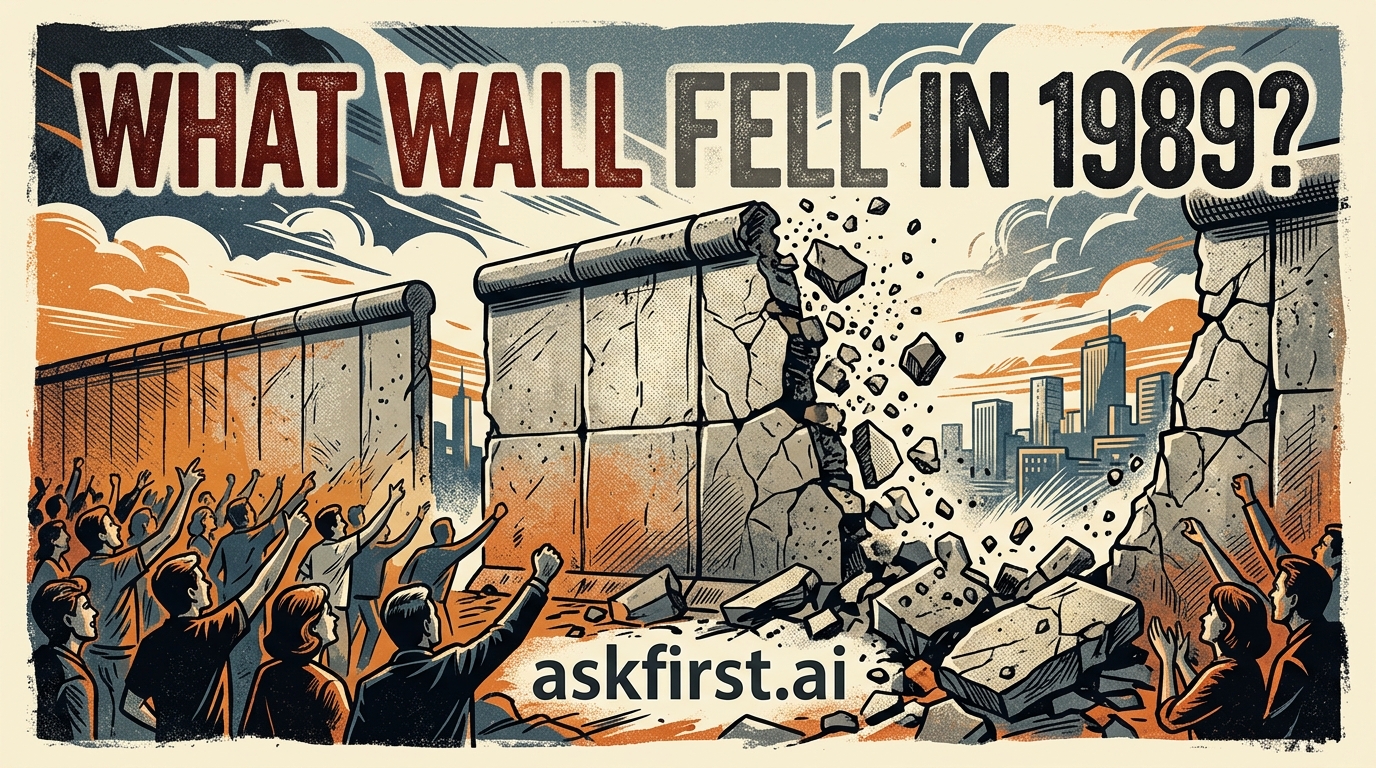
On the night of November 9, 1989, the world witnessed one of the most profound geopolitical shifts of the 20th century: the collapse of the Berlin Wall. For twenty-eight years, this concrete barrier had served as the physical and ideological manifestation of the "Iron Curtain," dividing not only a city but an entire globe into two competing spheres of influence. Its fall was not merely the destruction of a wall, but the symbolic end of the Cold War and the catalyst for the reunification of Germany and the eventual dissolution of the Soviet Union.
The Origins of the Divide
To understand the significance of 1989, one must look back to August 13, 1961, when the German Democratic Republic (GDR) began construction of the Antifaschistischer Schutzwall (Anti-Fascist Protection Rampart). As documented by historian Mary Elise Sarotte in her definitive work, "The Collapse: The Accidental Opening of the Berlin Wall," the structure was erected to stop the "brain drain" of East Germans fleeing to the democratic, prosperous West Berlin.
The wall evolved from simple barbed wire into a complex fortification system consisting of two parallel concrete walls, a "death strip" filled with landmines, anti-vehicle trenches, watchtowers, and armed guards under orders to shoot defectors. For nearly three decades, it stood as a grim reminder of the repression inherent in the Soviet-backed Eastern Bloc.
The Catalyst: A Summer of Unrest
The events of 1989 did not happen in a vacuum. Throughout that year, the Soviet grip on its satellite states began to loosen under the reformist policies of Mikhail Gorbachev, specifically glasnost (openness) and perestroika (restructuring).
By the summer of 1989, the situation reached a boiling point. Hungary, a socialist state, began dismantling its border fence with Austria. This created a hole in the Iron Curtain, allowing thousands of East Germans to flee to the West through a "back door." As described in "1989: The Struggle to Create Post-Cold War Europe" by Mary Elise Sarotte, this mass exodus created an internal legitimacy crisis for the GDR leadership, led by Erich Honecker. Simultaneously, peaceful protests—most notably the "Monday Demonstrations" in Leipzig—began to swell, with citizens shouting, "Wir sind das Volk!" (We are the people!).
The Night of November 9: A Bureaucratic Blunder
The actual opening of the wall was, ironically, the result of a monumental communication error. On the evening of November 9, 1989, East German official Günter Schabowski held a televised press conference to announce new, relaxed travel regulations intended to appease the public. When asked by a journalist when these regulations would take effect, a flustered Schabowski shuffled his papers and replied, "Das tritt nach meiner Kenntnis… ist das sofort, unverzüglich" (As far as I know… it takes effect immediately, without delay).
The announcement spread like wildfire. Within hours, thousands of East Berliners descended upon the checkpoints. The border guards, overwhelmed and lacking clear instructions from their superiors, eventually stood down. At 11:30 PM, the gates at Bornholmer Straße were opened, and the wall was effectively breached. People from both sides climbed atop the concrete barrier, dancing, weeping, and embracing in a scene of spontaneous, historic joy.
Geopolitical Consequences and Legacy
The fall of the wall triggered a domino effect across Eastern Europe. Within weeks, the Communist governments of Czechoslovakia, Bulgaria, and Romania fell. By October 1990, East and West Germany were formally reunited.
In his seminal analysis, "Postwar: A History of Europe Since 1945," Tony Judt notes that the collapse of the wall signaled the end of the bipolar world order that had dictated international relations since the end of World War II. It marked the triumph of liberal democracy and market capitalism in the region, though it also ushered in a complex period of economic transition and identity crises for the former Eastern Bloc.
Conclusion: A Lesson in Resilience
The fall of the Berlin Wall remains one of the most powerful examples of "people power" in human history. It reminds us that even the most formidable physical and ideological barriers are ultimately subject to the will of a populace demanding freedom. The concrete slabs that once divided families and nations now sit in museums, public squares, and private collections globally—remnants of a time when the world was split in two, and symbols of the day that division finally crumbled.
Today, the site of the former wall serves as a place of reflection, particularly at the Berlin Wall Memorial on Bernauer Straße. It serves as a permanent testament to the courage of those who protested for their rights and the precariousness of authoritarian regimes when faced with the collective desire for self-determination. The fall of the wall in 1989 is not just a date in a history book; it is the cornerstone of the modern European identity.