The Psychology of Catharsis: Understanding Cinematic Tears
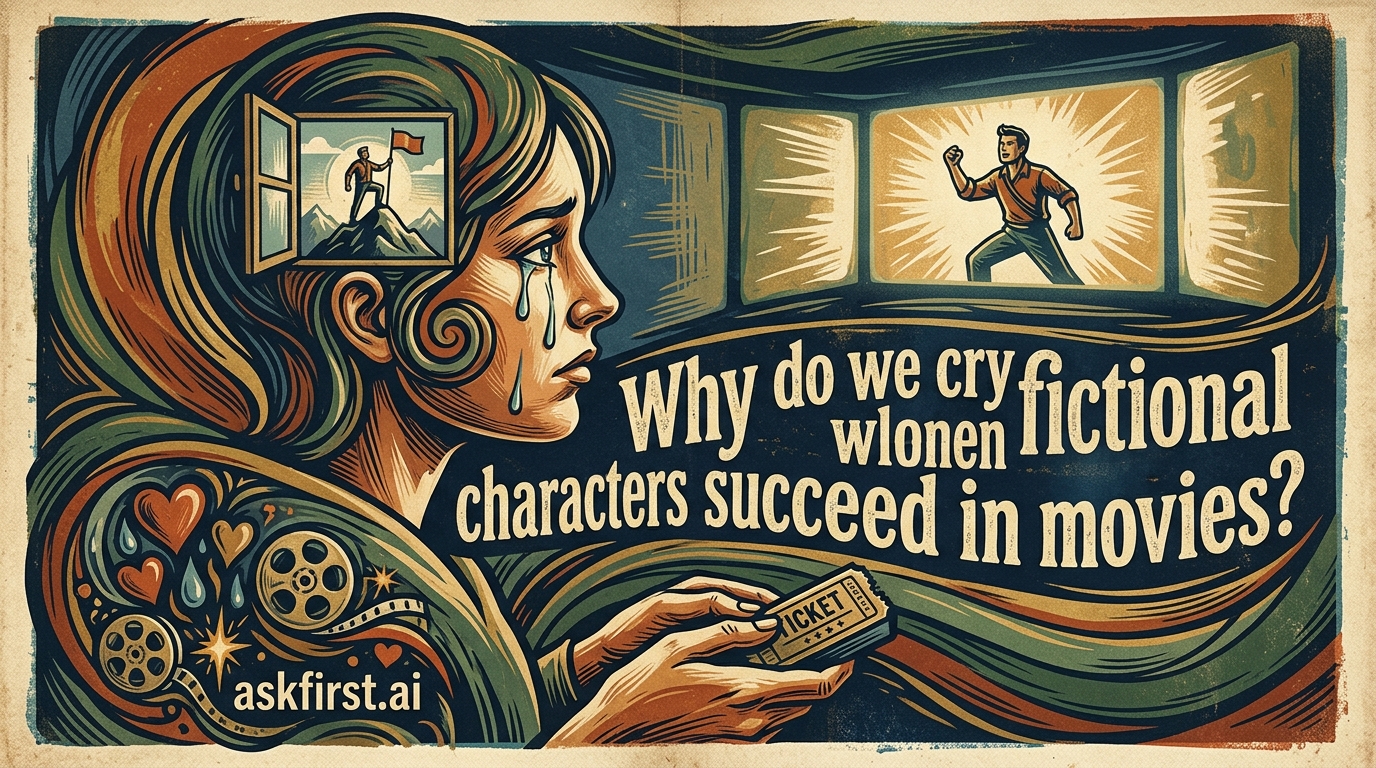
Human beings often find themselves shedding tears of joy during the climax of a film when a hero finally triumphs against insurmountable odds. This phenomenon, known as 'kama muta'—a Sanskrit term for being moved by love or communal sharing—reveals the profound way our brains process narrative structure and social connection. While we cognitively understand that the characters are fictional, our neurological systems often fail to distinguish these simulated experiences from genuine life events.
The Role of Mirror Neurons and Empathy
At the core of this emotional surge are mirror neurons, a specialized subset of brain cells that fire both when we perform an action and when we witness someone else performing that same action. When a character experiences a moment of victory, the brain simulates that internal state, activating our own neural pathways associated with achievement and relief. This biological mimicry is not limited to sadness; it extends to the profound emotional weight of success. We are, quite literally, hardwired to feel what others feel, even if those 'others' are projections of light on a silver screen.
Narrative Transportation and Suspension of Disbelief
Narrative transportation is the psychological state of being so deeply immersed in a story that the real world effectively fades away. As viewers become psychologically 'transported' into the narrative world, the boundary between self and character becomes permeable. When the character succeeds, this victory feels personal because the viewer has invested time, mental energy, and emotional capital into the character’s arc. This is often termed the Parasocial Relationship effect. We celebrate the success of a character because their growth represents a culmination of a journey we have supported throughout the film.
The Chemistry of Joyful Crying
Why do we cry instead of simply smiling? The answer lies in the physiological impact of intense emotional arousal. When a moment is sufficiently powerful—such as a long-awaited homecoming or a moral victory—the brain triggers a release of oxytocin and prolactin. These are the same chemicals released during significant life milestones, such as births or reunions.
- Oxytocin: Known as the 'bonding hormone,' it facilitates a sense of connection and deep trust.
- Prolactin: Associated with the regulation of complex emotions, it helps soothe the nervous system following high-arousal states.
When these neurochemicals spike, the lacrimal system (the tear ducts) activates to maintain internal equilibrium. Crying, in this context, is a biological method of regulating extreme levels of emotional tension.
The Role of Universal Archetypes
Many successful films utilize the Hero's Journey (monomyth), a structural template popularized by Joseph Campbell. These archetypes resonate across cultures because they reflect universal human experiences: overcoming fear, achieving redemption, and discovering inner strength. When a fictional character triumphs, they validate these archetypal paths for the viewer. Their success is a proxy for our own latent desires to overcome our personal limitations. We weep not just for the character, but for the universal truth that resilience eventually yields a reward.
Collective Effervescence
In a cinema setting, this experience is often magnified by the presence of others. The sociological concept of collective effervescence, coined by Émile Durkheim, describes how groups of people experiencing the same emotion simultaneously feel a heightened intensity. Sharing a space with an audience means our individual reactions to a character’s success are amplified by the collective joy of the room, creating an feedback loop that triggers a stronger emotional response than watching alone.
Conclusion: Why it Matters
Crying at a fictional triumph is not a sign of emotional instability; it is a sign of deep human connection and psychological health. It confirms that the human capacity for empathy is boundless and that we possess the ability to find meaning and joy in shared storytelling. By engaging with fictional characters, we rehearse the emotional muscle of celebration, allowing us to process complex feelings in a safe, controlled environment. This unique human capacity is a testament to our social nature and our perpetual search for inspiration in the stories we tell.