The Hidden Wood Wide Web: Understanding Mycorrhizal Networks
Far beneath the forest floor lies a bustling, complex, and highly organized communication system that mirrors the infrastructure of human internet networks. Scientific research into plant communication has revealed that trees are not solitary, silent sentinels; rather, they are active participants in a sophisticated subterranean social network. This biological highway is known as the Mycorrhizal Network, a symbiotic relationship between tree roots and specialized fungi.
The Fungal Foundation: What Are Mycorrhizae?
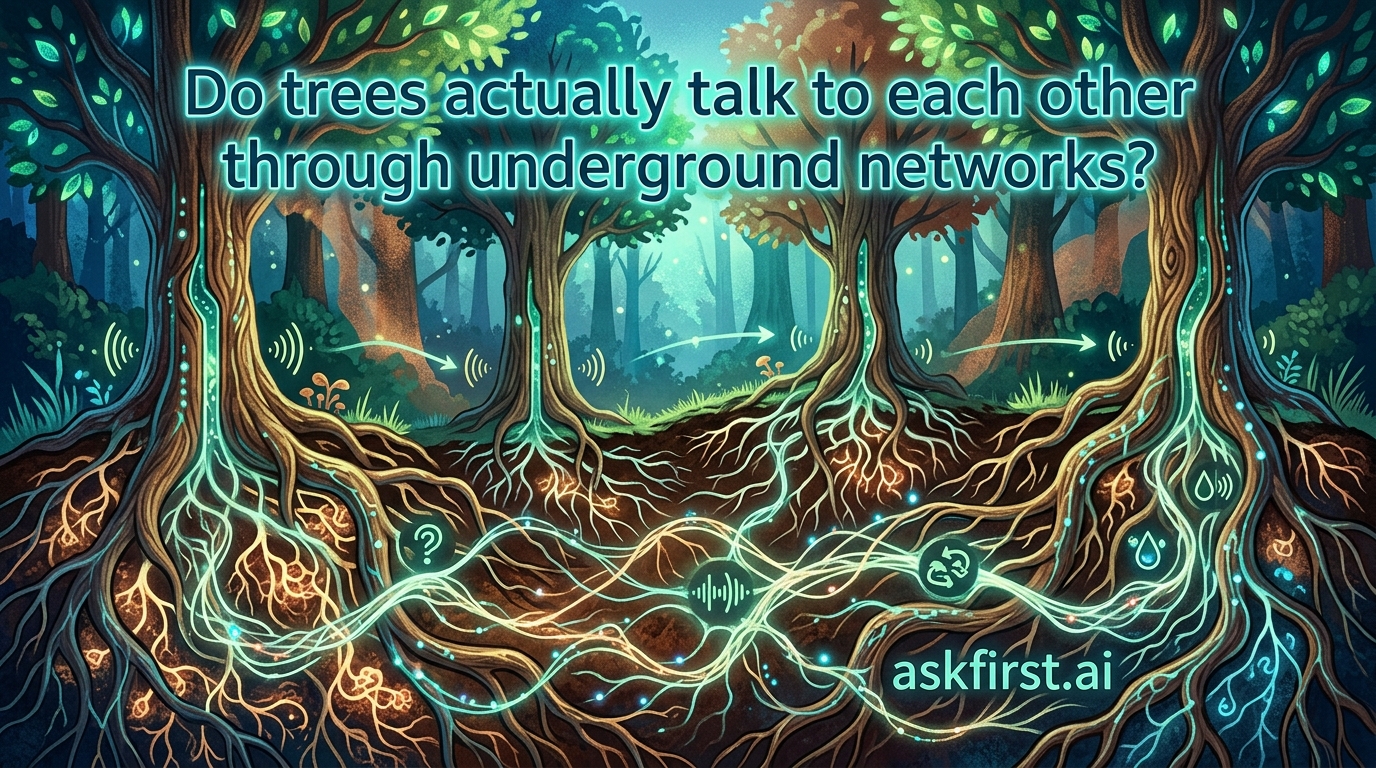
The term 'mycorrhiza' comes from the Greek words mykes (fungus) and rhiza (root). These fungi form a mutualistic association with plant roots, extending tiny, thread-like filaments called hyphae deep into the soil. While these filaments may seem insignificant, they collectively form the mycelium, a vast, sprawling web that connects the root systems of different trees, often linking entire forests. Through this connection, trees engage in resource sharing, warning signals, and collaborative defense strategies.
The Mechanisms of Communication: Nutrient and Signal Transfer
Resource Sharing: Trees often exist in varied conditions where some individuals receive more sunlight than others. Stronger, healthier trees frequently utilize these fungal conduits to send excess sugar and nutrients to shaded or struggling saplings. This phenomenon ensures the longevity of the collective forest stand rather than promoting individualistic competition alone.
Chemical Signaling: When a tree is attacked by insects or experiences environmental stress, such as drought, it releases chemical signals into the soil. These signals travel through the mycelial network, effectively 'warning' neighboring trees. Upon receiving these alerts, nearby vegetation begins producing defensive chemicals—such as tannins or increased levels of sap—which make them less palatable or more resistant to the encroaching threat.
Carbon Exchange: Research has shown that older trees, often dubbed 'Mother Trees' in forestry literature, act as central hubs. They funnel carbon into the network, fueling the growth of younger trees that have yet to establish their own reliable photosynthetic capacity.
The Role of Mother Trees
Ecological studies have identified specific 'Mother Trees'—the oldest, largest, and most well-connected individuals in a forest. These giants hold an immense amount of knowledge and resources within the network. By maintaining the integrity of the underground grid, Mother Trees provide a stable foundation for the entire ecosystem. They do not merely compete for light; they foster a community-oriented environment that increases the survival probability of seedlings and promotes forest resilience against climate-induced stressors.
Is It Really 'Talking'?
While the term 'talking' is a metaphorical shorthand, the biological reality is remarkably similar to human communication. Trees do not use vocal cords, but they do use electrochemical signaling. Similar to how neurons in a human brain communicate via electrical impulses, trees transmit information through the fungi by altering their hormonal and chemical output. These fluctuations are interpreted by adjacent trees, leading to adaptive behaviors. This form of 'language' is chemical-based, persistent, and essential for the homeostasis of the forest biome.
Implications for Modern Forestry and Ecology
Understanding this invisible web has fundamentally shifted the paradigm of modern forestry. Historically, forest management prioritized harvesting and thinning, often removing older trees as they were perceived as resource competitors. However, the discovery of mycorrhizal networks proves that removing Mother Trees disrupts the communication lines and stability of the entire forest. Current conservationists now advocate for 'pro-forestation'—the practice of protecting existing forests to allow these complex, ancient networks to remain intact.
Why This Matters for the Future
The existence of the 'Wood Wide Web' challenges the traditional perception of competition as the primary driving force of evolution. Instead, cooperation and resource optimization emerge as equally critical pillars of natural success. As humanity looks toward 2030 and beyond, understanding the collaborative intelligence of trees is vital. Protecting these subterranean highways can mitigate the effects of localized climate change, improve soil health, and ensure that biodiversity remains robust in the face of anthropogenic pressures.
Conclusion
The silence of the forest is an illusion. Every grove is a densely connected metropolis of exchange, defense, and collective growth. By recognizing trees as social agents, humanity gains a deeper appreciation for the intricate, interconnected nature of all life on Earth. The next time you walk through a woodland, remember that you are stepping across a busy, invisible bridge of biological intelligence.