The Psychology of Unexpected Dream Appearances
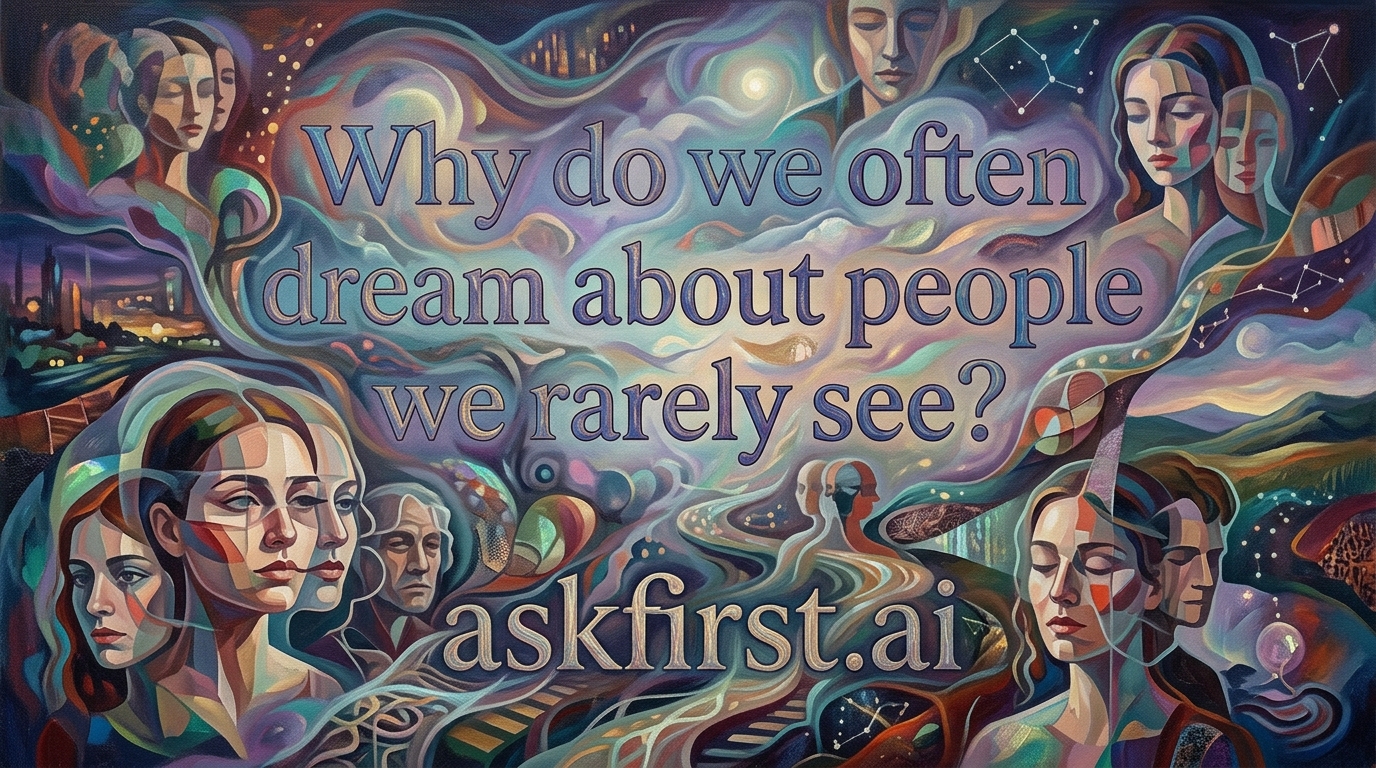
Dreams remain one of the most enigmatic facets of the human experience. A common and puzzling occurrence is the sudden appearance of an acquaintance, a distant relative, or a forgotten childhood friend in a dream. While it may feel like a mystical coincidence, psychological and neurobiological frameworks provide a robust explanation for why these forgotten figures frequently surface during REM (Rapid Eye Movement) sleep.
The Associative Memory Network
The brain functions as a massive, interconnected network of associative memories. Unlike a computer hard drive that stores files in discrete locations, the human brain links concepts, people, places, and emotions through thematic threads. When an individual sleeps, the prefrontal cortex—the part of the brain responsible for logical, linear thinking—goes quiet. This allows the amygdala and the hippocampus to engage in spontaneous 'memory consolidation' and 'emotional regulation.'
If you see a specific shade of blue that reminds you of a high school classroom, your brain may naturally retrieve a memory of a classmate you have not spoken to in years. Even if the conscious mind ignores the trigger, the subconscious mind follows this web of associations, weaving that person into a dream narrative. This is not because of a psychic connection, but because the brain is busy organizing and pruning its vast neural archives.
Emotional Proxy and Symbolic Representation
In dream analysis, individuals from our past often serve as 'emotional proxies.' The brain prioritizes emotional significance over factual recency. If a rarely seen person once represented a specific feeling—perhaps safety, betrayal, academic pressure, or joy—the brain may 'summon' them to represent those same feelings in a new context.
- The Schema Theory: Dreams often use archetypes. If a person was once a authority figure, they may appear in a dream to represent a current authority struggle at work or home.
- The Nostalgia Factor: During periods of stress or change, the brain seeks 'anchors' of familiarity. By pulling a person from the distant past into a dream, the mind is attempting to bridge the gap between who one was and who one is becoming.
The Role of 'Residual Processing'
Neuroscientists often refer to 'day residue'—the idea that our daily experiences inform our dreams. However, there is also 'latent residue.' Sometimes, the brain processes information that was consciously ignored during the day. An accidental glance at a photo on social media or hearing a song that was popular years ago can plant a seed in the subconscious. This latent information remains dormant until the REM cycle, where it blooms into a vivid dream scenario.
Why the Brain Chooses 'Strangers'
One of the most fascinating aspects of dreaming about people we rarely see is the sense of surprise. Why not dream about people we see every day? The answer lies in the brain's drive for cognitive simulation.
- Testing Scenarios: The brain often uses dreams to rehearse complex social interactions. It is easier for the brain to utilize a stable, 'fixed' memory of a past person than to simulate the constantly evolving, unpredictable behavior of someone currently in your life.
- Low Cognitive Load: Since the memory of a distant acquaintance is somewhat fuzzy or incomplete, the brain has more freedom to project its own internal state onto the character, making them a perfect vessel for the dream’s narrative requirements.
Evolution and Survival
From an evolutionary perspective, our ancestors needed to track a wide social circle to survive. While modern life is more sedentary, the mechanism remains: we are wired to keep track of social 'data.' The brain constantly reviews old social interactions to determine if they hold lessons for the present. When we dream of an old friend, the brain is essentially asking: 'What was the nature of that relationship, and does it still serve my current environment?'
Conclusion
Dreaming about someone you rarely see is a testament to the remarkable efficiency of the human memory. Far from being a random glitch, these dreams are a sign that the brain is diligently filing away experiences, managing emotions, and testing social blueprints. Whether they represent a forgotten memory, an emotional lesson, or simply the brain's playful use of old data, these nocturnal visits are a natural part of cognitive maintenance. The next time a ghost from the past appears in a dream, do not search for a supernatural meaning; instead, appreciate the intricate, beautiful machinery of your own mind.