The Psychology of Temporal Perception
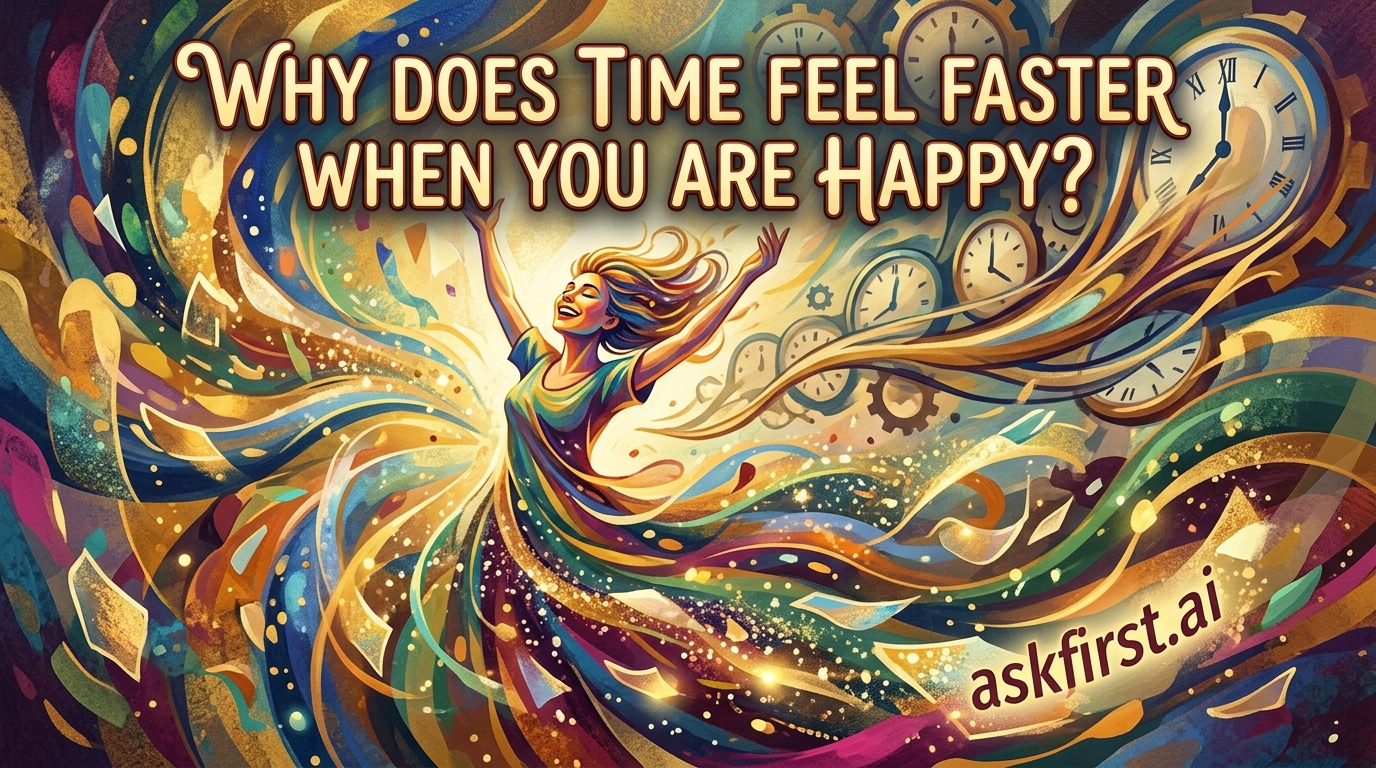
The perception of time is not a fixed, rhythmic constant dictated by the ticking of a clock; rather, it is a malleable mental construct deeply influenced by emotional states, cognitive load, and neural processing. When individuals experience joy, elation, or profound happiness, they often report that time seems to 'fly.' This phenomenon, frequently described by the phrase 'time flies when you are having fun,' is grounded in complex neurobiological mechanisms and psychological frameworks.
The Role of Prospective vs. Retrospective Timing
To understand why happiness accelerates perceived time, one must distinguish between two modes of time estimation: prospective and retrospective timing.
- Prospective Timing: This involves paying attention to the passage of time as it happens. When you are bored or waiting, you constantly check the clock, causing the brain to focus on the duration itself. This heightened monitoring makes time feel elongated.
- Retrospective Timing: This refers to how we judge a period of time after it has already occurred. This relies heavily on memory storage and the density of episodic events.
When you are deeply happy—engaged in play, laughter, or social connection—you are effectively distracted from the task of 'monitoring' time. Because your cognitive resources are fully committed to the enjoyment of the present moment, the brain does not spend energy counting the passage of seconds. Therefore, in prospective mode, the lack of monitoring creates the illusion of speed.
Memory Density and the 'Oddball' Effect
Retrospectively, our perception of time is often based on the number of 'new' memories created. Neuroscientists like David Eagleman have hypothesized that the brain uses the volume of encoded information to estimate how much time has passed.
- The Routine Trap: When life is mundane and repetitive, the brain stops recording new details because the environment is predictable. Looking back, weeks seem to blur together, making time feel like it is accelerating as we age.
- The Happy State: Happiness often coincides with novel experiences—traveling, celebrating, or deep social bonding. While these moments feel 'fast' while happening due to flow states, the resulting rich tapestry of memories can sometimes make that same period feel 'longer' when reviewed later. However, in the immediate context of joy, the flow state—a term popularized by psychologist Mihaly Csikszentmihalyi—is the primary driver of the 'speeding' sensation.
The Flow State Mechanism
Happiness often facilitates the Flow State, a mental condition where a person is fully immersed in an activity. During flow, the prefrontal cortex—the part of the brain responsible for self-monitoring and temporal tracking—becomes less active. This phenomenon is known as 'transient hypofrontality.' By 'turning off' the internal timekeeper, the brain loses its ability to anchor the experience to a standard clock, leading to the subjective experience of time compression.
Hormonal Influences and Arousal
Beyond psychology, physiological arousal plays a significant role. Joyful states involve the release of dopamine and norepinephrine. These neurotransmitters can influence the internal 'pacemaker' in the brain. Research suggests that high levels of arousal can cause the internal clock to tick faster relative to real-time. If your internal biological pulse speeds up, the world outside appears to be moving more slowly, but if the clock resets or 'drops' beats due to intense focus, we perceive the outside world as moving much faster in comparison.
Scientific Implications for Quality of Life
Understanding this phenomenon provides valuable insights into how we design our lives. If boredom makes time drag and constant, low-level monotony makes our years feel as though they are vanishing into a blur, then the solution lies in Mindful Engagement.
- Seek Novelty: Engaging in new activities ensures that the brain continues to encode vivid memories, preventing the 'fast-forward' effect of aging.
- Embrace Presence: Ironically, by engaging in activities that make us happy, we allow ourselves to exit the standard 'time-keeping' mode of the human brain, granting us the freedom to exist in a state of timelessness.
In conclusion, time feels faster when you are happy because your brain stops measuring the clock and starts living the experience. Happiness shifts our focus from the quantitative measurement of seconds to the qualitative richness of our lived reality. By detaching from the artificial constraints of our internal chronometer, we find that life, when enjoyed fully, transcends the simple ticking of a watch.