The Neurobiology of Emotional Imprinting
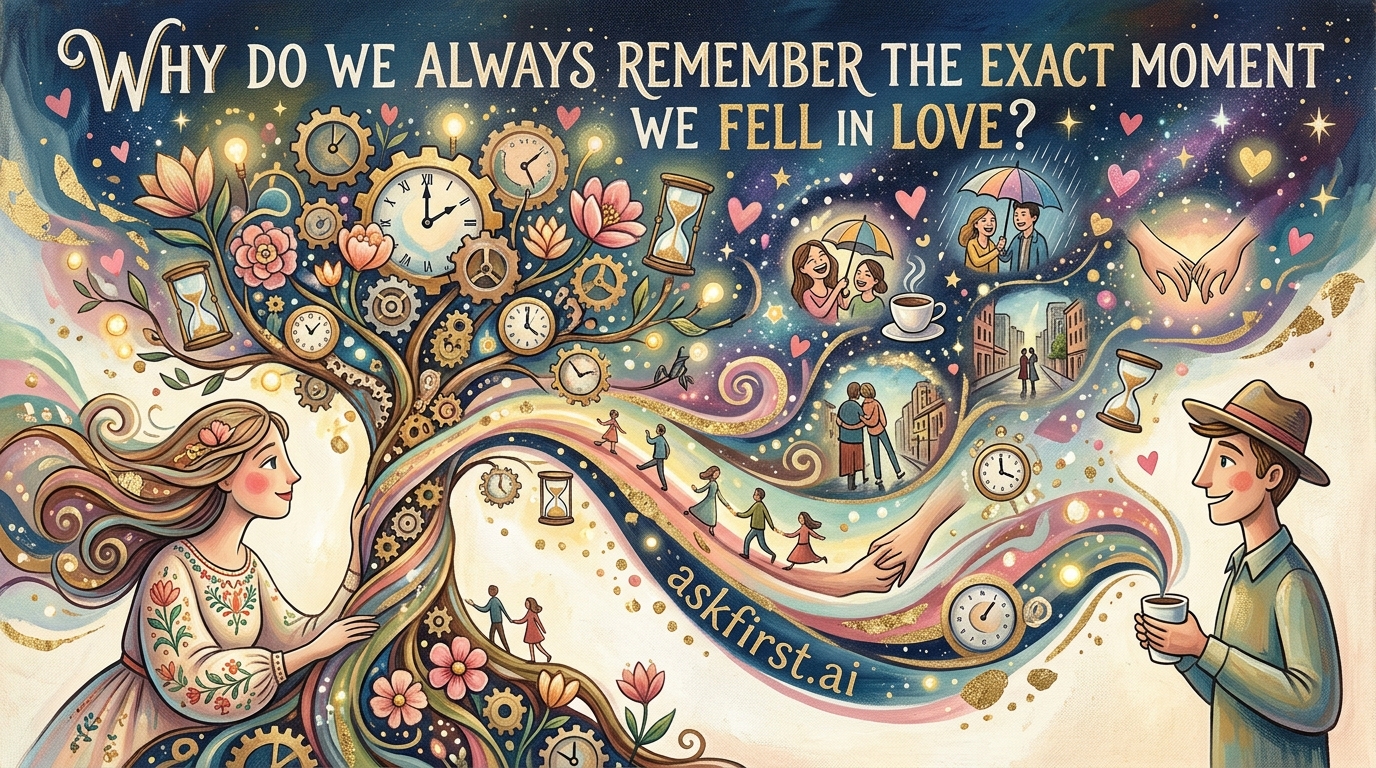
Falling in love is widely regarded as one of the most intense psychological experiences a human being can undergo. It is not merely an emotion; it is a profound neurochemical event that triggers a cascade of activity in the brain. The reason the specific moment of falling in love remains etched into long-term memory lies in the architecture of the human limbic system. When an individual experiences an intense romantic connection, the brain releases a potent cocktail of dopamine, oxytocin, and norepinephrine. This combination acts as a chemical 'highlighter' for the brain, effectively signaling that the current sensory input is of critical survival importance.
Research indicates that the hippocampus, the area of the brain responsible for memory formation, functions in tandem with the amygdala during these emotional peaks. The amygdala processes emotions, and when it is highly stimulated, it communicates directly with the hippocampus to encode the memory with greater depth and clarity. This process, often referred to as 'emotional arousal enhancement,' ensures that information linked to intense feeling is prioritized over routine, mundane daily events. It is essentially an evolutionary mechanism designed to ensure that significant interpersonal bonds—which are vital for reproduction and communal security—are not easily forgotten.
The Flashbulb Memory Phenomenon
Psychologists have long studied the concept of 'flashbulb memories,' which are vivid, long-lasting memories of significant events. While these are typically associated with historical or tragic occurrences, the initial moment of romantic realization mirrors the mechanics of these memories. The brain captures a panoramic view of the environment, sounds, smells, and even the temperature at the moment the connection is solidified.
- High Contrast: Because the moment usually involves a shift from baseline physiological states to high arousal, the brain creates a mental 'snapshot' of the scene.
- Selective Attention: In that moment, peripheral stimuli fade into the background, leaving the object of affection and the immediate sensory data in high relief.
- Recursive Rehearsal: Humans tend to ruminate on these moments. By mentally replaying the 'falling in love' narrative, the neural pathways associated with that memory are strengthened through long-term potentiation, essentially reinforcing the memory every time it is recalled.
The Role of Novelty and Uncertainty
Novelty is a powerful driver of brain chemistry. When an individual meets someone who represents a new, high-value connection, the brain's reward centers, particularly the ventral tegmental area (VTA), become hyperactive. This area is the engine room of the brain’s dopamine production. When something new and rewarding happens, the brain is primed to learn from it.
Coupled with novelty is the psychological concept of uncertainty. During the early stages of love, the brain is often in a state of high suspense. 'Will they reciprocate?' 'What happens next?' This state of uncertainty keeps the focus intense and alert. From a cognitive perspective, when we are trying to resolve a puzzle—such as interpreting the signals of a potential partner—our cognitive load increases, making the details of that resolution process much more likely to be archived permanently. The brain effectively catalogs the context of the resolution to ensure that the strategy used to build this connection is preserved for future use.
The Evolutionary Logic of Permanence
From an evolutionary standpoint, keeping an accurate record of who we choose as a mate is essential for reproductive success. If an individual identifies a partner who offers physical security, genetic health, or social stability, the brain benefits from remembering exactly how that connection started. By encoding the 'when, where, and how' of that bond, the brain provides a blueprint for successful pair-bonding behavior.
Furthermore, romantic love serves as a foundational pillar for human social structures. By creating memories that feel timeless and significant, the brain encourages individuals to remain committed to their partners despite the inevitable fluctuations in hormones that occur over time. The memory of the 'first spark' acts as a cognitive anchor, providing a sense of continuity that helps sustain the relationship during periods of lower intensity.
Conclusion: A Legacy of the Mind
Ultimately, the ability to recall the exact moment of falling in love is a gift of our biological design. It is the result of a perfectly synchronized interaction between the neurochemical reward system and the memory centers of the brain. While the intensity of the feeling may fluctuate as the relationship matures, the memory serves as a permanent testament to a pivotal moment of transition. It is the brain's way of marking the map of one's life, identifying the precise coordinates where the internal world underwent a permanent, profound change. Understanding this helps one appreciate that these memories are not just sentimental artifacts; they are fundamental markers of the human experience.