The Eternal Nature of Honey: Nature's Most Enduring Marvel
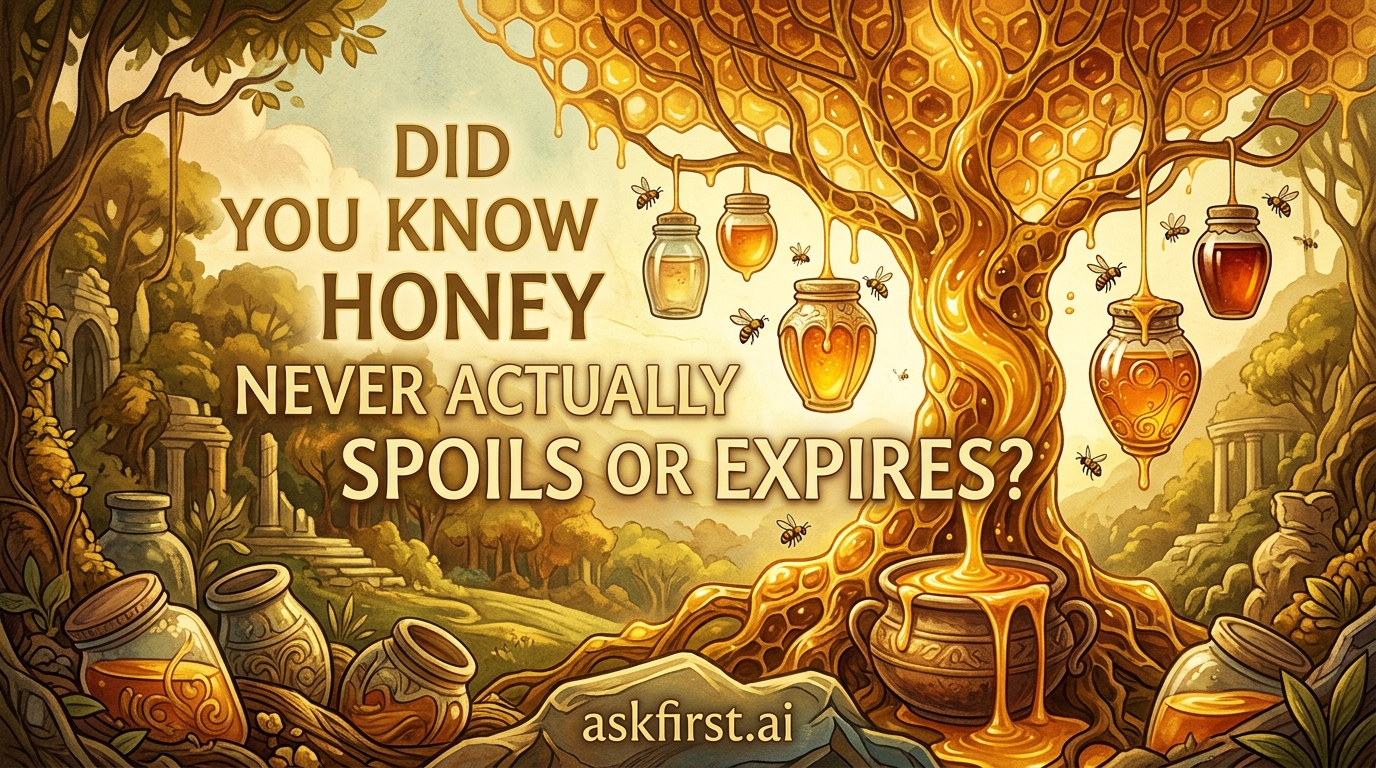
It is one of the most astonishing facts in the natural world: honey is effectively immortal. Archaeologists excavating ancient Egyptian tombs have discovered pots of honey dating back over 3,000 years, and remarkably, that honey remains edible. While the texture might crystallize or change over the millennia, the chemical composition allows it to defy the common rules of decay that govern almost every other organic food substance. Understanding why honey remains shelf-stable indefinitely requires an exploration of biochemistry, botanical science, and the industrious nature of honeybees.
The Chemical Trifecta of Preservation
Honey survives the passage of time due to a unique combination of three distinct chemical properties that work in tandem to create a hostile environment for bacteria and microorganisms.
1. Low Moisture Content
Bacteria and fungi require moisture to thrive, grow, and multiply. Raw honey contains very little water, generally ranging between 14% and 18%. This concentration is simply too low to support the life cycles of most spoilage-causing microbes. Through the process of evaporation and enzymatic action, honeybees transform nectar, which has high water content, into the thick, viscous substance known as honey, effectively dehydrating it to a state of preservation.
2. High Acidity
The pH level of honey typically falls between 3.2 and 4.5. This relatively high acidity is significant enough to act as an antiseptic barrier. Most bacteria, which prefer a more neutral environment, find it impossible to colonize in such an acidic medium. The acidity of honey is a biological byproduct of the enzymes secreted by bees during the nectar-to-honey conversion process.
3. The Hydrogen Peroxide Factor
Perhaps the most fascinating aspect of honey's longevity is its ability to produce its own preservative agent. When honeybees collect nectar, they introduce an enzyme called glucose oxidase into the substance. When this enzyme reacts with the glucose in the honey, it produces gluconic acid and hydrogen peroxide. Hydrogen peroxide is a powerful oxidizing agent that serves as a potent deterrent against microbial growth. Because it is released slowly and consistently in trace amounts, it provides a persistent antimicrobial defense.
The Role of Osmosis
Beyond its chemical makeup, honey acts through the physical principle of osmosis. Because honey is extremely sugar-dense—comprising roughly 80% sugars like fructose and glucose—it possesses high osmotic pressure. When a bacterium attempts to inhabit honey, the sugar pulls the water molecules out of the bacterial cell through its cell membrane. This dehydrates the microorganism, rendering it inactive or killing it outright. In essence, honey 'starves' bacteria of the water they need to survive.
The Myth of Crystallization: Understanding Change vs. Decay
Many consumers mistakenly believe that if honey turns cloudy, thick, or solid, it has 'gone bad.' This is a misconception. Crystallization is a natural physical process, not a sign of spoilage. Because honey is a supersaturated sugar solution, the glucose molecules naturally want to settle out of the liquid and form crystals over time. The speed of this process depends on the floral source of the nectar and the ambient temperature. To restore crystallized honey to a liquid state, one simply needs to place the jar in a warm water bath. Heating it gently dissolves the crystals without damaging the nutritional properties of the honey.
The 'Raw' Distinction and Proper Storage
While honey is technically immortal, its quality can be impacted by how it is processed and stored. Most commercial honey found in supermarkets is heat-treated (pasteurized) to delay crystallization and filtered to remove pollen, which gives it a smoother, clear appearance. While pasteurization does not technically shorten the shelf life, it can diminish some of the delicate enzymes that provide honey its antimicrobial and health-boosting properties. For long-term preservation of taste and quality, honey should be kept in a tightly sealed container to prevent it from absorbing moisture from the air, which could increase its water content and potentially make it susceptible to fermentation.
A Legacy of Survival
Nature has engineered honey as a primary energy reserve for the bee colony, designed to withstand the harsh conditions of winter when floral resources are scarce. By creating a substance that resists decomposition, bees ensure their survival across seasons. This biological imperative has gifted humanity with one of the few food sources that can literally last forever. Whether consumed as a culinary delicacy or used in traditional medicine for its soothing properties, honey stands as a testament to the sophistication of natural systems. It is not merely a sweetener; it is a perfectly engineered, self-preserving masterpiece of evolutionary biology.