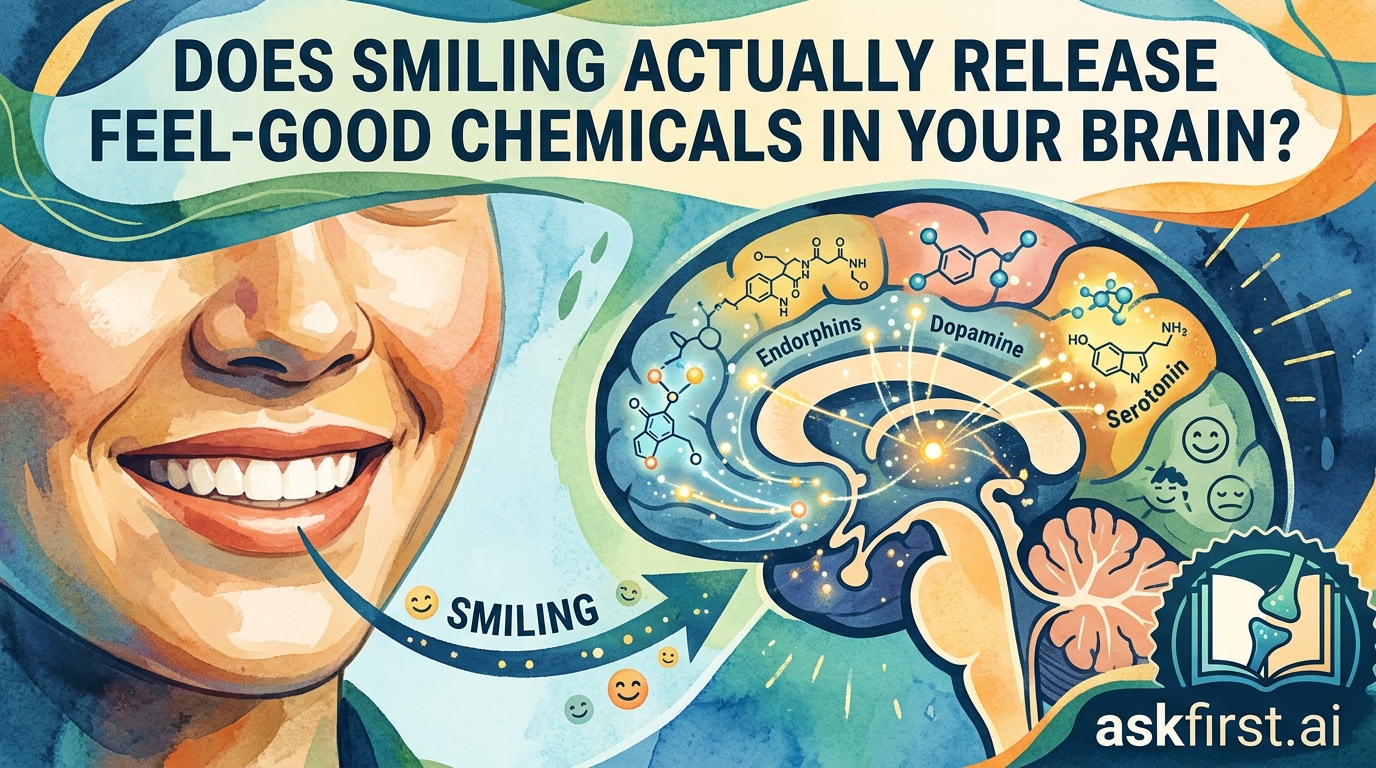
The Neurobiology of the Smile: A Chemical Cascade
It is a common piece of advice: 'fake it until you make it,' or more specifically, 'smile even when you do not feel like it.' While this sounds like optimistic platitude, there is profound neurological evidence suggesting that the simple physical act of smiling triggers a complex chemical reaction in the brain. This mechanism is rooted in the facial feedback hypothesis, which posits that facial expressions can influence emotional experience.
The Dopamine and Serotonin Connection
When the muscles in the cheeks and around the eyes—specifically the zygomaticus major and the orbicularis oculi—contract, they send signals to the brain that activate the reward system. This process triggers the release of dopamine, a neurotransmitter primarily responsible for feelings of pleasure, motivation, and reinforcement. Dopamine acts as a chemical messenger that signals to the brain that something positive is occurring, encouraging the repetition of the action.
Simultaneously, the act of smiling helps to modulate the release of serotonin, a neurotransmitter associated with mood regulation, social behavior, and overall well-being. Increased serotonin levels contribute to a sense of calm and emotional stability. By initiating this physiological signal, the brain begins to mirror the physical expression with a congruent internal state, effectively hacking one's own mood.
Endorphins: Nature's Natural Painkillers
Beyond dopamine and serotonin, smiling stimulates the release of endorphins. Often referred to as the body's natural opiates, endorphins are small proteins produced by the pituitary gland and the hypothalamus. They function to mitigate pain and induce feelings of euphoria. Historically, this system evolved to help humans survive physical stressors; however, in the modern context, smiling allows individuals to tap into this reservoir of natural wellness as a proactive tool for stress management.
The Feedback Loop: The Facial Feedback Hypothesis
The relationship between expression and emotion is bidirectional. While the brain dictates expressions, the facial muscles send sensory input back to the brain via the cranial nerves. This input is processed in the limbic system, the seat of emotion. Studies involving electromyography (EMG) have shown that when a person is instructed to adopt a smile—even without an emotional catalyst—the brain displays increased activity in the regions associated with positive affect.
- The Duchenne Smile: This is the 'genuine' smile, involving the eyes. It is involuntary and creates the most significant neurochemical shift.
- The Social Smile: This is a conscious contraction of the mouth muscles. While less potent than the Duchenne smile, it still triggers neurochemical pathways that can reduce cortisol, the body’s primary stress hormone.
Practical Applications for Daily Life
Understanding this mechanism offers a practical advantage in day-to-day life. By consciously initiating a smile during stressful encounters or moments of fatigue, individuals can exert a measure of control over their nervous system. This is not about suppressing authentic feelings but rather using physiology to shift one's baseline state.
- Mindful Smiling: Taking a moment during a workday to consciously smile can interrupt the physiological stress response, signaling to the brain that the environment is safe.
- Emotional Regulation: For those facing social anxiety or emotional fluctuations, practicing a smile can act as a circuit breaker, preventing the brain from slipping deeper into negative ruminations.
- Social Connectivity: Smiling triggers mirror neurons in the brains of observers, which encourages others to smile in return. This creates a feedback loop of positive chemical release throughout an entire social group, effectively spreading the neurochemical benefits.
Scientific Validity and Limitations
It is important to acknowledge that the facial feedback effect is not a miracle cure for complex mental health disorders. While it acts as a valuable tool for emotional regulation and biological support, it works best as part of a broader framework of wellness, including adequate sleep, nutrition, and professional guidance where necessary. However, the scientific consensus remains robust: the body and mind are intrinsically linked, and the simple movement of facial musculature acts as a biological switch for neurochemical homeostasis. By choosing to smile, one is essentially engaging in a form of self-directed neurochemistry, proof that small physical habits can have massive, measurable effects on human experience.