The Science of Physiological Synchrony
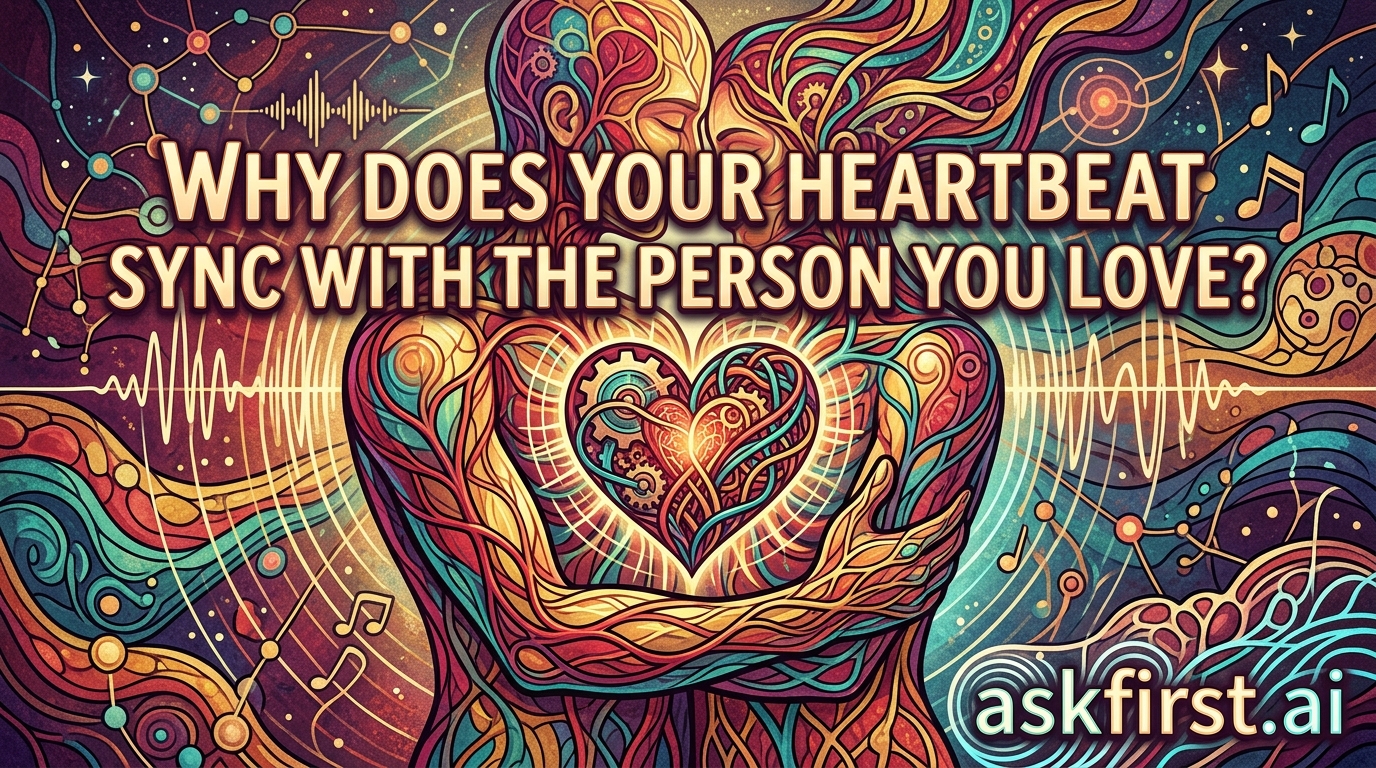
The phenomenon where heartbeats and respiratory patterns align between two people, often referred to as physiological synchrony, represents one of the most fascinating intersections of human biology and emotional attachment. When two individuals share a deep bond—whether romantic, parental, or fraternal—their bodies often enter a state of non-conscious coordination. This is not mere coincidence or poetic metaphor; it is a measurable biological reality rooted in the complex architecture of the human nervous system.
The Role of the Autonomic Nervous System
At the core of this synchrony is the autonomic nervous system (ANS), which regulates involuntary physiological processes like heart rate, blood pressure, and breathing. The ANS is divided into the sympathetic branch (fight or flight) and the parasympathetic branch (rest and digest). Research suggests that when two people are emotionally attuned, they exhibit "inter-brain" and "inter-body" coupling. This happens through the mirror neuron system, which allows individuals to simulate the internal states and emotions of others. By observing a loved one’s breathing or body language, the brain subconsciously adjusts its own physiological outputs to mirror the partner, creating a shared rhythm.
Psychological Resonance and Proximity
Beyond mere neurological mirroring, proximity acts as a catalyst. When a partner is physically close, the brain perceives social safety. This perception lowers cortisol levels—the body's primary stress hormone—and increases the release of oxytocin, frequently dubbed the "cuddle hormone" or the "bonding chemical." Oxytocin plays a critical role in social bonding and has a calming effect on the heart. As the nervous systems of two individuals enter a shared environment, the hormonal regulation of one individual begins to influence the other, leading to a stabilization of cardiac rhythms.
Evolutionary Significance
From an evolutionary perspective, physiological synchrony serves a survival function. Historically, mammals that could attune to the distress or calm of their kin were more likely to survive threats. Social buffering—the phenomenon where the presence of a supportive partner reduces the stress response—is a direct benefit of this alignment. By syncing heartbeats, partners can essentially act as emotional anchors for one another. If one person experiences a spike in heart rate due to a potential stressor, the other’s presence can help bring that rhythm back to a resting state, effectively regulating the collective homeostasis of the pair.
Empirical Evidence and Studies
Scientific literature, including pivotal studies published in journals like Psychological Science, has utilized ECG and respiratory sensors to track couples in laboratory settings. These studies demonstrate that the magnitude of synchrony is directly proportional to the perceived quality of the relationship and the level of empathy between the participants.
- Emotional Attunement: Participants who reported higher levels of relationship satisfaction showed more consistent heart rate alignment.
- Empathy Indices: Individuals scoring higher on standard tests of emotional intelligence demonstrated a greater capacity to sync with their partners.
- Breath Entrainment: Often, cardiac synchrony is preceded by breathing synchronization. As one partner slows their breathing, the other follows, leading the cardiovascular system to stabilize alongside the respiratory rate.
Practical Applications and Implications
Understanding this phenomenon provides insight into the power of human connection. It suggests that our bodies are not isolated entities but are, in fact, porous systems that constantly communicate with the environment and the people within it. This biological resonance underscores the importance of physical touch and presence in sustaining mental health. Even in the absence of spoken language, the rhythm of the heart communicates a state of safety, affection, and presence.
Conclusion
In summary, the syncing of heartbeats between loved ones is a profound expression of bio-behavioral synchrony. It is the body’s way of saying that the partner is not just a separate entity, but an extension of one’s emotional ecosystem. By leveraging the power of mirror neurons, hormonal regulation, and the evolutionary drive for social security, human beings create a shared physiological space that reinforces the strength of their bond. This rhythmic harmony is a silent, constant testament to the depth of human connection and the remarkable adaptability of the human heart.