The Evolutionary Blueprint of Regret
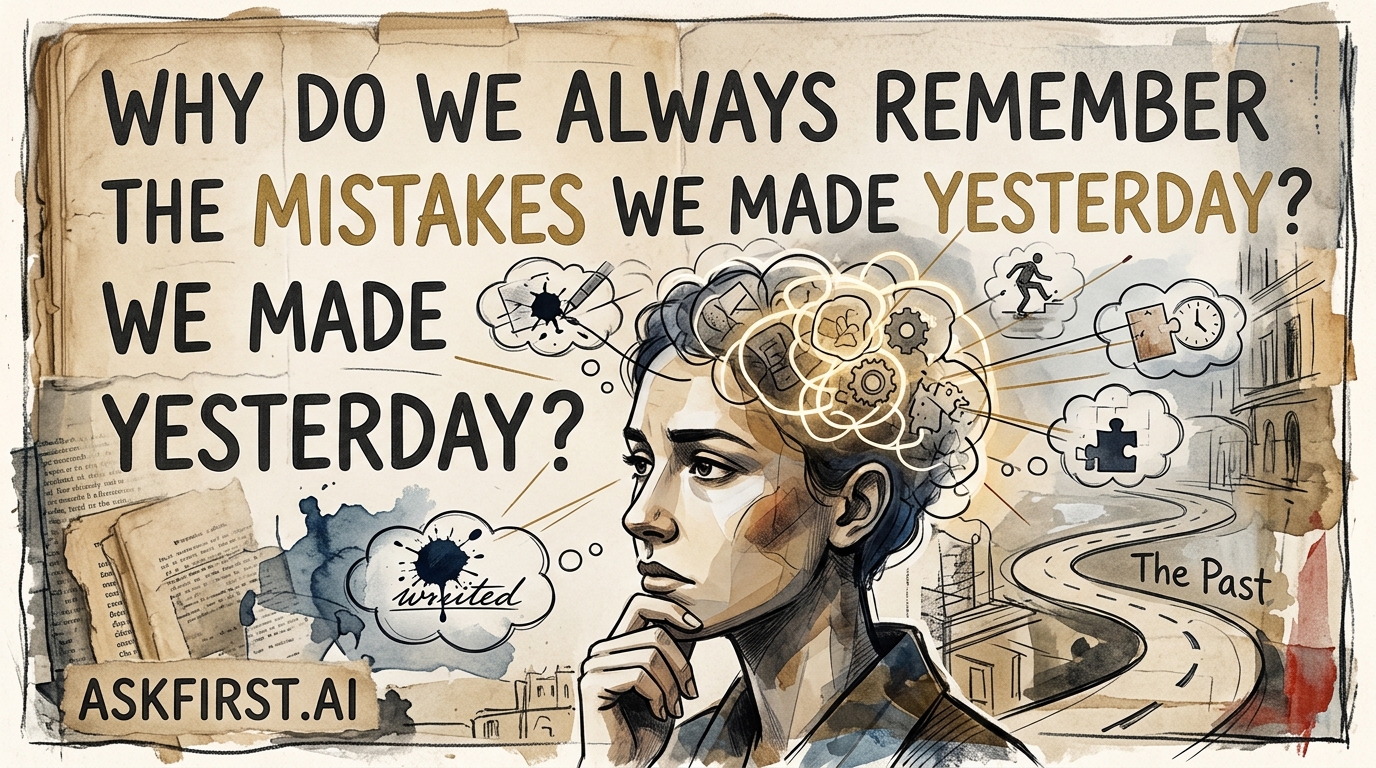
The human propensity to dwell on yesterday's mistakes is not a flaw; it is a sophisticated evolutionary adaptation designed for survival. From a neurobiological perspective, the brain treats perceived failures with the same intensity as physical threats. This phenomenon, often termed the 'negativity bias,' ensures that the mind prioritizes learning from error over celebrating success. By highlighting what went wrong, the brain attempts to prevent the recurrence of behavior that could lead to social ostracization or physical peril. This mental mechanism is essentially an internal quality assurance system that never sleeps.
The Role of the Amygdala and Prefrontal Cortex
When a mistake is identified, the amygdala—the brain's emotional command center—activates immediately, triggering a stress response. Simultaneously, the prefrontal cortex attempts to rationalize the event, analyzing the causal chain of the error. This combination creates a 'cognitive itch.' Because the brain desires closure, it loops the memory of the mistake repeatedly, hoping to find a pattern or a future solution. Research into cognitive psychology suggests that this 'Zeigarnik Effect' causes people to remember uncompleted or unresolved tasks—including the resolution of a social blunder or a failed project—more vividly than tasks that were completed successfully.
Psychological Hooks: Why We Cannot Let Go
- The Negativity Bias: Humans are hardwired to notice negative stimuli far more rapidly than positive ones. This was historically vital for spotting predators in the brush but now manifests as an obsession with a misplaced email or a misinterpreted social cue.
- Social Comparison Theory: Individuals often measure themselves against an idealized version of who they should be. Mistakes highlight the gap between reality and that idealized self, causing a dissonance that demands immediate mental attention.
- The Learning Feedback Loop: Every time the memory of a mistake is replayed, the brain is attempting a 'what-if' simulation. By mentally practicing different outcomes, the mind is theoretically 'training' for a future scenario where a similar choice might be presented.
Breaking the Cycle: Strategies for Cognitive Reframing
To move past the persistent recall of yesterday's errors, one must engage in conscious cognitive reframing. This is not about forgetting; it is about shifting the focus from blame to data acquisition.
- Objectivity Through Documentation: Writing down the specific mistake acts as a form of externalization. By removing the error from the abstract mental space and placing it on paper, the brain perceives the problem as 'dealt with.'
- The 10-10-10 Rule: Ask whether this mistake will matter in 10 minutes, 10 months, or 10 years. This perspective-taking technique helps the prefrontal cortex override the emotional distress signaled by the amygdala.
- Reframing as Information: Instead of viewing a mistake as a character flaw, categorize it as high-value data. If an experiment yields a negative result, scientists do not lament the result; they analyze the variables. Apply the same scientific rigor to daily life choices.
Societal and Developmental Context
Education systems often emphasize perfection, which exacerbates the fear of making mistakes. When society frames failure as the end of the road rather than the beginning of a correction, the brain becomes hyper-vigilant. However, those who develop a 'growth mindset,' a term coined by psychologist Carol Dweck, are better able to categorize past mistakes as essential growth markers. By shifting the internal narrative, the memory of the mistake changes from a source of shame into a blueprint for future success.
Conclusion: Harnessing the Power of Reflection
Ultimately, the memory of yesterday's mistakes is a testament to the capacity for improvement. If the brain did not care about the errors made, it would lack the drive to adapt or evolve. While the repetitive nature of these memories can feel burdensome, it is also the mechanism that powers human resilience and refinement. Embracing these memories as useful, albeit uncomfortable, feedback allows individuals to turn regret into wisdom. By acknowledging the evolutionary purpose of the negativity bias, one can reclaim control over the narrative, ensuring that yesterday’s lessons illuminate tomorrow’s choices rather than casting a shadow over them. The mind is not haunting its owner with past failures; it is constantly optimizing for future success, provided the observer learns to steer the process with intention and self-compassion.