The Science of Synchrony: How Shared Movement Bonds Us
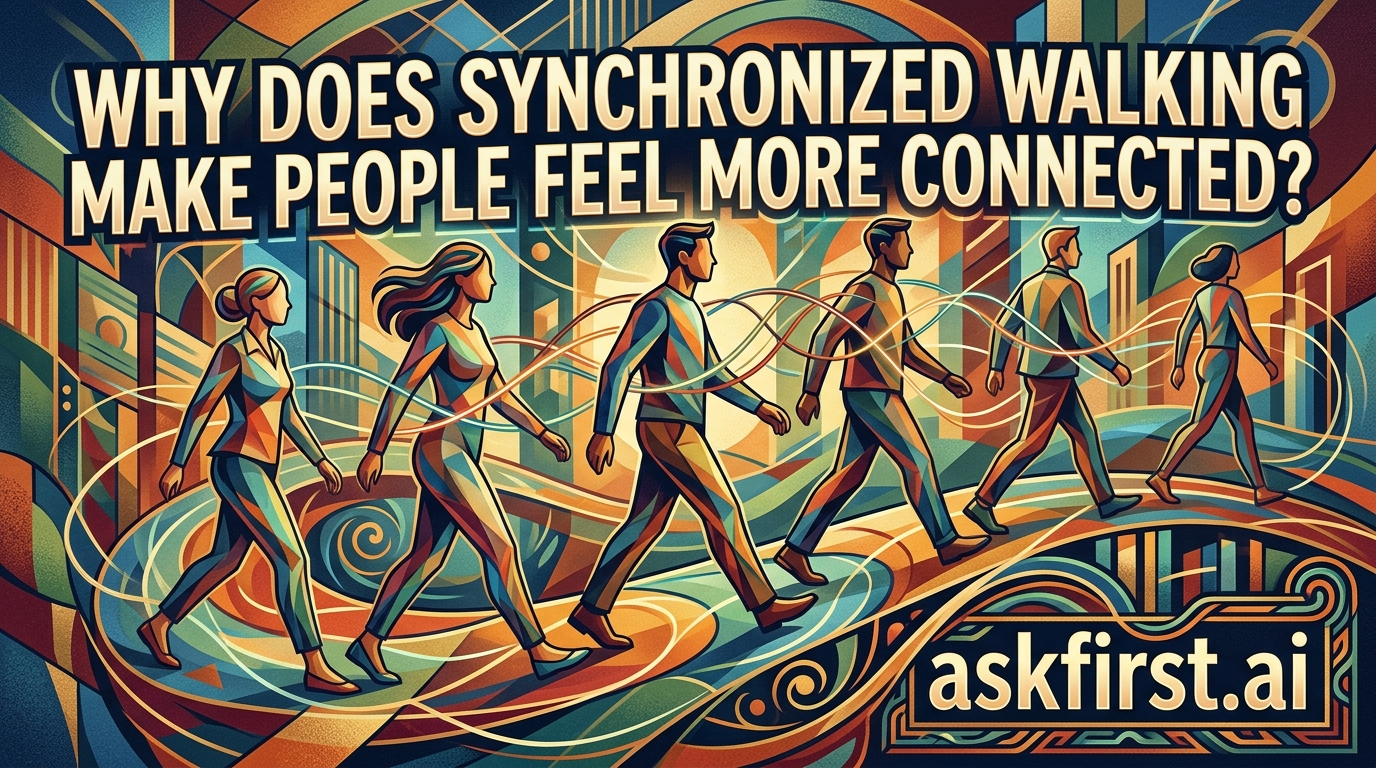
Synchronized walking, often referred to as interpersonal motor coordination, is a fascinating phenomenon where humans unconsciously adjust their gait to match the cadence of those around them. This subtle alignment acts as a powerful social glue, fostering a deep, often subconscious sense of camaraderie and cohesion among individuals. Research in the field of social psychology and behavioral science suggests that this behavior is deeply rooted in our evolutionary history, serving as a non-verbal language that signals unity, cooperation, and group identification.
The Evolutionary Mechanics of Coordination
From an evolutionary standpoint, the ability to act as a cohesive unit was a primary survival advantage. When ancestral groups moved in unison, they demonstrated higher levels of alertness, defense capabilities, and communal strength. This biological inclination toward synchrony is controlled by mirror neurons—a class of brain cells that fire both when an individual performs an action and when they observe the same action performed by another. When individuals walk in sync, these mirror neurons create a neural bridge between participants, effectively putting their brains on the same wavelength. This shared rhythm decreases the neural load required for social navigation, as the brain perceives the synchronized individual not as a 'separate' entity, but as part of an integrated, safe 'whole.'
Physiological Synchronization: The Heartbeat Effect
Beyond simple motor movement, synchronized walking can lead to physiological synchronization. Studies have shown that when people walk together in a specific rhythm, their heart rates, breathing patterns, and even hormonal profiles begin to align. This is sometimes referred to as 'physiological entrainment.'
- Oxytocin Release: Research indicates that rhythmic, synchronized movement triggers the release of oxytocin, often dubbed the 'bonding hormone.' This chemical promotes feelings of trust and reduces cortisol levels, effectively lowering anxiety.
- Increased Pain Thresholds: Studies, such as those conducted by the University of Oxford, have demonstrated that engaging in synchronous movement increases pain tolerance and perceived stamina, reinforcing the notion that we are stronger together.
- Neural Oscillation: Electroencephalogram (EEG) readings from individuals walking in synchronization show an increase in 'inter-brain phase locking,' meaning their brain wave patterns begin to mirror each other in frequency, which facilitates easier communication and understanding.
The Psychology of the 'We-Identity'
When we align our stride with another person, we undergo a cognitive shift. The brain stops distinguishing between 'self' and 'other' as strictly. This phenomenon is known as the Self-Other Merging. By minimizing the distinction between personal space and shared space, synchronized walking diminishes personal defensiveness. This makes individuals more likely to act prosocially—that is, they become more inclined to cooperate, offer help, and share resources. It transforms a group of disparate individuals into a unified team, even if they have never spoken a single word to one another.
The Practical Application of Synchrony
This behavior is not limited to casual strolling. It is actively leveraged in various sectors:
- Military Training: Marching in perfect unison has been used for centuries not just for visual spectacle, but to foster absolute unity and discipline. It forces soldiers to subordinate their individual ego to the collective goal.
- Team Building: Many modern organizational psychology programs encourage walking meetings where participants are guided to maintain a steady, synchronized pace to foster better creative problem-solving.
- Therapeutic Settings: Movement therapy often utilizes rhythmic gait training to build rapport between therapists and patients, establishing a foundation of trust that transcends verbal communication.
Dispelling the Myth of Coincidence
Many people assume that walking in sync is a conscious decision to mimic someone else. However, psychological testing reveals that this is almost always an unconscious act of social mirroring. When people feel a high level of rapport, they naturally fall into step. Conversely, when rapport is low, individuals are more likely to break step or deliberately deviate from a companion's rhythm. Therefore, the degree of synchronization can actually serve as a metric for the current state of a relationship or group dynamic. If you find yourself in lockstep with a companion, your brain is signaling that you are in a high-trust, low-threat state.
Conclusion: The Rhythm of Belonging
Synchronized walking is far more than an accidental overlap in stride; it is a profound social mechanism that allows us to 'feel' the presence of others in a physical sense. By aligning our bodies, we align our minds, reducing social friction and fostering a sense of shared destiny. In a world increasingly defined by digital distance, the simple act of matching our footsteps remains a potent reminder of our fundamental human need for physical and emotional connection. Next time you find yourself walking in perfect rhythm with someone else, recognize it as the silent, ancient language of human cooperation at work.