The Psychology of Parasocial Relationships
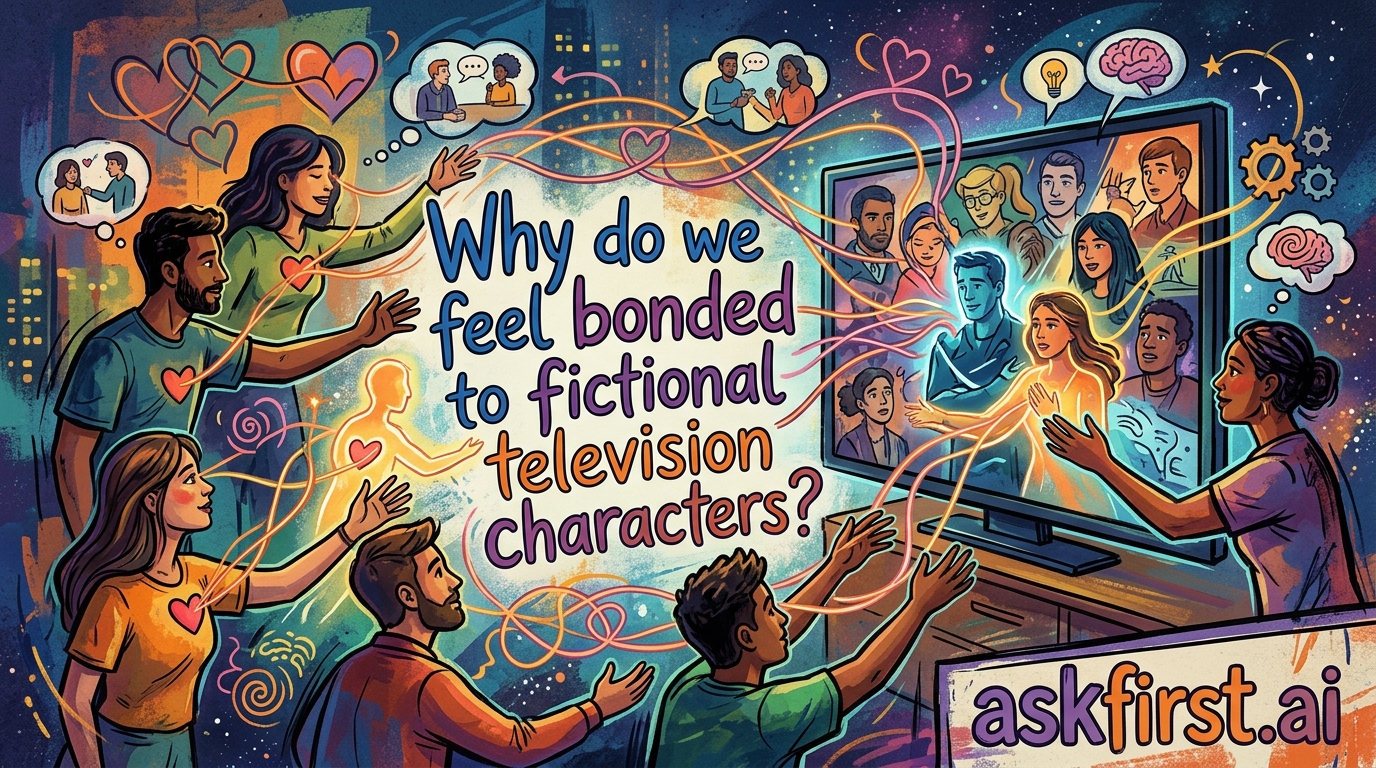
The phenomenon of feeling a deep, emotional connection to characters who exist only within a screen is known in psychology as a parasocial relationship. While these bonds are one-sided—meaning the fictional character is unaware of the viewer's existence—the emotional weight they carry is remarkably similar to real-world friendships. This experience is not a sign of delusion but rather a testament to the evolutionary adaptability of the human brain, which often struggles to distinguish between real interpersonal signals and high-quality simulated social cues.
Why Our Brains Embrace Fiction
1. Evolutionary Social Hardwiring
Humans are social animals evolved to thrive in small, tight-knit tribes. For most of human history, if someone smiled at us, spoke to us, or revealed their vulnerabilities, they were physically present. Television acts as a "super-stimulus." When a showrunner writes a character that shares secrets, grows through challenges, or expresses consistent emotional responses, the brain's social centers (like the medial prefrontal cortex) activate as if a real person were interacting with us. We perceive these characters as members of our extended social circle because the brain prioritizes social information processing regardless of the medium.
2. The Illusion of Consistency and Intimacy
Unlike real-life friends, who might be unavailable, unpredictable, or moody, television characters are often designed to be highly reliable in their personality traits. Over many episodes, viewers observe these characters navigating life, often seeing them in private, vulnerable moments that would be impossible to witness in reality. This creates an illusion of intimacy. Research in media psychology suggests that the more we see a character, the more we rely on them for companionship, especially during periods of real-life social transition or isolation.
The Mechanisms of Identification
- Cognitive Identification: This occurs when viewers mentally "take on" the perspective of the character, imagining how it feels to be them in a given situation. It fosters empathy and moral alignment.
- Affective Identification: This is the emotional bridge. When a character succeeds, the viewer feels a sense of vicarious pride; when they suffer a setback, the viewer experiences genuine sadness. This reinforces the bond, making the character a permanent fixture in the viewer's emotional landscape.
- Social Comparison: Viewers often measure their own values or life choices against the character’s trajectory, using fictional figures as a yardstick for personal growth or self-reflection.
Benefits of Parasocial Bonding
Contrary to the myth that such bonds are isolating, evidence suggests they can serve as emotional support systems. For those experiencing social anxiety or lacking a local community, these characters provide a safe environment to "practice" social empathy.
- Stress Reduction: Engaging with familiar characters can lower cortisol levels, acting as a form of social comfort.
- Personal Growth: Observing a character overcome obstacles can inspire viewers to mirror those traits in their own lives, a concept known as the 'parasocial contact hypothesis.'
The Role of Narrative Immersion
Television has a unique advantage over other media: Time. By spending hours, days, or even years with characters, viewers experience a narrative arc that mimics the passage of time in reality. The brain interprets this duration as a lasting history. The longer we watch, the more 'social data' we collect about the character, leading to a profound sense of mutual history.
Conclusion: A Human Marvel
Feeling bonded to a fictional entity is not a social deficit; it is an incredible demonstration of human imagination and emotional capacity. We possess the unique ability to project our internal world onto external narratives, finding meaning, companionship, and guidance in stories. Whether it is a protagonist’s resilience or a comedic ensemble’s warmth, these digital mirrors allow us to explore our own humanity in ways that transcend the limits of physical geography and time. In essence, we do not just watch television; we engage in a deeply human act of collaborative storytelling, where the characters provide the script, and we provide the soul.