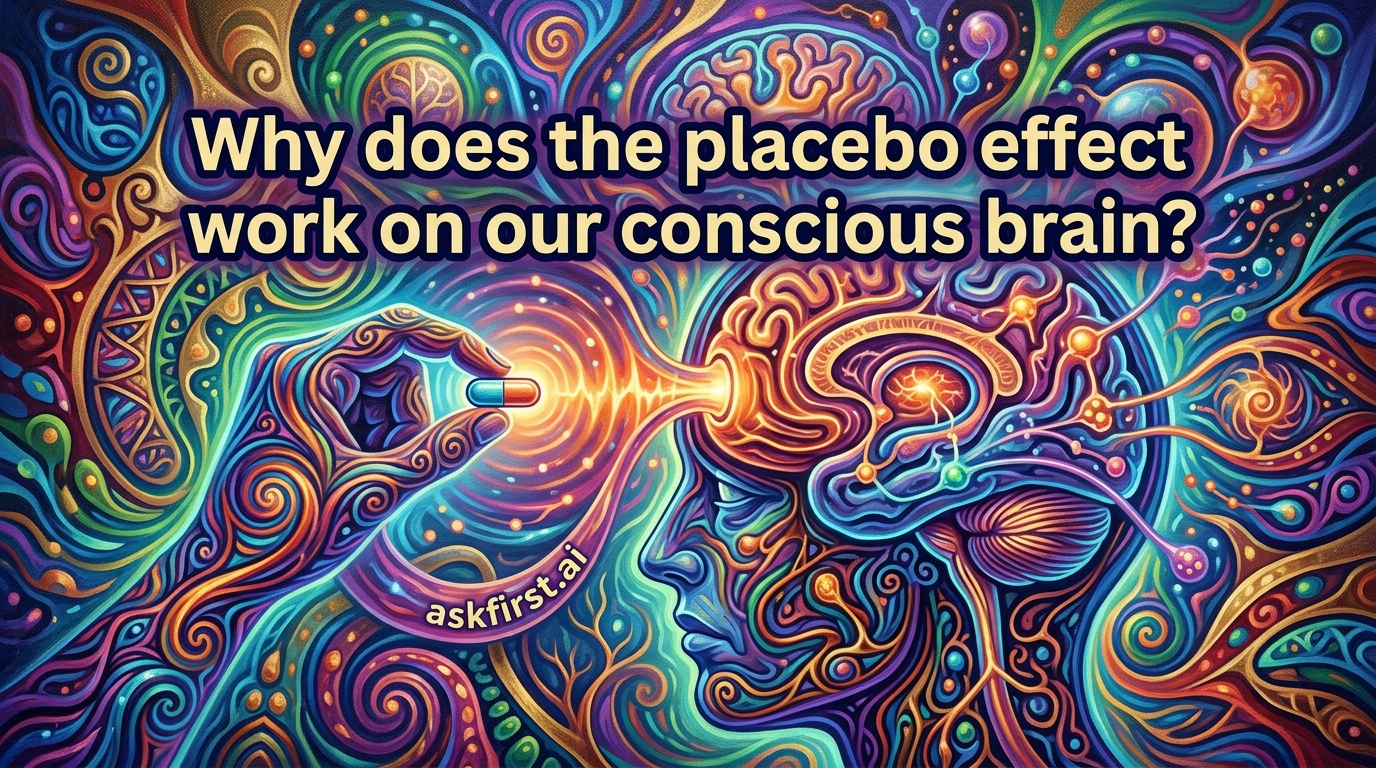
The placebo effect is a profound neurological phenomenon where an individual experiences a perceived or actual improvement in condition following the administration of a treatment that lacks active pharmacological properties. Far from being merely 'all in the mind,' this effect represents a complex orchestration of neurobiological, psychological, and physiological mechanisms that reveal the brain's remarkable capacity to regulate bodily functions through expectation and conditioning.
The Neurobiology of Expectation
At the core of the placebo response lies the brain's internal prediction system. When a person expects a treatment to work, the prefrontal cortex—the area responsible for higher-level executive functioning—activates neural pathways that influence the brain's reward and pain-processing centers. Specifically, the anticipation of relief triggers the release of endogenous opioids and dopamine. These are the body's natural painkillers and pleasure chemicals, which can actually alter the perception of pain or stress in real-time.
Research indicates that the opioid system is centrally involved. In clinical studies, when patients are given an inert substance but told it is a potent analgesic, their brains increase production of endogenous opioids. If these patients are administered an opioid antagonist like naloxone, the placebo effect is often blocked, demonstrating a tangible biochemical mechanism at work. This confirms that the brain does not just 'think' it feels better; it proactively modulates sensory input based on cognitive input.
The Role of Pavlovian Conditioning
Beyond conscious expectation, the placebo effect is deeply rooted in subconscious conditioning. Throughout life, people are conditioned to associate certain rituals—such as visiting a doctor, swallowing a pill, or receiving an injection—with recovery. This associative learning creates a conditioned response. Even when the stimulus (the drug) is replaced by an inert placeholder, the brain initiates the physiological process of healing because it anticipates the relief associated with the ritual. This is similar to Pavlov’s dogs salivating at the sound of a bell; the 'ritual' of medicine serves as the bell, and the biological response is the healing cascade.
Psychosocial and Environmental Contexts
The effectiveness of a placebo is significantly influenced by the environment and the practitioner. This is often referred to as the 'meaning response.' Key factors include:
- Therapeutic Rapport: A warm, empathetic, and confident physician enhances the patient's expectation of relief.
- Treatment Characteristics: The size, color, and method of delivery matter. For example, large pills often perform better than small ones; injections typically yield stronger placebo effects than oral medications due to the perceived clinical intensity.
- Conditioning History: Patients who have had positive experiences with medical treatments in the past are statistically more likely to exhibit a strong placebo response.
The Placebo vs. The Nocebo
Conversely, the brain is equally capable of inducing the 'nocebo' effect. If a person expects a treatment to cause harm or side effects, the brain can initiate physiological changes that lead to those symptoms. This highlights that the brain acts as a filter for bodily health, where the content of thoughts shapes the neurological output sent to the rest of the body. When the brain expects misery, it can heighten sensitivity to pain or suppress immune functioning through stress-response hormones like cortisol.
Why This Evolutionarily Makes Sense
From an evolutionary perspective, the placebo response can be viewed as an adaptive mechanism for resource management. If the brain senses that an environment or a specific 'intervention' suggests safety or improvement, it may modulate immune or metabolic activity to promote recovery. By responding to symbols and context, the human brain saves metabolic energy and prioritizes healing when it detects the presence of care or external help.
Clinical Implications
The existence of the placebo effect does not render medicine ineffective; rather, it underscores the importance of the therapeutic encounter. In clinical practice, the 'bedside manner' is not merely a social nicety but a functional tool that can amplify the efficacy of medical interventions. By harnessing the patient’s belief and the healing context, healthcare providers can potentially reduce the dosage of active drugs needed or improve overall patient satisfaction and clinical outcomes.
Conclusion
The placebo effect remains one of the most fascinating examples of the mind-body connection. It serves as a reminder that human biology is not static but dynamic, responding constantly to the stories we tell ourselves and the contexts in which we exist. Understanding that expectations have biological weight empowers both patients and practitioners to foster environments where healing is optimized through the convergence of science and the human experience.