The Neural Architecture of Cephalopods: A Decentralized Marvel
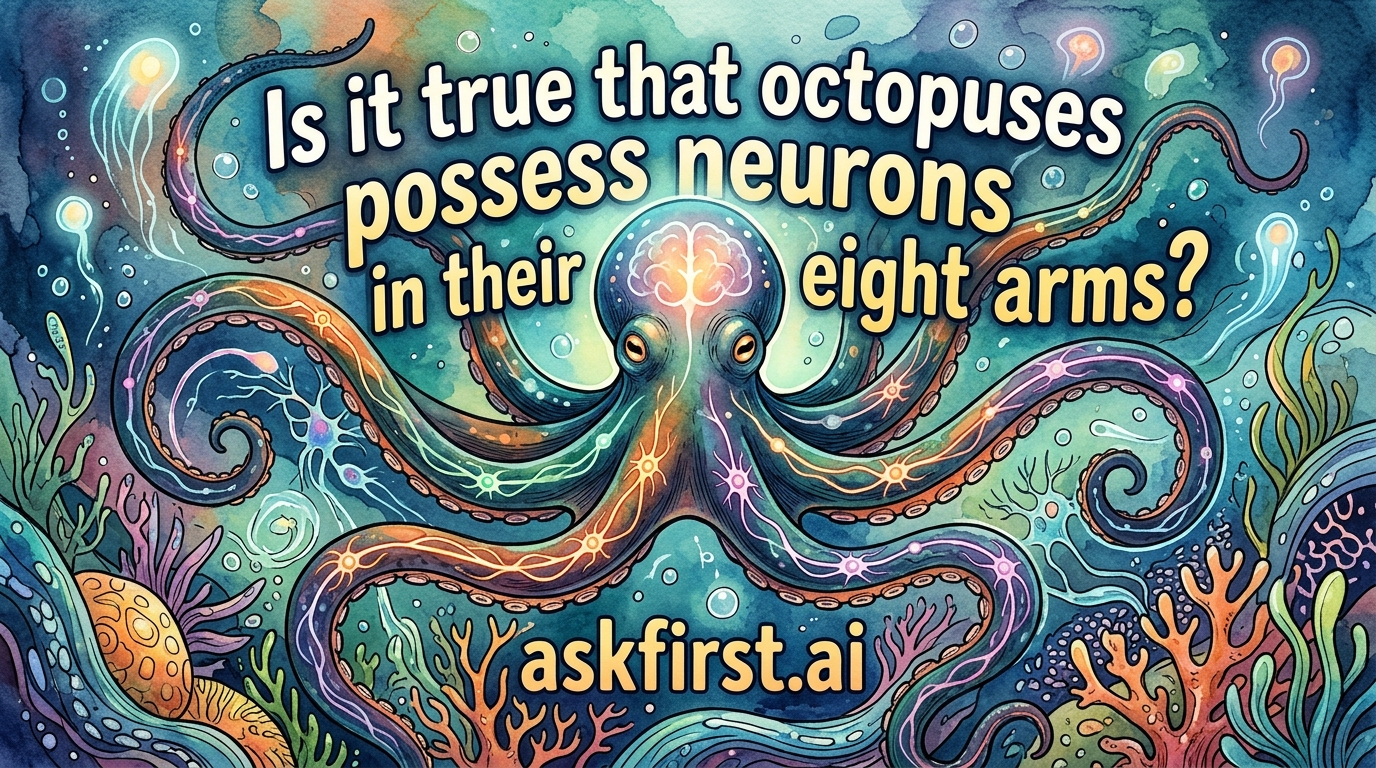
It is scientifically accurate that octopuses possess a highly complex, decentralized nervous system that distributes significant neurological processing power directly into their eight arms. In an octopus, roughly two-thirds of its approximately 500 million neurons are located not in its central brain, but within the arms themselves. This unique biological adaptation allows each arm to operate with a degree of autonomy that is virtually unheard of in the animal kingdom, functioning almost as a distributed computer network connected to a central command node.
How Distributed Cognition Works
Unlike vertebrates, which rely on a centralized spinal cord and brain for almost all motor functions, the octopus has evolved a system where the arms can execute tasks without waiting for input from the central brain. This process is known as peripheral nervous system processing. When an octopus reaches for food or explores a rocky crevice, the sensory receptors in the suckers gather immense amounts of information regarding texture, chemical composition, and pressure. These neurons process the data locally, allowing the arm to move, bend, and grip without the central brain being burdened by every micro-adjustment.
- Sucker Autonomy: Each sucker contains tens of thousands of sensory neurons. They can taste and touch independently of the main brain.
- Reflex Arcs: If an arm touches a sharp object or encounters a potential threat, the local neurons trigger an immediate withdrawal reflex faster than a signal could travel to the central brain and back.
- Coordination: Despite their independence, the arms remain coordinated. The central brain exerts a 'top-down' control that manages higher-level movement goals while letting the arms determine the tactical 'how' of execution.
Why Did Evolution Choose This Path?
Biological researchers believe this decentralized nervous system is an evolutionary response to the octopus's unique body plan. Because octopuses lack a rigid skeleton, the range of motion for their limbs is theoretically infinite. Mapping the movement of an arm that can bend at any point in any direction is computationally expensive for a standard brain. By offloading this 'control task' to the arms themselves, the octopus avoids a massive neurological bottleneck, allowing it to navigate complex environments at incredible speeds.
Comparison to Vertebrate Systems
In human physiology, the motor cortex manages fine motor skills, and if the connection between the brain and limb is severed, the limb becomes paralyzed. In the octopus, however, severed arms have been observed to show signs of independent activity for a short period, as the neural clusters continue to react to sensory stimuli. This level of peripheral independence is the closest example found in nature to a 'modular brain.'
Scientific Implications for Robotics and AI
This phenomenon has caught the attention of engineers and roboticists interested in soft robotics. Traditional robots are rigid and require precise path-planning algorithms to avoid collisions. A robot inspired by the octopus, featuring a decentralized controller, could navigate cluttered, dynamic environments by allowing its 'limbs' to interact with the surroundings through local tactile feedback, much like the octopus does when it slips into tight crevices. This research is paving the way for search-and-rescue bots and deep-sea exploration vessels that can adapt to changing terrain in real-time.
Conclusion: A Different Kind of Intelligence
The octopus reminds humanity that intelligence does not necessarily require a large, centralized skull-encased brain. By distributing neural density throughout its appendages, the octopus has achieved a mastery over its environment that is both efficient and profoundly sophisticated. This alien-like biological architecture serves as a cornerstone of modern neurobiology, inviting researchers to reconsider the definitions of consciousness and cognitive processing in the animal kingdom. The next time you observe an octopus exploring a reef, realize you are watching one of the most successful examples of decentralized intelligence currently inhabiting our oceans.