The Paradox of Solomon: Understanding the Advice Gap
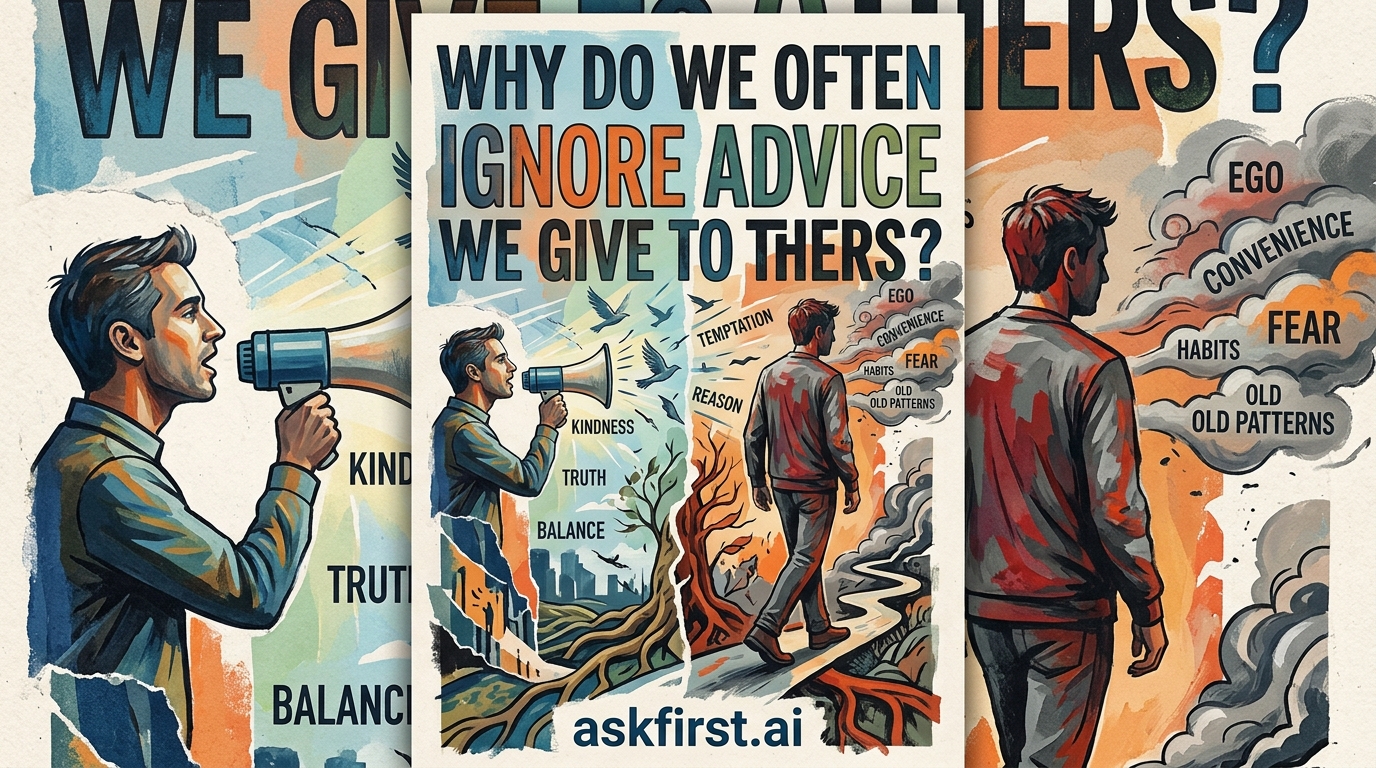
Human beings frequently exhibit a fascinating psychological phenomenon known as the Solomon’s Paradox. This paradox describes the tendency for individuals to reason more wisely about other people’s problems than their own. While an observer can often see a clear path forward for a friend, that same observer remains paralyzed by indecision when faced with a mirrored situation in their own life. This cognitive discrepancy is deeply rooted in how the brain processes self-referential information compared to objective analysis.
The Role of Psychological Distance
The primary driver of this phenomenon is psychological distance. When individuals evaluate a friend’s dilemma, they occupy an observer's perspective, which promotes high-level, abstract thinking. This distance allows for a broader perspective, free from the immediate emotional turbulence that clouds personal decision-making. In contrast, when analyzing personal issues, the mind adopts a 'bottom-up' processing style. This is mired in specific details, fears, and ego-driven desires, making it difficult to see the forest for the trees. By removing oneself from the situation, the analytical capacity increases significantly because the emotional stakes are lowered.
Cognitive Biases and Self-Protection
Several cognitive biases further exacerbate this gap:
- Self-Serving Bias: People naturally attribute their own success to internal qualities while blaming failures on external factors. When offering advice to others, this bias is absent because there is no immediate ego-threat to manage.
- The Empathy Gap: Decisions are often dictated by current emotional states. Because individuals cannot easily predict how they will feel in future scenarios, they struggle to apply rational advice to themselves.
- Loss Aversion: Research in behavioral economics demonstrates that people feel the pain of a loss twice as strongly as they feel the joy of an equivalent gain. Consequently, when people advise themselves, they tend to be overly risk-averse, whereas they are more willing to suggest bold, rational moves to a friend.
The Lack of 'Metacognitive' Awareness
Metacognition—or thinking about one's own thinking—is notoriously difficult to sustain under pressure. People often operate on autopilot, relying on established heuristic patterns when dealing with personal stress. This 'system one' thinking (fast, emotional, intuitive) dominates personal choices. Conversely, when coaching someone else, the individual transitions into 'system two' thinking (slow, deliberate, logical). To bridge the gap, one must intentionally trigger a shift in mindset.
Strategies for Self-Guidance
To apply the wisdom offered to others to one's own life, specific techniques can bridge the gap:
- The Third-Person Perspective: Referring to oneself by name when problem-solving creates the same psychological distance seen when advising a peer. Studies suggest that people who engage in 'distanced self-talk' show superior emotional regulation.
- The 'Best Friend' Heuristic: Before finalizing a decision, ask, 'What would I tell my best friend if they were in this exact position?' This simple prompt forces the brain to shift from emotional immersion to objective analysis.
- Temporal Distancing: Project the current problem five years into the future. By analyzing the issue through the lens of long-term consequences rather than immediate gratification, one gains a clearer view of what truly matters.
The Evolution of Wisdom
Wisdom is not merely the accumulation of knowledge; it is the ability to apply that knowledge consistently across different contexts. The fact that humans are better at advising others than themselves does not signify a flaw in character, but rather a functional feature of the human brain designed for emotional protection. However, mastering the art of self-advice is the ultimate mark of emotional maturity. By consciously creating mental distance, individuals can leverage their own wisdom to improve their life outcomes, effectively becoming their own best mentor. Through practice, the divide between what is known and what is done shrinks, leading to a more congruent, intentional, and successful life trajectory.