The Enigmatic Slumber of Aquatic Life: Understanding Fish Sleep
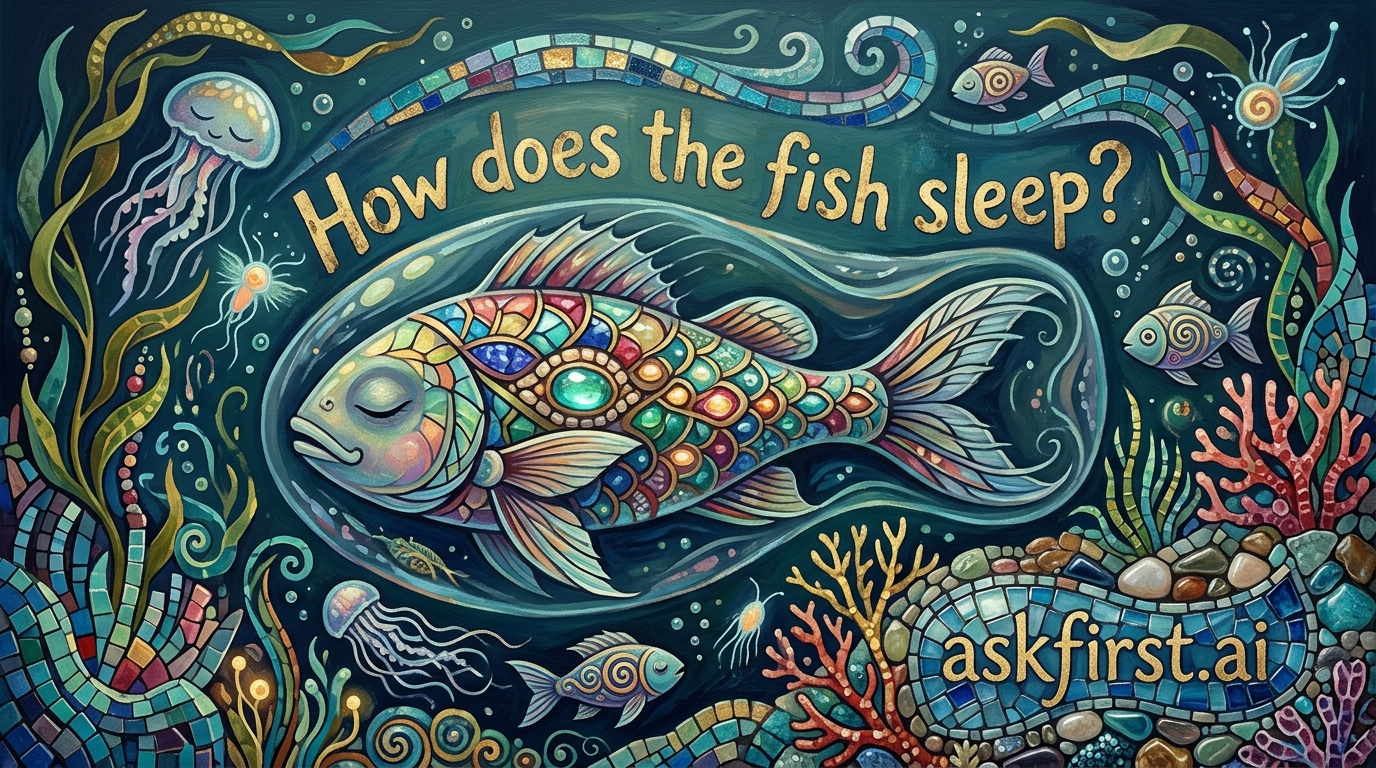
The concept of "sleep" in fish is a fascinating subject that often defies our terrestrial-centric understanding of rest. When we think of sleep, we envision closing our eyes, entering a state of unconsciousness, and remaining immobile for hours. However, because fish lack eyelids and possess unique physiological requirements for survival in aquatic environments, their version of sleep—often termed "resting state" or "torpor"—is profoundly different from the mammalian experience.
The Absence of Eyelids and the Architecture of Rest
The primary reason humans find it difficult to observe fish sleeping is the anatomical absence of eyelids. Most fish species cannot close their eyes, which leads to the common misconception that they never sleep. Instead, fish enter a state of reduced activity and responsiveness. During this period, their metabolism slows down, their heart rate decreases, and they exhibit a diminished sensitivity to external stimuli.
According to Dr. Irene Tobler, a renowned sleep researcher who has extensively studied sleep across various species, sleep is defined by specific behavioral and physiological criteria rather than the mere act of closing eyes. In her seminal work, "Phylogeny of Sleep," she emphasizes that sleep is a state of behavioral quiescence, increased arousal threshold, and rapid reversibility. Fish exhibit these traits by hovering in place, hiding in crevices, or settling on the substrate of their environment, all while remaining alert enough to flee from potential predators.
Behavioral Patterns and Environmental Adaptations
Different species have evolved distinct strategies to manage rest without compromising their safety or physiological needs. The environment dictates the method:
- Stationary Resting: Many reef fish, such as Parrotfish, find a safe nook in the coral during the night. Some even secrete a mucus cocoon around themselves, which acts as a chemical barrier to mask their scent from nocturnal predators like moray eels. This behavior is documented in "The Reef Guide: Fishes of the East African Coast" by Dennis King, which highlights how these "sleep bubbles" provide both protection and early warning systems.
- Continuous Movement (Obligate Ram Ventilators): Some species, such as Great White Sharks and Tuna, are known as "obligate ram ventilators." They must keep moving to force oxygen-rich water over their gills. If they stop, they suffocate. Consequently, these fish do not experience "sleep" in the way we do. Instead, they engage in a form of unihemispheric rest or simply swim in a "zombie-like" state, where their spinal cord controls their movement while their brain enters a low-energy resting phase.
- Bottom Dwellers: Species like flatfish or catfish often simply settle into the sand or mud. By blending into the substrate, they minimize their visibility while their metabolic processes stabilize.
The Role of Circadian Rhythms and Brain Activity
Recent advancements in neurobiology have confirmed that fish possess a circadian rhythm similar to land animals. Research conducted at the University of Zurich and published in the journal Nature has demonstrated that zebrafish (Danio rerio) exhibit sleep-like states that are regulated by the same neurotransmitters—such as hypocretin and melatonin—that govern human sleep.
When zebrafish are deprived of rest, they exhibit "rebound sleep," meaning they sleep longer and deeper when finally allowed to rest, mirroring the compensatory behavior seen in humans. This suggests that the biological need for restorative rest is an ancient evolutionary trait that predates the emergence of mammals. The brain activity of these fish during rest shows distinct patterns of neural oscillation, which researchers now categorize as clear indicators of a primitive sleep cycle.
The Evolutionary Necessity of Sleep
Why do fish need to sleep if they are already in a state of relative calm? The answer lies in cognitive and cellular maintenance. Even in the aquatic world, rest is required for:
- Memory Consolidation: Just as in humans, sleep helps fish process information from their environment, such as the locations of food sources or the presence of territorial rivals.
- Energy Conservation: By lowering their heart rate and metabolic activity, fish save precious energy, which is vital for survival in nutrient-scarce environments.
- Immune System Support: Sleep allows the body to repair damaged tissues and strengthen the immune system, a process vital for species that frequently interact with abrasive surfaces or parasites.
Conclusion
Fish do indeed sleep, though they do so in a manner tailored to the relentless demands of an underwater existence. Whether they are tucked away in a protective mucus cocoon, hovering motionlessly in the mid-water column, or swimming in a rhythmic, semi-conscious state, their version of rest is essential for their biological longevity. By observing these behaviors, we gain a deeper appreciation for the evolutionary continuity of life. Sleep is not merely a human luxury; it is a universal necessity that bridges the gap between the terrestrial and the aquatic worlds, proving that even in the silent depths of the ocean, the brain finds time to reset and recover.