The Biological and Psychological Architecture of Love
Love is perhaps the most profound human experience, a complex tapestry woven from evolutionary biology, neurochemistry, and psychological development. While poets and songwriters have spent millennia attempting to define it through metaphor, modern science offers a more grounded, albeit equally fascinating, explanation. We feel love because it is an essential survival mechanism—a powerful, invisible tether that has ensured the continuation of the human species for hundreds of thousands of years.
The Neurochemical Cascade: The Brain’s Internal Laboratory
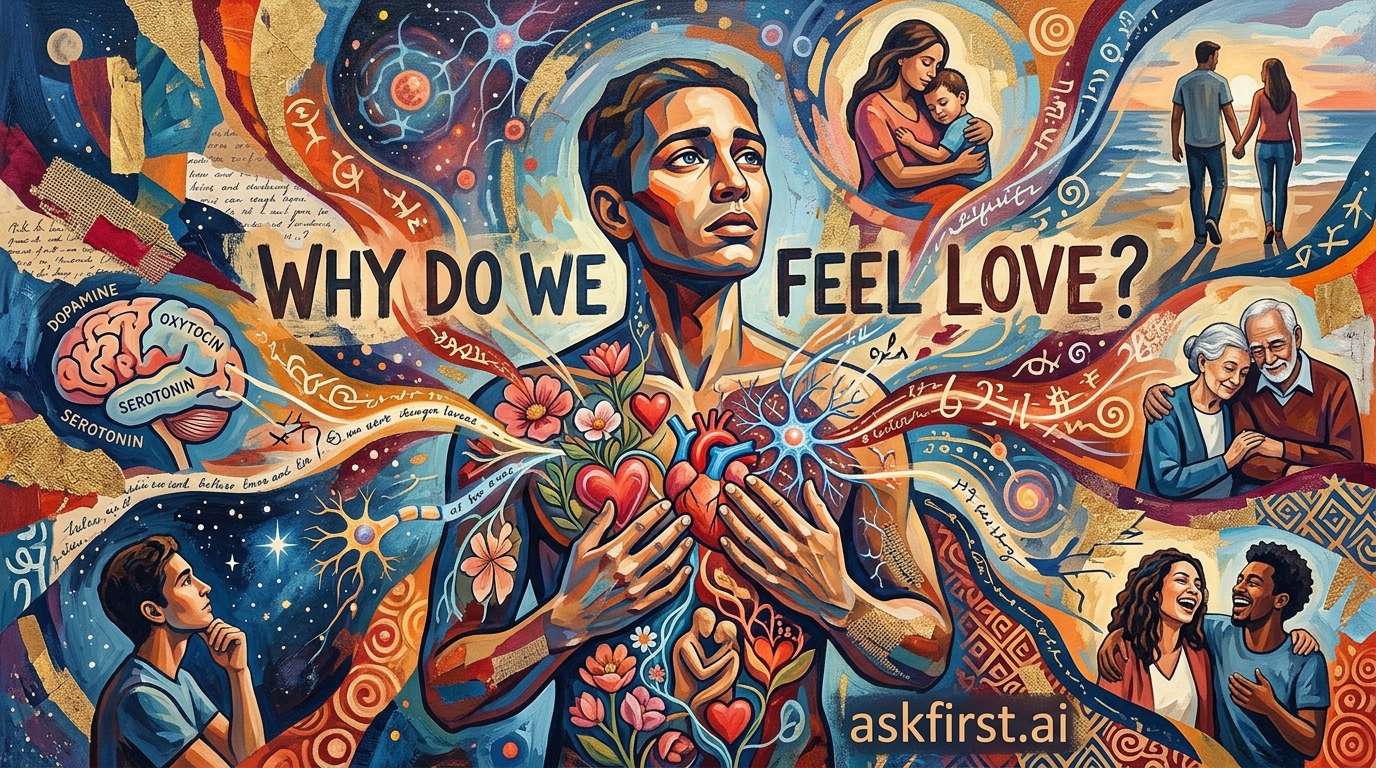
At the core of the experience of love lies a sophisticated chemical cocktail. When we feel a surge of attraction or deep attachment, our brains are flooded with specific neurotransmitters and hormones that dictate our behavior and emotional state.
- Dopamine: Often dubbed the "reward molecule," dopamine is the primary driver of the early stages of romantic love. When we encounter a potential partner, our ventral tegmental area (VTA) becomes highly active, releasing dopamine. This creates the intense focus, energy, and goal-oriented behavior characteristic of "limerence." Dr. Helen Fisher, a biological anthropologist and the author of Why We Love: The Nature and Chemistry of Romantic Love, notes that this system is part of our brain's reward circuitry, similar to the mechanisms triggered by caffeine or nicotine, which explains why love can feel so addictive.
- Oxytocin and Vasopressin: As the initial spark of attraction matures into long-term attachment, the neurochemical profile shifts. Oxytocin, frequently called the "cuddle hormone," is released during physical intimacy and social bonding. It fosters trust and emotional security. In The Chemistry of Connection, author Susan Kuchinskas explains how oxytocin acts as a social glue, reinforcing the bonds between partners and even between parents and children. Vasopressin, meanwhile, is linked to long-term commitment and territoriality, helping to maintain the exclusivity of a pair bond.
The Evolutionary Imperative: Survival of the Species
From an evolutionary perspective, love is not merely a sentiment; it is a strategic adaptation. Anthropologists suggest that the human infant is born in a relatively helpless state, requiring years of intensive care to reach maturity. If our ancestors had not possessed a mechanism to ensure that parents remained together to provide food, protection, and social training, the species would have likely perished.
Love acts as a "commitment device." By making the welfare of another person as important as our own, we ensure that resources are pooled and threats are mitigated. This perspective is championed by evolutionary psychologist David Buss in his seminal work, The Evolution of Desire. Buss argues that love evolved to solve specific adaptive problems, such as selecting high-quality mates, ensuring parental investment, and navigating the complexities of social hierarchy.
The Psychological Framework: Attachment Theory
While chemistry and evolution explain the why, psychology explains the how. Attachment theory, first developed by British psychologist John Bowlby and later expanded by Mary Ainsworth, posits that our capacity for love is deeply rooted in our earliest interactions with primary caregivers.
According to Bowlby’s research in Attachment and Loss, the internal working models we form as infants—whether we perceive our environment as safe and responsive or volatile and distant—dictate how we navigate romantic relationships in adulthood. Someone who developed a "secure attachment" in childhood is generally more capable of expressing vulnerability and trust. Conversely, those with "anxious" or "avoidant" patterns may experience love with high levels of distress or emotional detachment. Love, therefore, is a dynamic interplay between our biological wiring and our personal history.
The Cultural and Social Construct
While the biological urges are universal, the way we interpret and express love is heavily influenced by culture. In Western societies, the concept of "romantic love" as a prerequisite for marriage is a relatively modern invention, gaining significant traction only in the late 18th century. In many other cultures, love is viewed as a commitment that grows out of shared duty and social responsibility rather than the volatile fire of passion.
Sociologist Anthony Giddens, in his book The Transformation of Intimacy, discusses the rise of the "confluent love" model—a type of relationship based on mutual emotional satisfaction rather than external social requirements. This reflects a shift in modern society where love is increasingly tied to self-actualization and individual identity.
Conclusion: A Synthesis of Being
We feel love because it is the fundamental engine of human existence. It is the biological reward for reproduction, the evolutionary safeguard for our offspring, and the psychological framework through which we find meaning in a vast, often indifferent universe. Whether it manifests as the frantic obsession of a new romance or the quiet, enduring comfort of a lifelong partnership, love remains our most effective tool for navigating the complexities of being human. By understanding the chemical, evolutionary, and psychological underpinnings of love, we do not diminish its magic; rather, we gain a deeper appreciation for the intricate systems that allow us to connect, survive, and thrive together.