The Life Cycles of Volcanic Systems: Understanding Dormancy and Extinction
Volcanoes are not permanent fixtures of the Earth’s crust; they are dynamic, transient features that evolve, erupt, and eventually succumb to the cooling of their internal engines. When a volcano stops erupting, it does not necessarily mean it is "dead." Volcanologists categorize these quiet states into dormancy and extinction. Understanding why a volcano transitions from an active, explosive state to a state of permanent inactivity requires an examination of plate tectonics, magmatic reservoir exhaustion, and the cooling of the lithosphere.
1. The Exhaustion of Magmatic Reservoirs
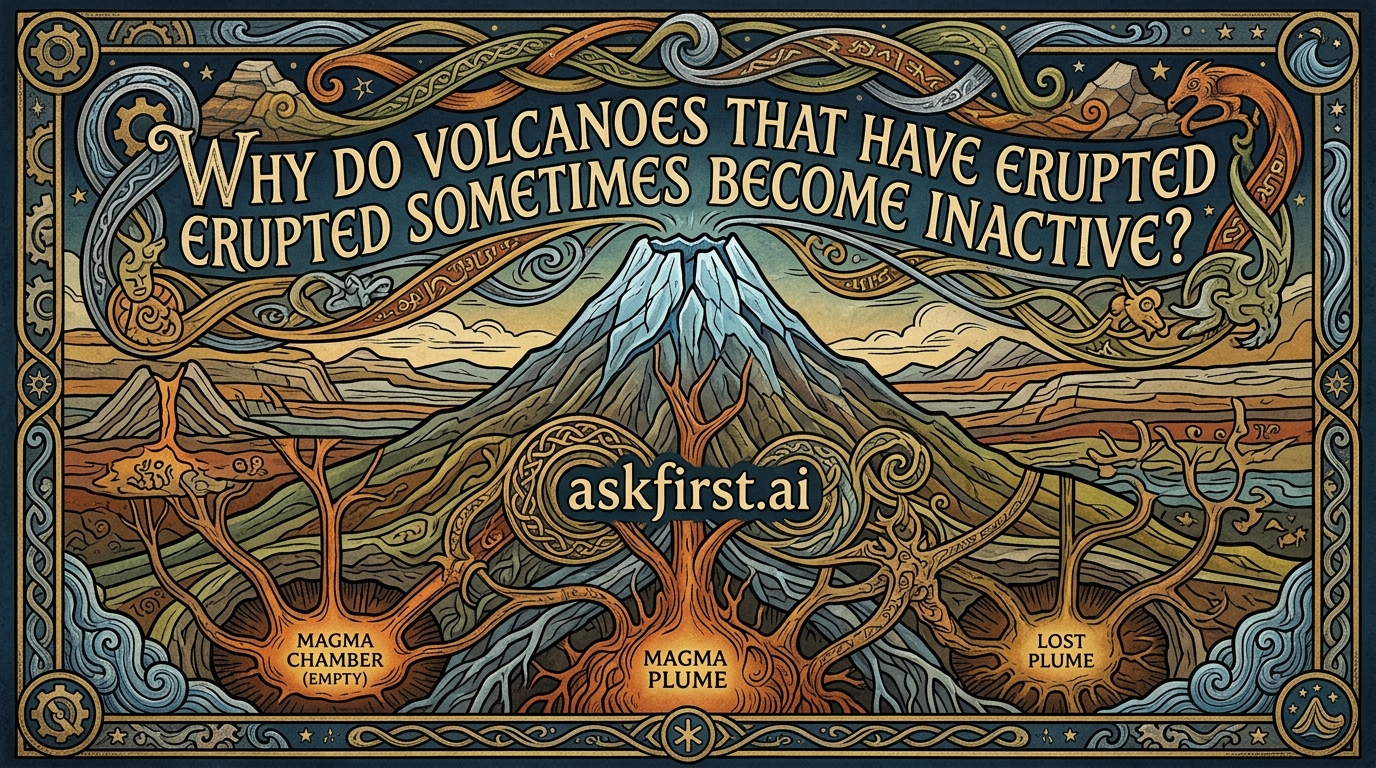
The primary reason a volcano ceases activity is the depletion of its underlying magma chamber. A volcano is effectively a plumbing system that connects a subterranean reservoir of molten rock to the surface. According to volcanologist Dr. Haraldur Sigurdsson in his seminal work Encyclopedia of Volcanoes, magma chambers are not infinite. They rely on a consistent supply of heat and melt rising from the mantle or the melting of the lower crust.
When the tectonic tectonic setting changes—such as when a subduction zone is disrupted or a tectonic plate moves away from a "hotspot"—the supply of magma is cut off. Once the existing magma in the chamber is either erupted or cools and crystallizes into solid rock (such as granite or gabbro), the volcano loses its fuel source. Without the pressure generated by molten material, the volcanic conduit eventually seals shut, rendering the volcano inactive.
2. Tectonic Migration and the "Hotspot" Theory
Many of the world’s most famous volcanoes are situated over hotspots—stationary plumes of intense heat rising from deep within the Earth's mantle. The Hawaiian-Emperor seamount chain provides the most concrete example of this process. As the Pacific Plate moves northwestward over the stationary Hawaiian hotspot, the older volcanoes are carried away from the heat source.
Once a volcano moves far enough away from the plume, the magma supply is severed. The volcano stops growing, and its structure begins to erode under the influence of wind, rain, and waves. Over millions of years, these islands subside and are eventually submerged beneath the ocean surface, becoming "guyots" or seamounts. This process, documented extensively by J. Tuzo Wilson in his foundational research on plate tectonics, illustrates that volcanic inactivity is often a geographical inevitability rather than a biological "death" of the mountain itself.
3. Tectonic Plate Reconfiguration
Volcanic activity is most common at plate boundaries, particularly subduction zones where one oceanic plate slides beneath another. The friction and the release of water from the subducting slab lower the melting point of the mantle wedge above it, creating magma. If the tectonic configuration changes—for example, if a ridge collision occurs or the subduction angle shifts significantly—the melting process is arrested.
For instance, the Cascade Volcanic Arc in North America is active because of the subduction of the Juan de Fuca Plate. If the subduction of this plate were to cease due to a change in plate motion, the volcanic arc would lose its primary trigger for melting. Within a few thousand years, the heat from the remaining magmatic bodies would dissipate into the surrounding crust, and the volcanoes would enter a permanent state of extinction.
4. The Process of Thermal Decay
Even when a magma chamber is not fully exhausted, it can become "thermally dead." Magma requires a high ambient temperature to remain liquid. If the rate of heat loss to the surrounding country rock exceeds the rate of heat input from the mantle, the magma chamber will undergo fractional crystallization.
In Volcanoes: Crucibles of Change by Richard V. Fisher, Grant Heiken, and Jeffrey B. Hulen, the authors explain that as magma cools, minerals crystallize in a specific order (Bowen’s Reaction Series). As the melt becomes more viscous and finally solid, the pressure required to force it through the volcanic conduit exceeds the pressure available. At this stage, the volcano becomes inactive. It effectively "freezes" from the inside out, turning the volcanic pipe into a solid plug of rock, commonly referred to as a volcanic neck or plug (a famous example being Shiprock in New Mexico).
5. Distinguishing Dormancy from Extinction
It is critical to distinguish between a volcano that is "resting" and one that is truly extinct. Dormancy implies that a volcano has the potential to erupt again, even if it has been quiet for centuries. Mount St. Helens, prior to its 1980 eruption, was considered dormant for 123 years.
Extinction, by contrast, is reserved for volcanoes that are geologically incapable of erupting again because their internal heat source is permanently gone. Determining this is complex; scientists look for the absence of seismic tremors, the lack of geothermal heat flow, and the absence of volcanic gases like sulfur dioxide.
Conclusion
The transition of a volcano to an inactive state is a testament to the impermanence of the Earth's crustal features. Whether due to the migration of tectonic plates, the exhaustion of mantle plumes, or the simple cooling of subterranean magma reservoirs, volcanic inactivity is the final stage of a long geological lifecycle. By studying these extinct or dormant giants, we gain a clearer picture of the Earth’s internal heat budget and the tectonic movements that continue to shape the surface of our planet. When a volcano stops erupting, it is merely closing a chapter in a much larger story of planetary evolution.