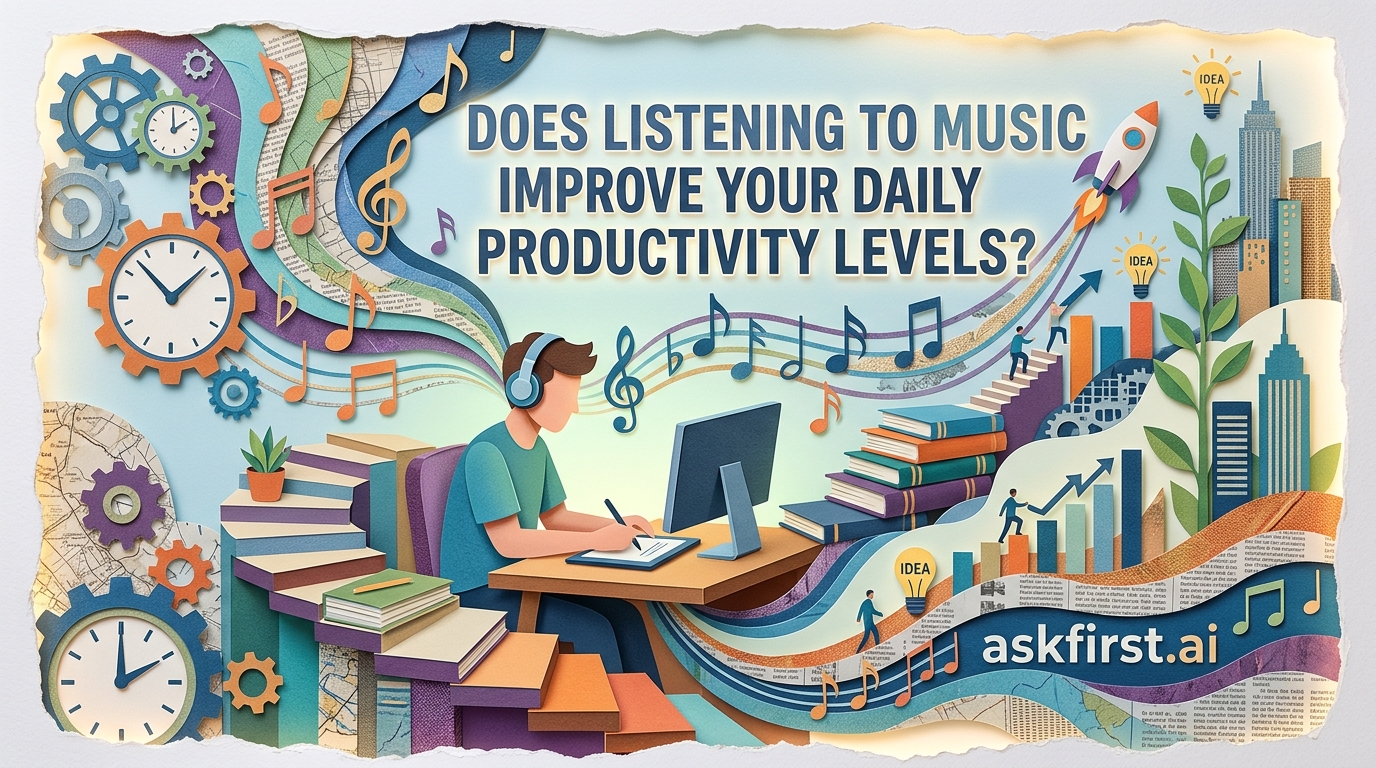
The Harmonic Edge: Analyzing the Music-Productivity Connection
For decades, the debate surrounding background music and workplace efficacy has oscillated between the belief that silence is the ultimate crucible of focus and the counter-intuitive claim that rhythmic auditory stimulation acts as a productivity catalyst. Modern cognitive science suggests that music functions as a powerful modulator of the human brain, capable of influencing dopamine release, mood regulation, and sustained attention spans. However, the efficacy of this relationship depends heavily on task complexity, musical structure, and individual personality traits.
The Science of Cognitive Entrainment
The fundamental mechanism behind music-enhanced productivity is often described as the 'Mozart Effect'—though modern researchers have nuanced this significantly. Auditory stimuli can induce neural entrainment, where brain waves synchronize with the tempo of the music. For repetitive, mundane tasks, upbeat music with a steady rhythm (around 60 to 70 beats per minute) can lead to a state of flow, reducing feelings of fatigue and boredom. This effect is largely attributed to the brain’s reward system; rhythmic patterns trigger the release of dopamine, which lowers the perceived difficulty of mechanical operations.
Task Complexity: The Threshold of Interference
One of the most critical factors identified in psychological literature is the interaction between cognitive load and auditory complexity. According to the 'Irrelevant Sound Effect', when individuals engage in tasks requiring linguistic processing—such as writing reports, coding, or reading complex legal documents—the presence of lyrics or complex melodies often acts as a cognitive burden. Because the brain’s language centers (Broca’s and Wernicke’s areas) compete for resources, listening to songs with vocals while attempting to write a complex email typically results in decreased comprehension and slowed output. Conversely, tasks that are high in physical or motor demand, such as cleaning, data entry, or repetitive administrative duties, benefit significantly from the presence of music, as the rhythm helps pace the execution.
Instrumental vs. Vocal Music
To optimize output, experts suggest the following strategies:
- Prioritize Instrumental Soundscapes: Studies indicate that classical music, lo-fi beats, or ambient nature sounds are superior for deep work. By removing the linguistic layer of vocals, the cognitive load is minimized, allowing the brain to focus on the task while maintaining a pleasant background ambiance.
- Match the Mood to the Goal: Energetic, upbeat playlists are ideal for overcoming procrastination or powering through a 'power hour' of clearing an inbox. Meanwhile, slow, melancholic, or minimal ambient music is better suited for brainstorming or creative problem-solving, as it allows for internal reflection without external distraction.
- The Power of Familiarity: Interestingly, the brain requires fewer resources to process music that is already known. Listening to a favorite album on repeat can serve as a 'comfort signal' for the brain, reducing stress levels during high-pressure deadlines. This familiarity allows for a baseline of psychological safety that fosters long-term concentration.
Individual Differences: The Extrovert-Introvert Divide
Psychological personality testing reveals that extroverts and introverts process sensory input differently. Research into the 'Arousal Theory' suggests that introverts often reach their peak arousal levels with less stimulation, meaning that listening to loud or complex music might push an introvert into a state of cognitive overload faster than an extrovert. Therefore, personal experimentation is vital. For some, silence is an absolute requirement for peak performance; for others, the right soundtrack is the very mechanism that keeps the mind from wandering during long stretches of solo labor.
Practical Implementation for Peak Efficiency
- Auditory Zoning: Categorize work tasks into 'Linear' (data entry, filing) and 'Cognitive' (strategy, writing). Use music for the former and silence or 'white noise' (brown noise) for the latter.
- The 90-Minute Rule: Utilize music during the middle of deep work sessions to maintain momentum. If focus begins to wane after 60 minutes, introducing a curated instrumental playlist can provide a necessary 'neural boost' to finish the cycle strong.
- Volume Control: High-volume music occupies more bandwidth in the brain's sensory processing channels. Keeping volume at a moderate 'background' level ensures that music remains an enhancer rather than a distractor.
Final Verdict
Music does not serve as a universal productivity multiplier; rather, it is a surgical tool. When applied correctly—by choosing instrumentals for reading, rhythms for repetition, and silence for deep creative analysis—it becomes an invaluable instrument for managing one’s mental environment. By understanding how the auditory cortex interacts with personal task demands, any individual can curate an environment that promotes sustained engagement and enhanced daily efficacy, regardless of the challenges posed by a busy professional landscape.