The Science of Human Connection and Pain Relief
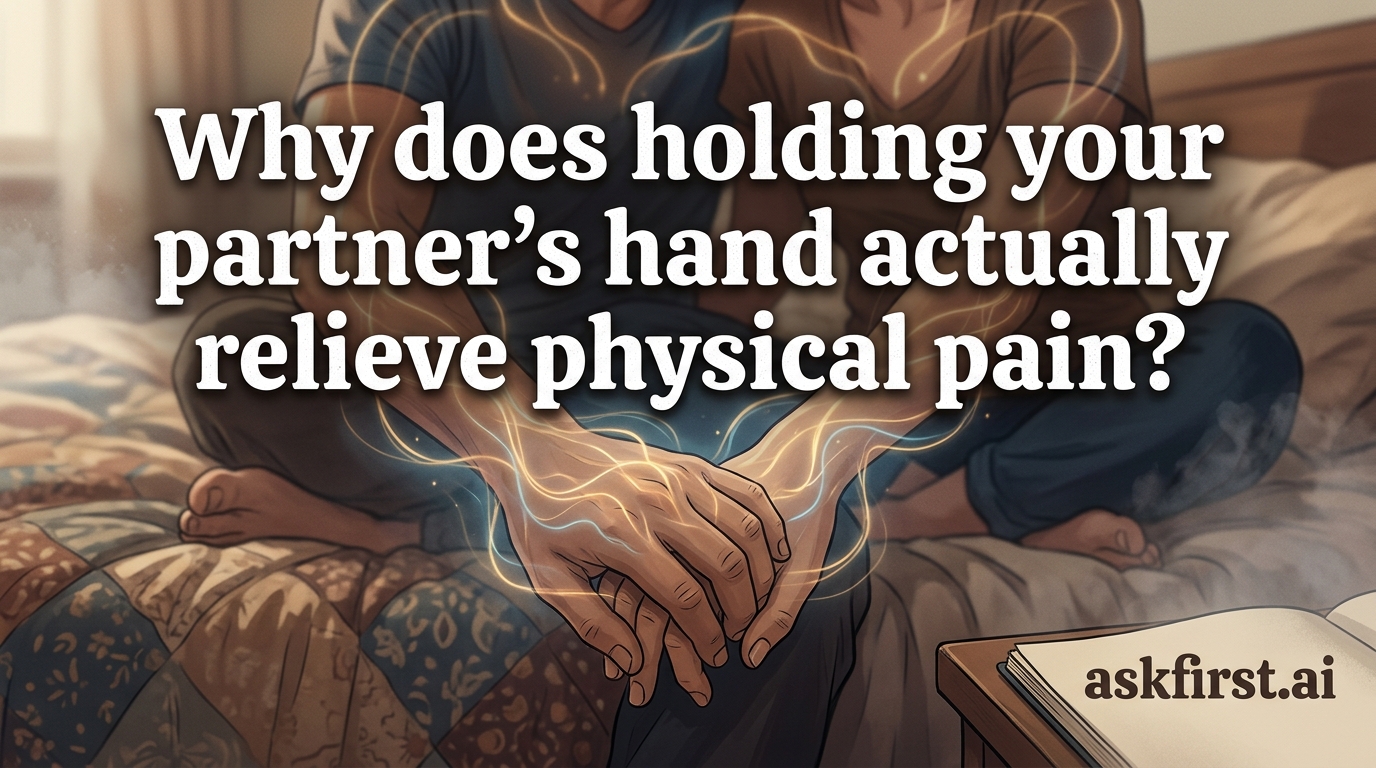
It is a phenomenon that seems almost cinematic in its simplicity: a person in distress reaches out, grasps the hand of a loved one, and suddenly, the perceived intensity of their physical discomfort diminishes. While this might appear to be a mere placebo effect or a romanticized notion, rigorous scientific investigation suggests that the act of holding hands triggers a complex neurological and physiological cascade known as interpersonal synchronization. This biological mechanism allows two nervous systems to align, effectively turning a solitary experience of suffering into a shared, mitigated state.
The Neural Mechanism of Interpersonal Coupling
When two individuals hold hands during a painful event, they engage in a process called brain-to-brain coupling. Research indicates that when a partner provides physical contact, their brain wave patterns—specifically the alpha-mu band, which is associated with focused attention and sensory processing—begin to sync with the recipient. This alignment is not accidental; it is a manifestation of empathic resonance.
- Empathic Dampening: The brain utilizes the presence of a supportive partner to recalibrate the pain-processing matrix. When the brain detects a supportive "other," it reduces activity in the areas responsible for threat perception, such as the anterior cingulate cortex.
- Oxytocin Release: The contact triggers the release of oxytocin, often referred to as the 'love hormone' or 'bonding chemical.' Oxytocin is a powerful neuropeptide that has been shown in various clinical studies to possess analgesic properties. It modulates the signals in the spinal cord, effectively turning down the volume of pain messages before they even reach the brain.
The Role of Social Support in Stress Regulation
Physical touch is arguably the most primitive and effective form of communication. From an evolutionary perspective, our ancestors relied on social groups for survival. Isolation was synonymous with danger, whereas being touched by a trusted member of the 'tribe' signaled safety. Today, this evolutionary hardwiring remains intact. When a partner holds a hand, the body's autonomic nervous system shifts away from a 'fight-or-flight' sympathetic response and moves toward the parasympathetic 'rest-and-digest' state.
Beyond the Touch: Why It Works
It is crucial to understand that this effect is highly dependent on the quality of the interpersonal bond. Science reveals that the analgesic benefit is strongest when the partner is perceived as empathetic and supportive. If the interaction lacks genuine emotional connection, the brain does not sync, and the pain-relieving effects are significantly diminished or non-existent.
- Cognitive Distraction vs. Biological Synchronization: While simple distraction (like watching a movie or counting numbers) can take the mind off pain, holding hands is qualitatively different. It creates a physiological shift that distraction alone cannot achieve. It is not just that the person is 'thinking about something else'; it is that their very biological signature is changing.
- Heart Rate and Respiratory Alignment: During prolonged contact, partners often begin to breathe in unison and their heart rates synchronize. This respiratory sinus arrhythmia creates a feedback loop of calm that stabilizes the nervous system of the person in pain, preventing the secondary spike in pain intensity that typically occurs when one becomes anxious about their own suffering.
Clinical Implications for the Future
This knowledge has profound implications for modern medicine. Incorporating supportive touch into bedside care could theoretically reduce the need for pharmacological interventions in certain contexts. By recognizing that social support is a biological resource rather than a sentimental gesture, caregivers can improve patient outcomes through simple, human-centric actions. It suggests that the most sophisticated piece of medical equipment in a room might actually be the hand of a supportive partner.
In conclusion, the act of holding hands is far more than an emotional gesture; it is a profound biological intervention. Through the synchronization of neural rhythms, the activation of hormone pathways, and the reduction of physiological stress markers, human touch acts as a natural buffer against pain. It is a testament to the fact that humans are fundamentally social creatures, designed to thrive through connection, even in our moments of greatest physical vulnerability. The next time you find yourself in pain, reach out—your partner’s presence is quite literally a potent, scientifically validated medicine for the human body.