The Psychology of Information Asymmetry
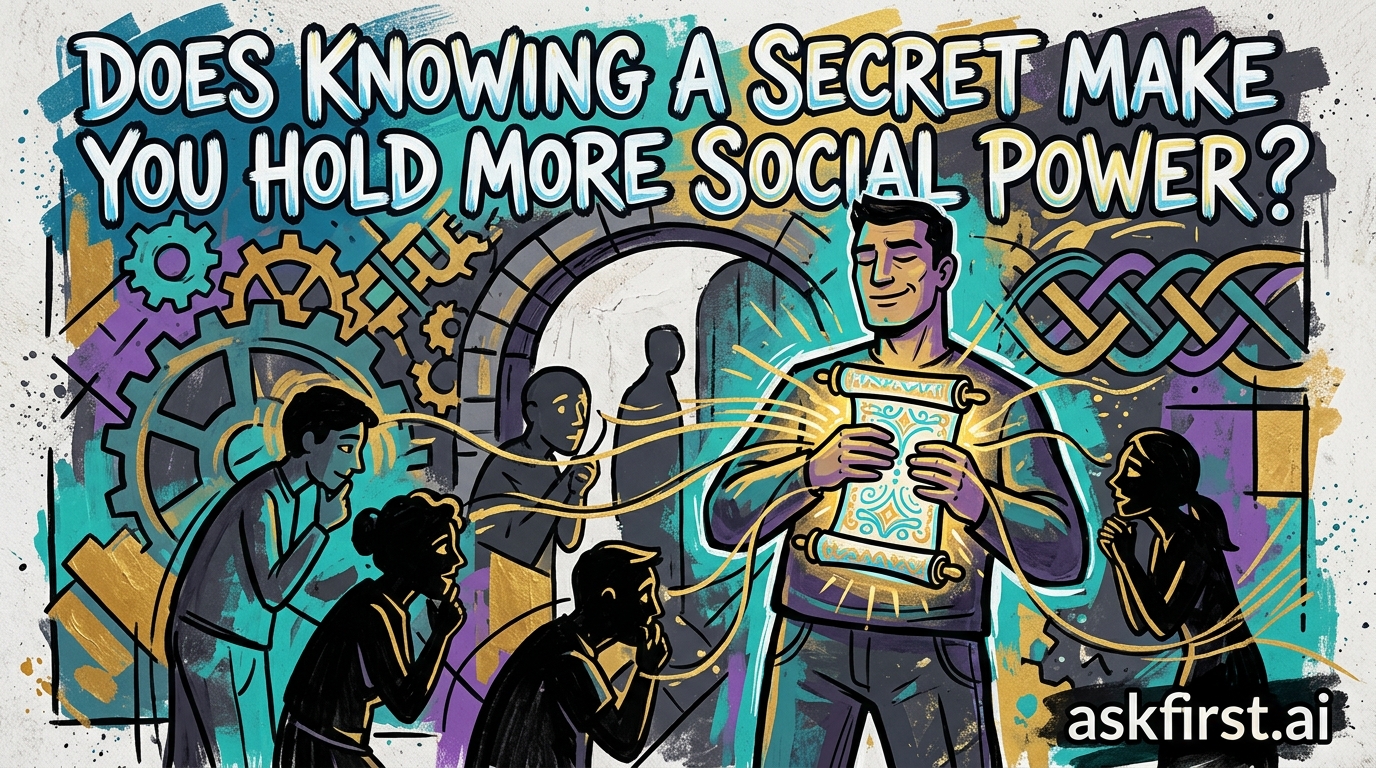
At the heart of human interaction lies a fundamental principle: information is currency. Knowing a secret—exclusive, sensitive, or high-value information—acts as a psychological lever that alters the dynamics between individuals. From ancient courts to modern corporate boardrooms, the possessor of a secret often enjoys a unique form of social capital. This phenomenon is known as information asymmetry, where one party holds more or better information than another, creating an immediate power imbalance.
The Mechanisms of Secret-Based Power
When an individual possesses secret information, they occupy a position of 'gatekeeping.' This creates several psychological effects that manifest as social power:
- The Curiosity Gap: Secrets create an irresistible pull on others. Humans are hardwired to resolve ambiguity. By holding back, the secret-bearer becomes the center of attention and intrigue.
- Strategic Leverage: Secrets function as bargaining chips. The implicit threat of disclosure, or the promise of revelation, allows the keeper to influence the behavior of others without ever having to exert physical force.
- The In-Group Bias: Sharing a secret fosters an immediate, intense bond. It creates an 'inner circle' dynamic, effectively separating the 'in-group' (those who know) from the 'out-group' (those who do not), which inherently elevates the status of the individuals inside that circle.
Theoretical Foundations: Why Secrets Command Respect
Social science suggests that power is often relational. According to French and Raven’s Bases of Power, expert power and information power are distinct categories. While expert power is about knowing how to do something, information power is about knowing what is actually happening. A secret is a pure form of information power. Even if the secret is relatively trivial, the fact that it is restricted confers a perception of high status to the person who holds it. Research by behavioral economists indicates that people often attribute 'insider' qualities to those who possess restricted knowledge, assuming they are better connected or more capable, regardless of their actual objective skills.
The Hidden Risks: The Downside of Secret-Keeping
While holding a secret confers power, it is rarely a stable foundation for long-term influence. The 'power' derived from secrets is often perceived as fragile and potentially deceptive.
- The Burden of Responsibility: Holding sensitive information requires constant cognitive monitoring. One must remember who knows what, leading to 'leaking' risks that can result in immediate loss of credibility if the secret is disclosed prematurely or carelessly.
- Erosion of Trust: True social power is often built on trust and predictability. When an individual is viewed solely as a repository for secrets, they are often excluded from authentic, vulnerable interactions. Peers may view the person as a 'threat' or a 'source of instability' rather than a collaborator.
- The Paranoia Trap: Maintaining secrets can lead to increased stress and social alienation. The individual begins to see every interaction through the lens of potential betrayal, which can distort their perception of reality and hinder their ability to build genuine, reciprocal social relationships.
Case Studies in Modern Contexts
Consider the corporate environment. An employee who possesses information about a confidential merger or a pending promotion holds significant influence in the office hierarchy. They may not hold a managerial title, but colleagues will gravitate toward them, seek their company, and even offer them favors in exchange for fragments of knowledge. This 'shadow hierarchy' is the physical manifestation of secret-based power.
Conversely, examine the digital age. In online communities, those who act as 'leakers' or sources of behind-the-scenes information gain rapid, albeit fleeting, spikes in popularity. However, history shows that such power is transient. Once the secret is revealed, the power evaporates, and the individual must immediately find a new secret to maintain their status. This creates a cycle of dependency that is exhausting and often detrimental to long-term reputation.
Conclusion: Power vs. Influence
It is vital to distinguish between power and influence. Knowing a secret provides short-term, coercive power—the ability to affect others' reactions to specific information. However, true, lasting social influence comes from consistency, transparency, and competence. While a secret might act as a shortcut to gaining attention, it rarely serves as a foundation for building lasting, high-quality social bonds.
In summary, possessing a secret can grant an individual temporary control over a narrative or a relationship, but it carries an inherent risk of undermining the trust required for sustainable authority. Use the power of information wisely: true influence is found not in what you keep from others, but in how you act with the knowledge you hold.