The Neural Mystery of Compressed Time
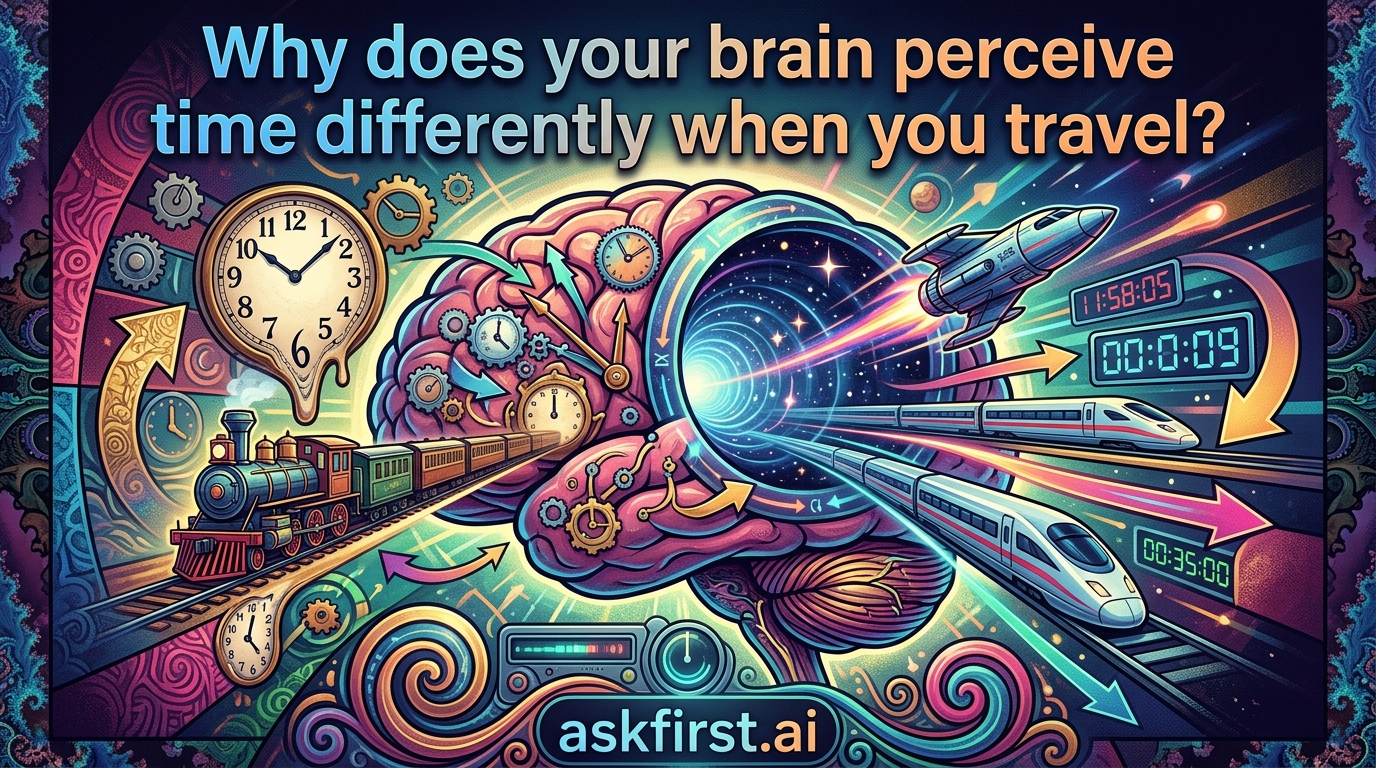
The phenomenon of 'holiday paradox'—where time seems to speed up as we grow older or slow down during novelty-filled travel—is a fascinating intersection of cognitive psychology and neuroscience. When the human brain encounters a new environment, it must process significantly more sensory data than during daily, repetitive routines. In familiar settings, the brain engages in 'predictive processing,' essentially ignoring the mundane to conserve metabolic energy. However, when traveling, the brain is flooded with novel stimuli, forcing it to create new memories. According to the 'Holiday Paradox' theory, these rich, detailed memories make the time spent traveling seem longer in retrospect. Conversely, when looking back at a week of monotonous work, the brain has fewer distinct markers to latch onto, creating the illusion that time vanished.
The Role of Memory Encoding and Retrieval
Cognitive scientists suggest that time perception is largely a retrospective reconstruction. The brain does not experience a continuous stream of time like a clock; instead, it stitches together snapshots of episodic memory. During a vacation, these snapshots are vibrant, high-definition, and numerous because the brain is working harder to map out new locations. This density of information serves as a marker for the brain's internal measurement of 'elapsed time.' When recalling a trip, the abundance of these detailed markers makes the period feel stretched out. In contrast, in a routine life, the brain filters out familiar input, leading to 'gaps' in the autobiographical timeline that the mind mentally collapses, causing the perception that months or years passed in a blink.
Dopamine and the Temporal Clock
Beyond simple memory density, the brain's neurochemistry plays a pivotal role. Novel experiences trigger the release of dopamine, a neurotransmitter heavily involved in reward systems and the regulation of internal timing. Research indicates that high levels of arousal and new stimuli can recalibrate the brain’s pacemaker. When we are engaged, excited, or challenged by a new culture, the internal tempo of the brain seems to shift. In high-arousal states, humans tend to overestimate short durations because they are more attentive to the passage of time. This heightened state of alertness during travel ensures that the brain does not skip over a single second of the experience.
Practical Factors Affecting Perception
Several distinct factors exacerbate this divergence in temporal perception:
- Cognitive Load: Learning new languages, navigating complex transit systems, and adapting to different social norms demand high cognitive resources. This 'cognitive load' forces the brain to stay in a state of 'deep focus.'
- Environmental Cues: Natural rhythms, such as new light cycles or different climate zones, influence the circadian regulation of attention, making the start of a trip feel particularly slow and deliberate.
- Expectation vs. Reality: The anticipation of travel creates a sharp contrast with the actual experience, which can distort the subjective duration of the journey.
The 'Novelty Bias' and Neuroplasticity
From an evolutionary standpoint, the brain prioritizes novelty because it could signify either potential danger or hidden resources. When traveling, our neuroplasticity is effectively 'upregulated.' We are learning, adapting, and synthesizing information at a rate far exceeding our normal pace of life. This intense neural activity provides a deep sense of presence, which is the antithesis of the 'autopilot' mode often triggered by mundane work environments. Because time is a mental construct derived from the degree of change within the environment, more change equals more time.
Conclusion: Harnessing the Perception of Time
Understanding why travel makes time feel different offers a secret to living a fuller life. If one wishes to feel as though their life is slowing down—granting the sensation of having 'more time'—it is essential to introduce novelty into the daily routine. By altering commuting routes, learning new skills, or exposing oneself to diverse sensory inputs, it is possible to replicate the neural density of a vacation. The brain responds to life not by the ticking of the clock on the wall, but by the accumulation of novel experiences. By maximizing those experiences, one can effectively lengthen the subjective span of their existence, turning the fleeting nature of time into a collection of rich, enduring moments.