The Eternal Nature of Honey: Fact or Myth?
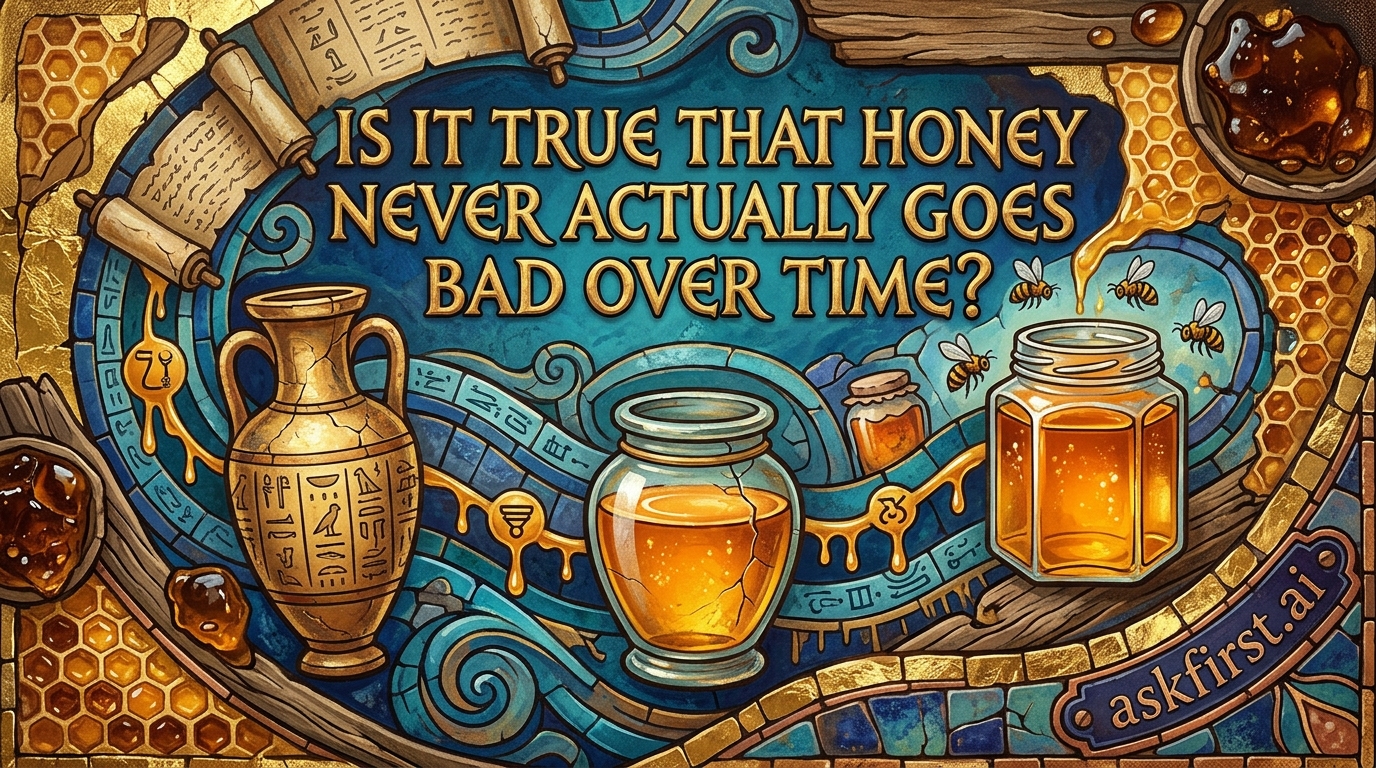
It is a widely held belief that honey possesses the extraordinary ability to remain edible indefinitely. Archaeological discoveries have frequently fueled this legend; for instance, explorers have famously unearthed pots of honey in ancient Egyptian tombs, dating back thousands of years, which remained in a remarkably preserved state. Scientifically speaking, honey is indeed one of the few food substances on Earth that, under the right conditions, does not spoil. This phenomenon is not magic but rather a sophisticated combination of chemistry, biology, and physics.
The Chemical Architecture of Longevity
To understand why honey resists decay, one must look at its unique composition. Honey is essentially a super-saturated sugar solution. It is composed primarily of glucose and fructose, with very low water content. This high concentration of sugar creates an environment where most microorganisms simply cannot thrive. In microbiology, this is known as osmotic pressure. When a bacterium or mold spore lands on honey, the high concentration of sugar pulls the water out of the microbe through osmosis. Without water, the organism is dehydrated and unable to reproduce or colonize, effectively rendering the honey shelf-stable.
The Role of Hydrogen Peroxide
Beyond its osmotic properties, honey contains an enzyme called glucose oxidase. This enzyme is introduced by bees during the process of nectar transformation. When honey is exposed to air, glucose oxidase reacts with the glucose, creating gluconic acid and hydrogen peroxide. Hydrogen peroxide acts as a potent antibacterial agent, serving as a chemical shield against pathogens that might otherwise compromise the integrity of the substance. This naturally occurring defense mechanism is one of the primary reasons why honey has been used medicinally throughout human history as a topical treatment for wounds and minor infections.
The Acidic pH Barrier
Another critical factor is the acidity of honey. Generally, honey maintains a pH level between 3.2 and 4.5. This level of acidity is sufficiently low to inhibit the growth of most spoilage-causing bacteria. By creating an acidic environment, honey effectively creates a hostile territory for most life forms that would otherwise cause food to rot or ferment. When combined with the low water activity and the antiseptic presence of hydrogen peroxide, the result is a substance that is hostile to almost all microbial life.
The Importance of Sealing and Storage
While honey is technically eternal, it is only as good as the seal on its container. Honey is hygroscopic, meaning it has the ability to absorb moisture from the surrounding atmosphere. If a jar of honey is left open in a humid environment, it will pull water from the air. Once the water content in the honey rises above approximately 18-20%, the protective barriers described above break down. At this point, yeasts that are naturally present in the environment can begin to ferment the honey, leading to spoilage. Therefore, keeping honey tightly sealed is the only requirement for maintaining its shelf life indefinitely.
Why Honey Crystallizes
Often, people mistake crystallized honey for expired honey. Crystallization is not a sign of spoilage; it is a natural physical process. Because honey is a super-saturated solution of glucose, the glucose molecules eventually settle and form crystals. This process is influenced by temperature and the specific floral source of the nectar. Crystallized honey is perfectly safe to eat. To restore it to a liquid state, one simply needs to place the jar in a warm water bath and gently heat it. This reverses the physical change without altering the chemical composition or the quality of the honey.
Summary of Preservation Rules
To ensure honey lasts forever, adhere to these simple guidelines:
- Keep it airtight: Prevent moisture absorption to maintain the low water-activity levels necessary for preservation.
- Store at room temperature: Extreme heat can degrade the color and flavor profile over long periods, while extreme cold accelerates crystallization.
- Avoid contaminants: Use a clean, dry spoon to scoop honey to prevent introducing water or external bacteria into the jar.
In conclusion, the legend is largely true: honey is a biological marvel of preservation. Through a perfect storm of low moisture, high acidity, and natural enzymatic defenses, it stands as the only food product capable of outlasting the shelf lives of almost anything else in a pantry. Provided it is kept away from moisture, that jar of honey can indeed be enjoyed by future generations.